Seven-step blueprint for using Jev in AI systems
A seven-step guide covering bounded typed decisions, putting Jev in front of a service, cutting cost, structured extraction, memory management and agent grading, with latency and fee comparisons.

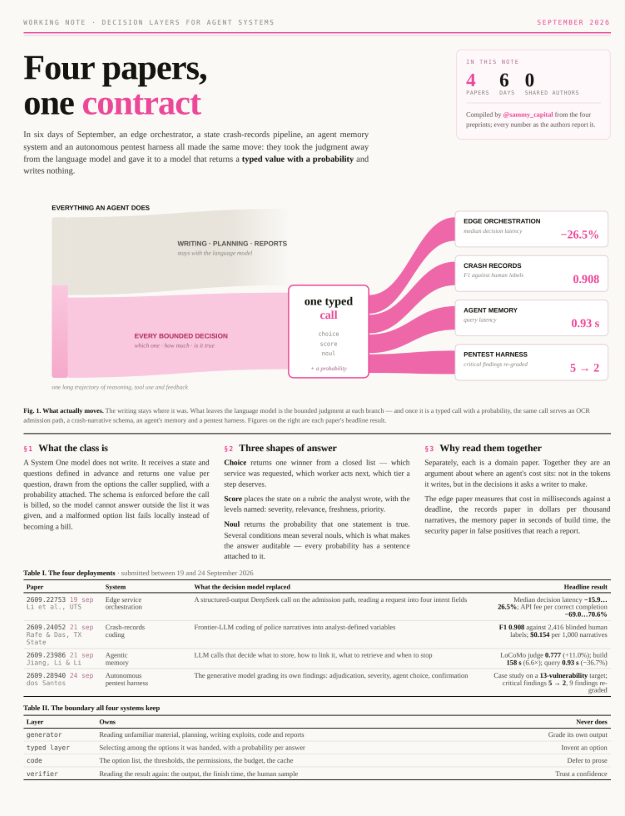
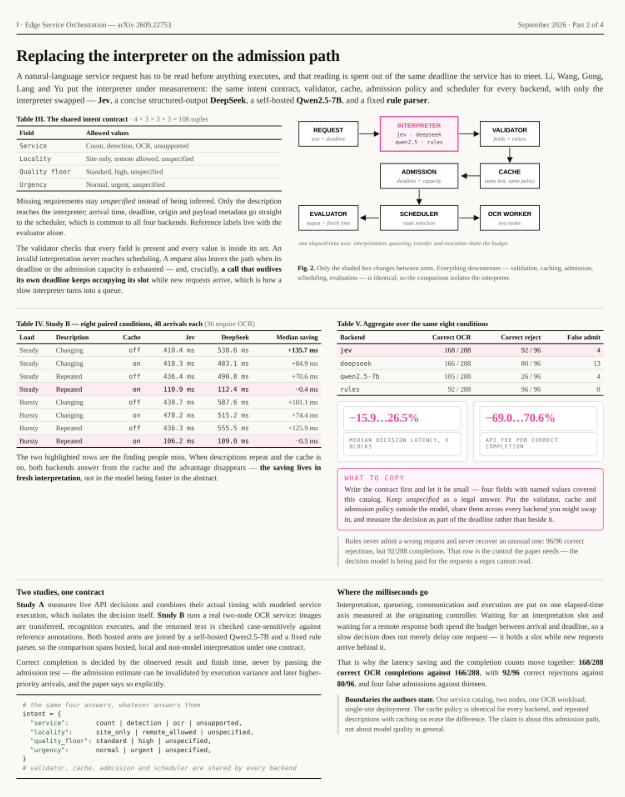
Jev is the most underrated model in AI right now, and the research just proved it It is more useful than most paid AI courses: this is a 7-step blueprint on how to use Jev to make any AI system faster, cheaper and harder to fool: step 1 → let Jev make every bounded decision: which one, how much, is it true. the LLM keeps the writing, and Jev returns a typed answer with a probability step 2 → put Jev in front of your service: against DeepSeek it completed more requests correctly (168 vs 166), rejected more bad ones (92/96 vs 80/96) and let in 3× fewer wrong requests (4 vs 13) step 3 → cut the bill: 15.9–26.5% lower median latency and up to 70% lower API fee per correct answer step 4 → give Jev a tiny contract: four fields with named values, and "unspecified" as a legal answer. it can't answer outside the list step 5 → turn messy text into data: 195,857 police crash reports coded at F1 0.908 against blinded human labels, for $0.154 per 1,000 step 6 → put Jev in charge of memory: memory builds 6.6× faster, queries take 0.93 s and the judge score goes up 11% step 7 → let Jev grade the agent, not the agent itself: in a pentest harness it re-graded 9 findings and cut false critical findings from 5 to 2 most AI courses teach you how to get a bigger model to do more Jev shows a small typed model beating it at the decisions that matter the result: lower latency, a smaller bill, fewer bad requests getting through and every decision with a probability attached Send this to Claude Code or Codex and let Jev take over your first decision ↓
This post quotes another post: x.com/gyome1_/status/2098057823930155319