CLM-8B vs Jev: choosing a System One decision model
An interview introduces CLM-8B, a System One model from Stanford and Nvidia that matches Jev on most tasks while running up to 9x faster, and is suited to judging the outputs of reasoning models.

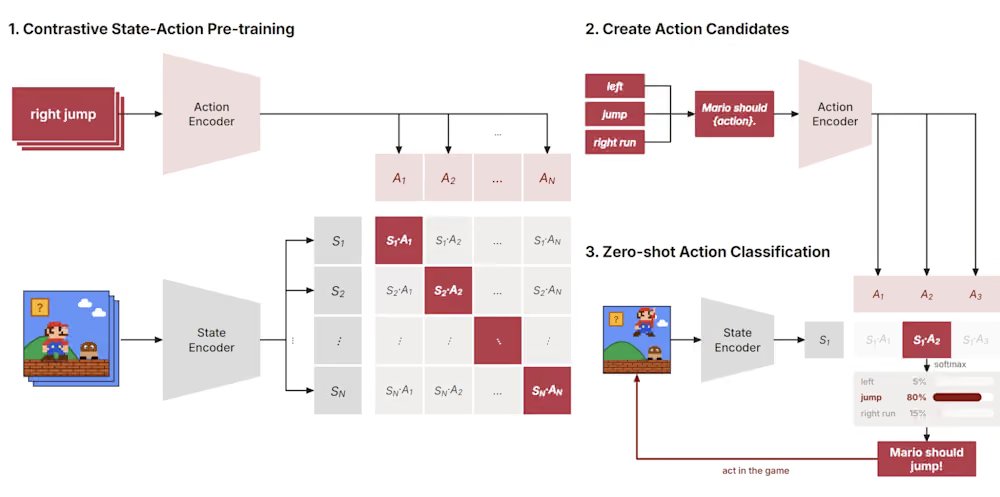
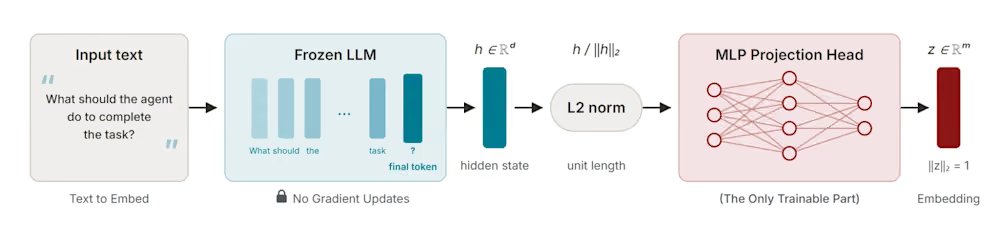
AI agents and agentic workflows are getting more complex, but the primitives that support them have not caught up, especially on tasks that don't need a generative answer. This is the gap that System One models (or decision models) fill. Jev is the most publicized example but not the only game in town. CLM-8B by Stanford and Nvidia is a System One model based on Contrastive Language Modeling. CLM encodes and matches states and actions. It can take an input such as a sequence of text or code tokens and map them to one of several actions. One of the use cases I'm especially bullish on is using it as a judge for multiple outputs from reasoning models, which it can do at a very high speed/accuracy while cutting down compute costs significantly. In experiments, CLM ran up to 9x faster than Jev while matching it on most tasks. And it is composed of a frozen Qwen3-8B backbone and a small trainable MLP projection head, which means fine-tuning it is very cost-efficient. I spoke to project lead @jackyk02 on the vision behind CLM, the best applications, and the future directions.
This post quotes another post: x.com/venturebeat/status/2103578683197812905