Study measures a psychological fingerprint for each LLM using human psychometric scales
Researchers ran 7 human psychological instruments on 9 LLMs five times each in English and Chinese, finding each model has a reproducible, unique profile and that language and vendor shift results.

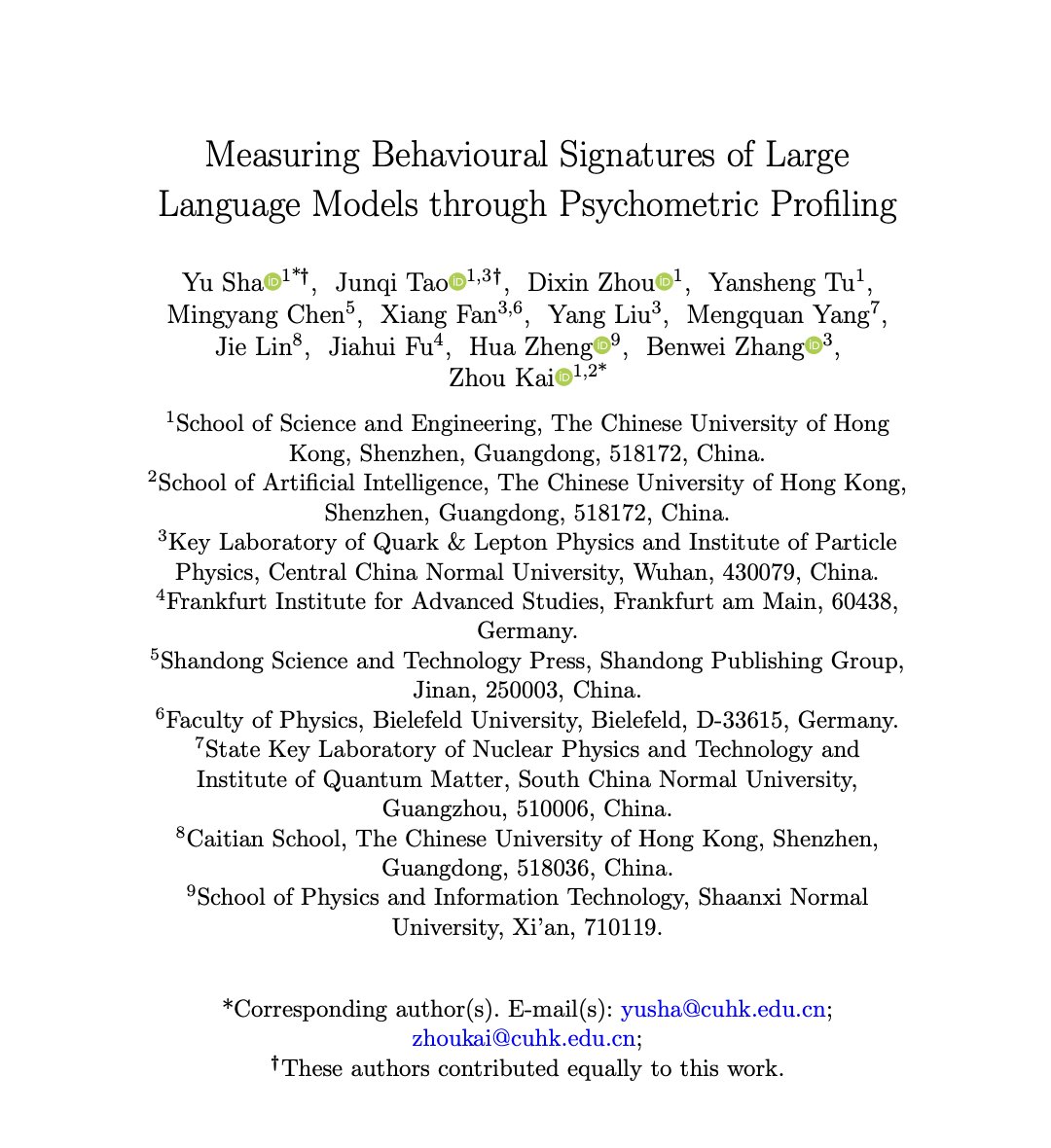
Researchers discovered every AI model has a psychological fingerprint you can measure like a human's. they developed a psychometric profiling framework to systematically characterize the behavioral regularities of large language models. they gave 7 human psychological instruments to 9 different llms, running them 5 times each in both english and chinese. result? you can measure an ai's "personality" the exact same way you measure a human's. here is the breakdown of what they found: model-specific identities: every single model has a structured, unique psychological profile. the behavioral signature is so highly reproducible across repeated administrations that you can literally recover the model's identity just from its test scores. the "good guy" baseline: thanks to safety training, they all share an alignment-shaped pattern of higher prosocial and self-regulatory responses. they also score universally low on dominance, disengagement, and harmful-intent endorsement. structured refusals: even when a model refuses to answer (producing an NA response), it isn't random. the paper shows these NA responses are structured and indicate strict boundaries of what the model considers applicable or safe. language alters personality: the language condition (english vs chinese) and the origin of the provider are directly associated with the model's psychological configuration and answerability. this isn't just a fun experiment.. it offers a framework for quantifying deployment-level behavioural signatures. as llms increasingly mediate our decisions and communication, we need to know exactly what kind of "mind" we are interacting with.