Oracle Cloud adds Nvidia, Google TPUs and more inference chips
Oracle is expanding its Nvidia Vera Rubin deployment and will offer Google TPU 8t/8i, Cerebras and SambaNova inference chips on its cloud from 2027, plus new OpenAI enterprise integrations.

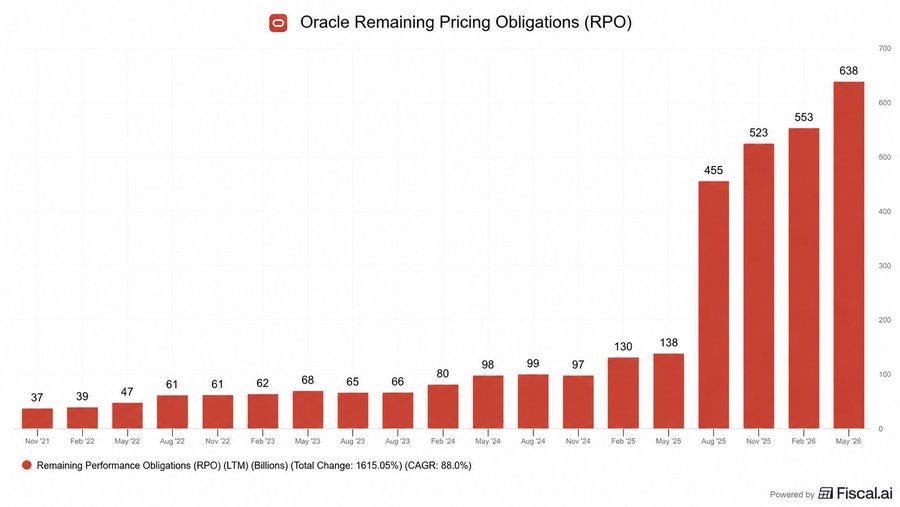
$ORCL is one of the most underrated AI infrastructure plays right now and today's announcements make me even more bullish. Oracle just announced several major AI partnerships, including an expanded deal with $NVDA to deploy Vera Rubin superclusters at multi-gigawatt scale. It's also bringing $GOOGL custom TPUs to Oracle Cloud starting in 2027, making it the first hyperscaler outside Google to offer them. These include Google's TPU 8t for training and TPU 8i for inference. But that's not all. Oracle is also partnering with $CBRS to offer its high speed AI inference systems starting in 2027, while adding SambaNova's specialized inference chips to its cloud infrastructure. What's interesting here is that Oracle isn't betting on just one chip architecture but rather building a cloud platform that supports NVIDIA GPUs, Google's TPUs, Cerebras systems, and SambaNova chips. This gives customers more flexibility to choose the hardware that makes the most sense for their workloads, whether that's training massive AI models or running inference at the lowest possible cost. Oracle is also expanding its partnership with OpenAI, introducing four enterprise offerings that integrate ChatGPT and Codex into business workflows, cybersecurity, application development, and small business operations. On top of that, $SNOW is bringing its AI Data Cloud to Oracle Cloud as a native service, allowing customers to purchase and manage it directly through Oracle. And I think this is where the bigger opportunity comes in. Oracle is positioning itself as an entire AI infrastructure platform, from the chips powering AI models to the enterprise applications businesses actually use. As AI inference demand continues growing, customers will increasingly care about performance, efficiency, and cost per token. By offering multiple chip architectures and integrating enterprise AI services, Oracle could capture a much larger share of that spending. Of course, the biggest concern remains Oracle's enormous capital spending requirements and whether it can generate attractive returns on all this infrastructure. But if AI demand continues scaling the way I expect, I think Oracle could become one of the biggest beneficiaries of the AI buildout. I think the market is still underestimating just how important Oracle could become in the AI ecosystem.