ChatGPT Images 2.5 wardrobe-swap prompt template
The author shares a "protected wardrobe rule" prompt for ChatGPT Images 2.5 that swaps garments by category without changing design details, with a full example for a blue sports blouson.


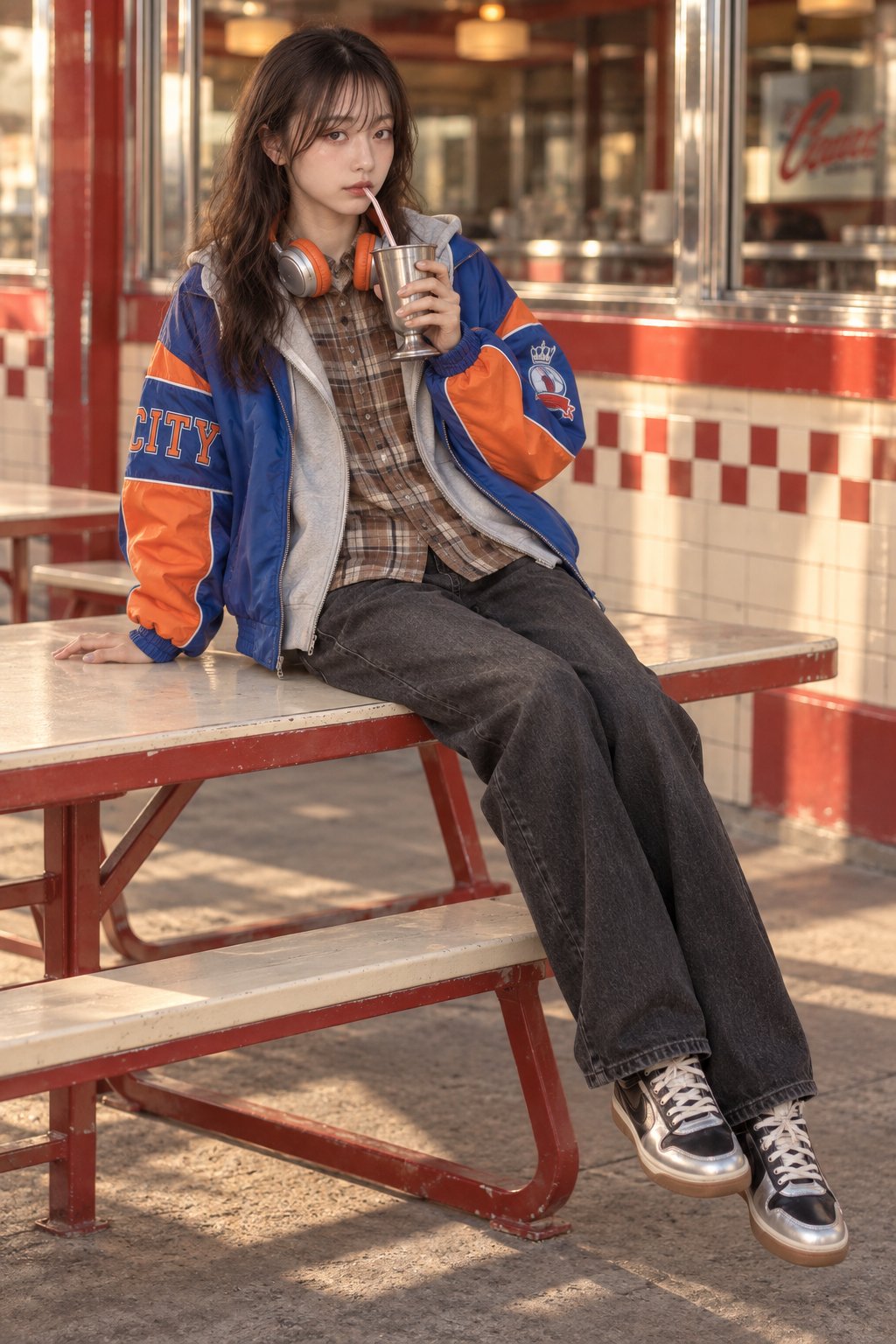
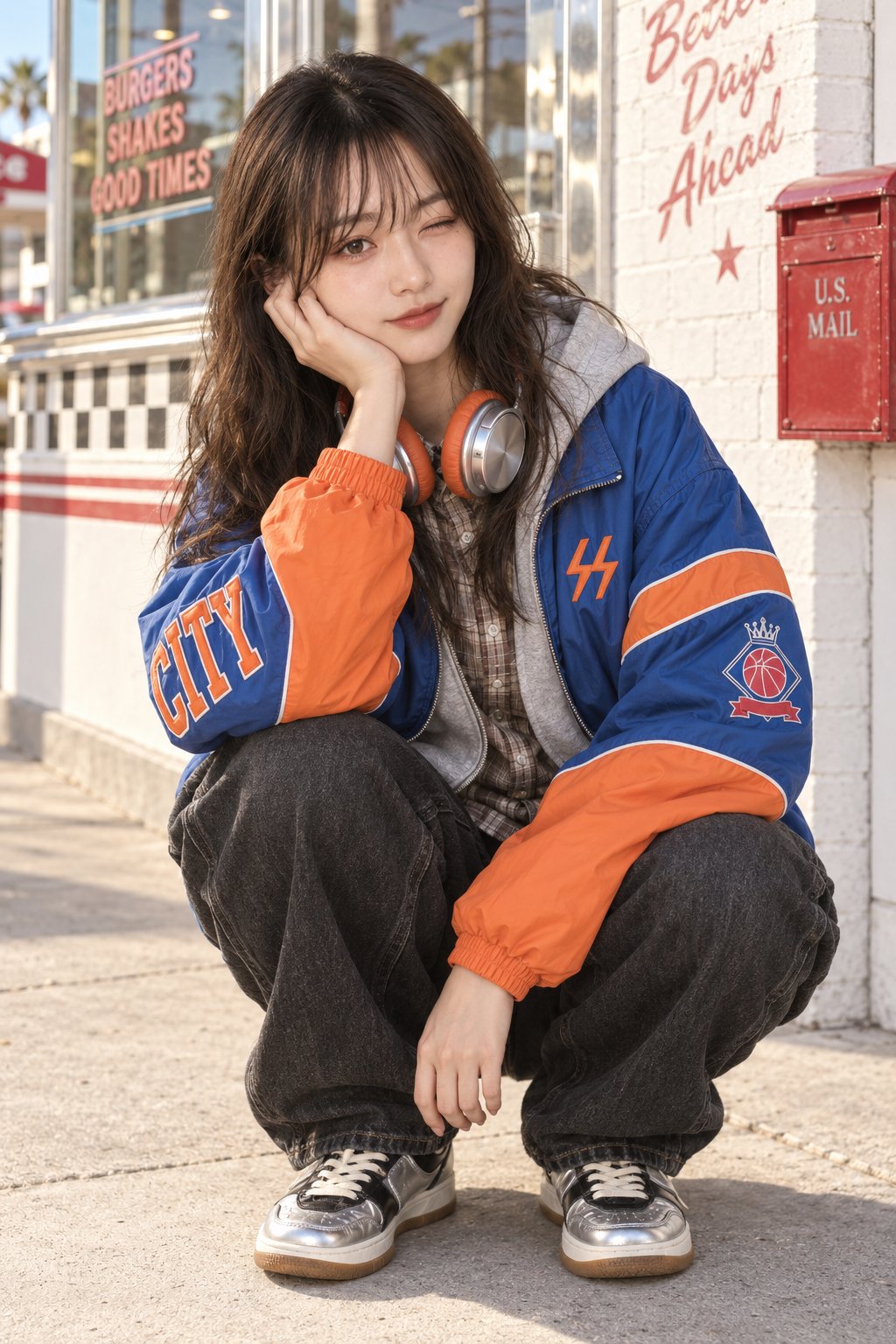
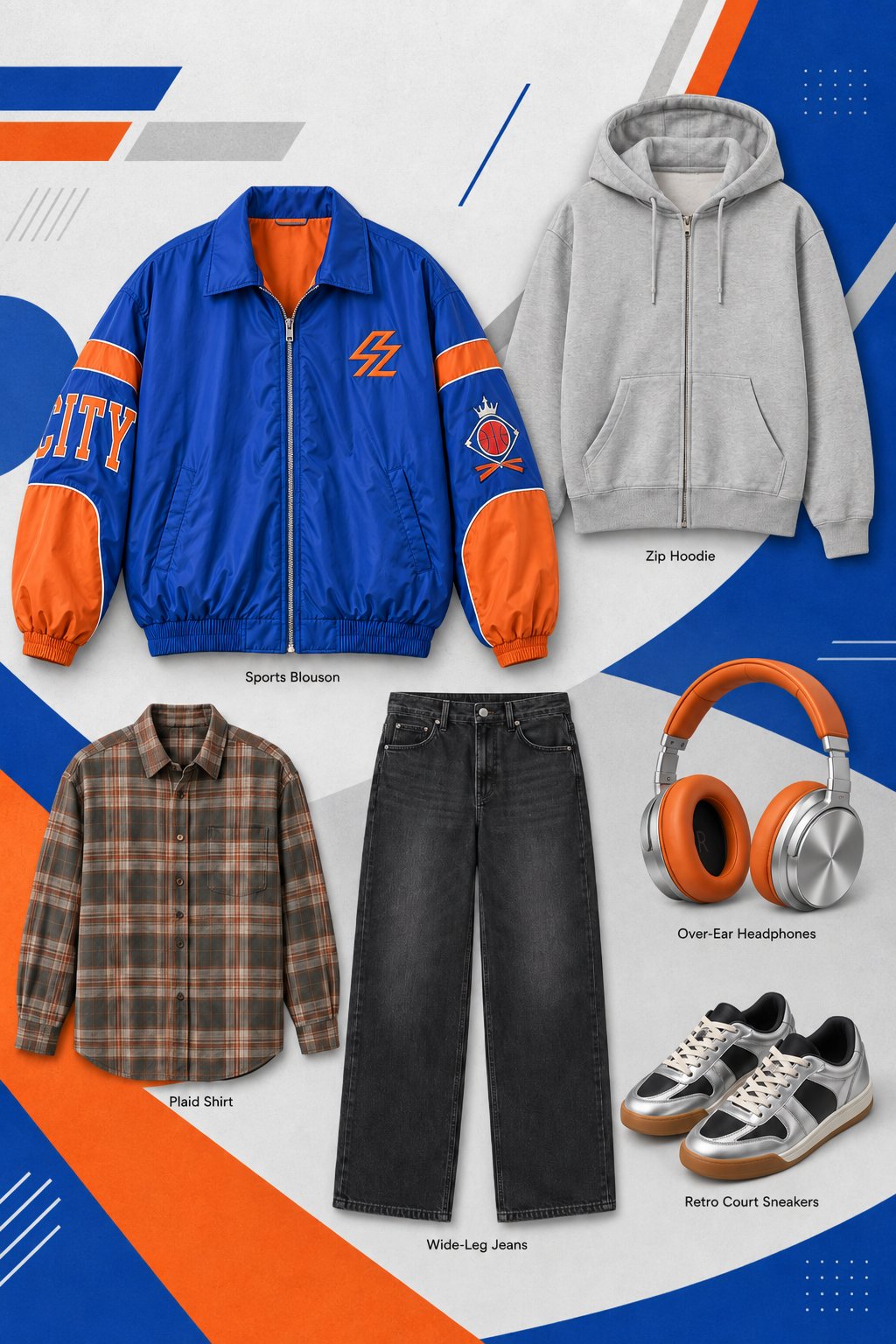
最近の人ほど、お洒落さんが多い🙂 古参の人ほど、お洒落を気にしない気がする🙃 何回同じコーデを着まわすつもりなの? カテゴリごとに交換可能な衣装プロンプトを配布中 生成環境:ChatGPT Images 2.5 #AIart️️️️️️️️️️️️️️️️️️️️️️️️️️️️️️️️️️️️️️️️️️️️️️️️️️️ #プロンプト PROTECTED WARDROBE RULE — HIGHEST PRIORITY: Treat each garment description below as its immutable final product identity. Preserve construction, parts, hardware, material, pattern, and every registered graphic or marking—its surface, side, orientation, scale, colors, content, spelling, and count. FINAL WORN STATE overrides only the scoped item's use, position, side, orientation, fastening, layering, folds, tucks, knots, and drape. If source prose omits or misclassifies a component required by an explicit selection, that selection corrects only that component. A SOURCE GARMENT label describes the unstyled item, never the completed silhouette. Do not redesign, add, remove, mirror, duplicate, relocate, or redraw protected details. Wardrobe: Outerwear / layers: An oversized royal-blue nylon sports blouson with a softly lustrous crinkled shell, dropped shoulders, a fold-down blue collar, a full metal front zipper, roomy hip-length body, side welt pockets and an elasticated blue hem. Both full sleeves have a narrow bright-orange upper-arm band, a broad blue middle section and long bright-orange forearm panels ending in gathered elastic cuffs; fine white piping traces the boundaries between blue and orange. The asymmetric decoration consists of large orange-outlined collegiate slab-serif lettering reading "CITY", with blue interiors, wrapping across the right middle sleeve, a compact orange embroidered emblem on the left chest, formed by two interwoven angular lightning strokes with squared terminals and narrow blue openings, and a smaller embroidered patch on the left middle sleeve: a pink-red oval ball with white curved seams inside a blue-and-white angular diamond, topped by a three-point crown and crossed below by a red ribbon. The back remains blue, and the smooth orange lining continues into the sleeves and front opening. A relaxed light-heather-gray full-zip sweatshirt hoodie in soft medium-weight cotton jersey with a brushed inner face. A substantial two-panel self-lined hood joins the neckline, and a silver metal zipper divides the straight front from neck to hem. The hip-length body has split kangaroo pockets, long set-in sleeves, ribbed cuffs and a ribbed lower band. The back and sleeves continue the plain gray marl surface, with a clean hood opening and no applied graphics. Final worn state: For the first item description above only: - Layering: Final state: keep this garment the complete outer layer over the second selected Outerwear / layers item; open only its original center-front fastening run within existing endpoints. Preserve source neckline, collar, front/rear panels, selected shoulder, sleeve, and body positions, plus fastening inventory, receiver mapping, order, spacing, endpoints, and placket length; add, remove, move, or extend nothing. ZIPPER FINAL STATE — Move the only original slider down to the original bottom stop; separate the original teeth throughout only the existing zipper track. Its complete source span remains exactly between the source-defined top stop and bottom stop. Keep the original zipper tape, teeth, slider, top stop, bottom stop, and narrow front opening at that exact length and anatomical level. Below the original bottom stop, the center-front fabric remains one continuous non-zipper panel; no seam, rib, fold, or edge becomes zipper track. Add, duplicate, remove, or relocate no zipper part. Only layer order, contact, occlusion, and optical transmission change. Every visible garment boundary follows the outer item's source geometry or separately selected fold-return line; inner contours remain optically behind it. Keep panel contact shallow. Relaxed handling within this same operation: Use light stable contact and broader material-correct ease without changing the selected layer order. Top: A relaxed long-sleeve button-front shirt in softly woven muted plaid, with broad dusty-brown and taupe bands crossed by narrower gray-green stripes in a roughly 3:1 width relationship. Fine cream and muted rust lines run through both directions of the check, retaining the same pattern scale across the body, pointed collar and button cuffs. A full front placket, conventional back yoke and curved shirttail hem complete the shirt, with the two rounded front hem sections meeting at the placket. Final worn state: - Front closure: FINAL FASTENING STATE — Fasten every original front fastening. The front edges meet or overlap continuously throughout the original fastening run, with no open slit through that closed section. Engage each closed fastening with its matching receiving part; overlap alone is not fastening. Preserve source count, type, order, spacing, endpoints, and placket length, plus construction beyond both endpoints. Add, remove, or relocate no hardware; keep unrelated fastenings unchanged. Change only the selected registered state and leave every unselected component and connection unchanged. Natural handling within this same operation: Keep the resolved primary closure mechanism and all its parts, count, and order unchanged. Keep the selected connected/disconnected position or zipper-segment map, every open or joined interval, and all endpoints unchanged. Closed positions or zipper segments remain physically joined; open ones remain disengaged. Keep unrelated closures in their source-defined states. Let only the surrounding fabric settle naturally with modest gravity-led folds. - Layering: Final state: place this garment underneath the second selected Outerwear / layers item across the upper body. the second selected Outerwear / layers item remains the outer garment and retains and owns its exact source neckline aperture and edge, armholes, panel connectivity, closure state, straps, sleeves, and selected final hem or fold-return line. This inner garment contributes appearance only through the outer material's existing optical apertures; no inner contour becomes an outer boundary. Only layer order, contact, occlusion, and optical transmission change. Every visible garment boundary follows the outer item's source geometry or separately selected fold-return line; inner contours remain optically behind it. Keep panel contact shallow. Natural handling within this same operation: Use soft stable contact with limited material-correct ease. Bottom: A pair of full-length charcoal-black jeans with a relaxed waist and seat, generous thighs and wide straight legs. Subtle gray washing and fine mottled denim grain soften the dark surface without strong distressing. Muted gray topstitching defines the seams, curved front pockets, coin pocket, rear yoke and two broad rear patch pockets. A fixed waistband with belt loops and a button-and-zip fly completes the five-pocket construction, while plain stitched hems finish the long, loose legs. Final worn state: - Waist position: Position the waistband level across the upper hip bones, clearly below the navel and natural waist. Keep the front, sides, and back at one continuous low-rise height. Do not raise it to the natural waist, drop only one side, or lower it to an underwear position. Footwear: A pair of low-top retro court sneakers with rounded toes, mirror-silver synthetic-leather uppers and black textile underlays. Curving silver toe and vamp overlays taper into pointed ends around dark inset areas, with narrow black edging and visible double stitching defining the panels. Off-white laces cross a black tongue between silver eyestays; black padded collars, silver side quarters and reinforced silver heel counters complete the uppers. A slim white midsole sits above a honey-brown gum rubber outsole that rises slightly around the toe as a rounded bumper. Headphones: A pair of over-ear headphones with large round brushed-silver outer earcup discs, narrow concentric metallic rims and shallow cylindrical silver housings. On the inward-facing side, thick orange-orange leather-like cushions form rounded annular pads around dark recessed acoustic fabric, with a small pale L on the left interior and R on the right interior. The earcups attach through articulated silver side arms to an adjustable arched headband wrapped in matching orange padding, with exposed metal sliders at both ends. The outer discs retain their silver faces independently of the orange inner cushions, and the rotating joints allow the cups to swivel while maintaining their distinct inward and outward surfaces. Final worn state: - Headphones position: Rest the headband behind the neck with both ear cups facing forward and sitting above the collarbones.