GPT-6 Astra memory explained: context compaction and tool-call limits
Explains Astra's three controls — previous_response_id to continue from the last response, context_management to compact history, and max_tool_calls to cap tool calls — so long tasks stop re-reading stale history.

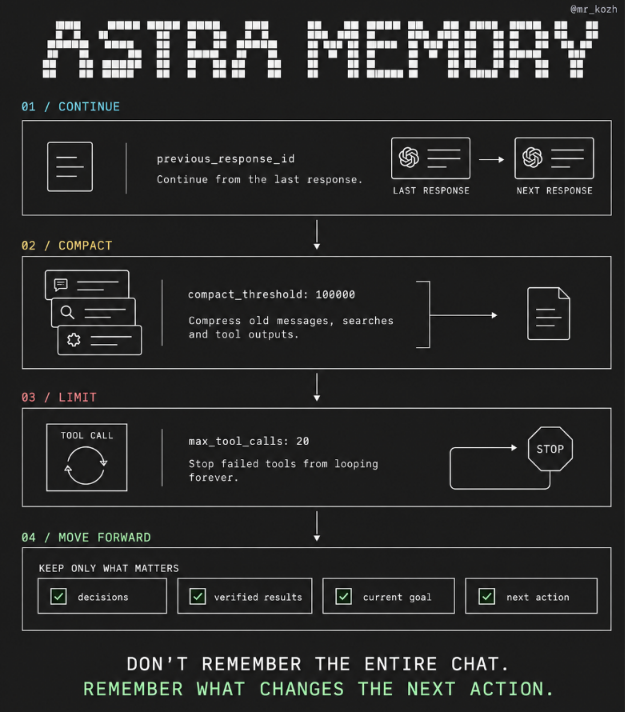
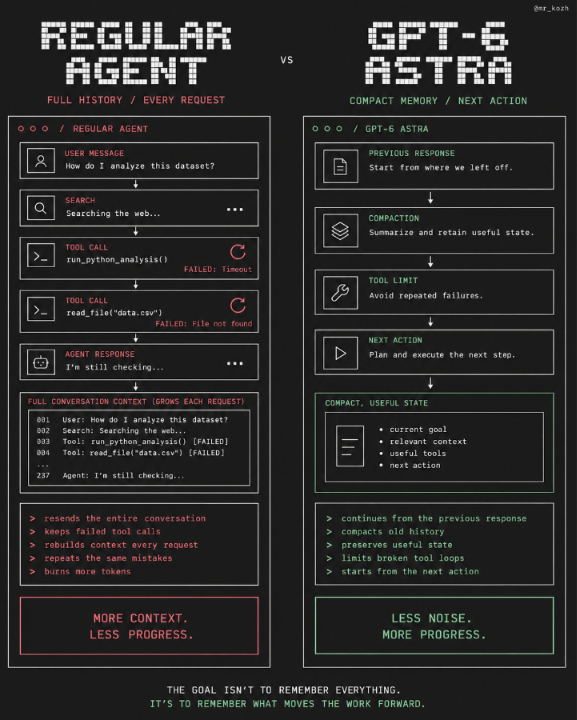
here’s how GPT-6 Astra memory works, simplified most agents don’t run out of intelligence. they drown in their own history. every old message, search result, failed tool call and useless status update gets sent again with the next request Astra gives you three controls: • previous_response_id - continue from the last response • context_management - compact the history after a threshold • max_tool_calls - stop broken loops before they burn the budget the usual workflow rebuilds the entire conversation every time Astra can continue from the last state, compress what happened and carry forward only the useful signal previous response + compacted history + tool limit → context for the next action that means longer coding sessions, research agents that don’t restart from zero and multi-step workflows that don’t pay to reread their own garbage but compaction isn’t memory by magic critical decisions, verified results and unresolved failures still need to be saved explicitly the goal isn’t to make your agent remember everything it’s to make sure it remembers what changes the next action I broke down the exact architecture below ↓
This post quotes another post: x.com/mr_kozh/status/2097221341107925350