Solrouter launches private inference layer on Solana
Solrouter introduced a private inference service running in Intel TDX enclaves, usable through Claude Code, Cursor and MCP, with a trading vault feature.

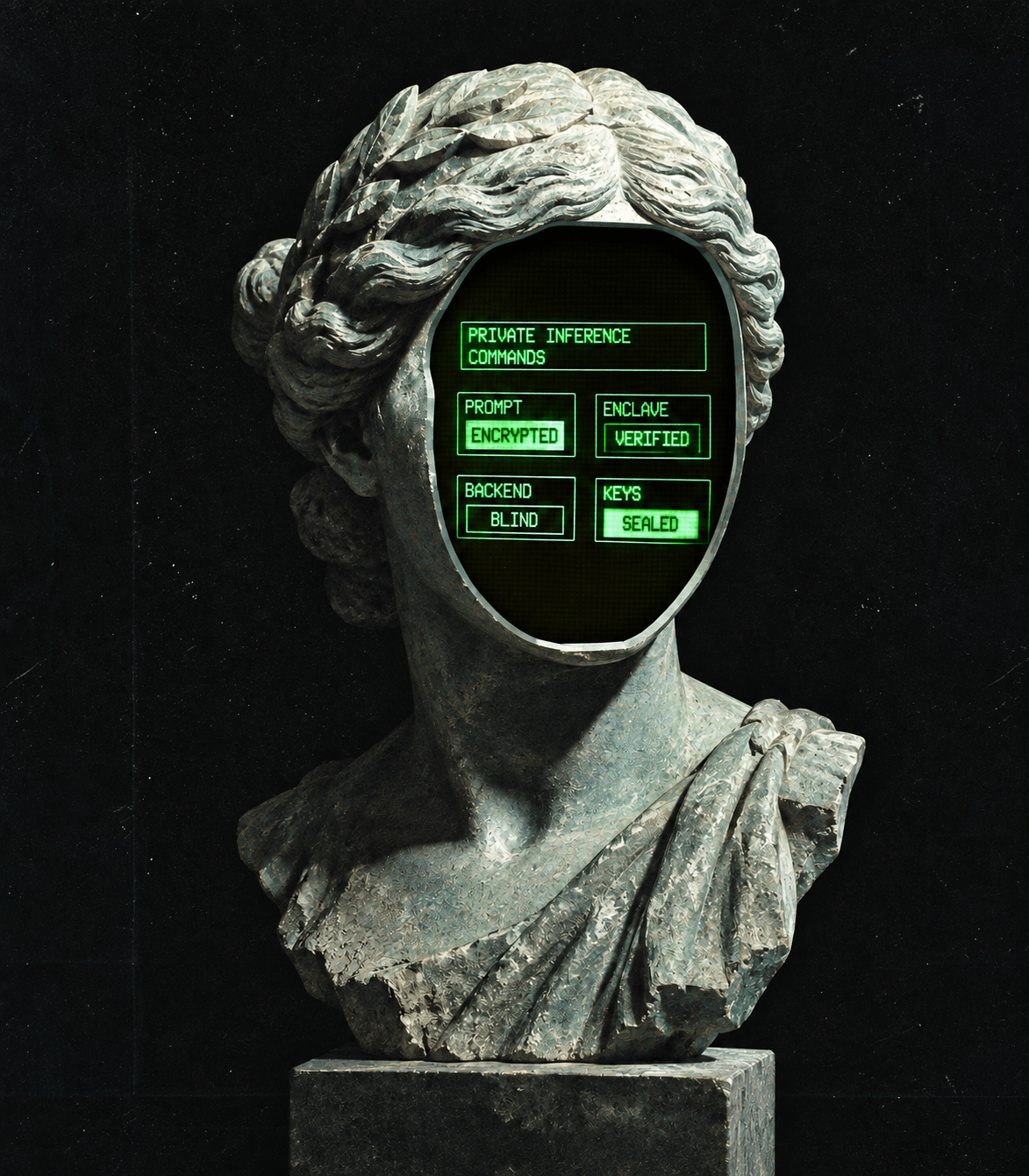

Most “private AI” products still read your prompt. They just promise not to log it. $ROUTER is taking a different approach. The prompt is encrypted on your device, decrypted inside an Intel TDX enclave, and each call produces a receipt on Solana. The token is still only ~$2.2M. ✤ 𝐏𝐫𝐢𝐯𝐚𝐭𝐞 𝐢𝐧𝐟𝐞𝐫𝐞𝐧𝐜𝐞 𝐰𝐢𝐭𝐡𝐨𝐮𝐭 𝐭𝐫𝐮𝐬𝐭𝐢𝐧𝐠 𝐭𝐡𝐞 𝐛𝐚𝐜𝐤𝐞𝐧𝐝: @solrouterai is a private AI inference layer on Solana. The backend receives ciphertext. Inference runs inside a verified Intel TDX enclave through Phala, and users can check the attestation themselves. The models are open-weight: • GPT-OSS 20B • Qwen 3.8 27B • Qwen3 Coder 30B • Qwen 3.5 122B You can use Solrouter through Claude Code, Cursor, Claude Desktop or its own chat app. That lets users keep their existing AI workflow while moving inference into the private execution environment. ✤ 𝐂𝐡𝐚𝐭, 𝐚𝐠𝐞𝐧𝐭𝐬 𝐚𝐧𝐝 𝐭𝐫𝐚𝐝𝐢𝐧𝐠 𝐟𝐫𝐨𝐦 𝐭𝐡𝐞 𝐬𝐚𝐦𝐞 𝐞𝐧𝐜𝐥𝐚𝐯𝐞: Solrouter has sealed chat across Claude, Cursor and its web app, plus an MCP server for connecting private inference to existing agents. There is also a TypeScript SDK. The trading vault is the more interesting part. Users can run: • Phoenix perps • Jupiter swaps • DCA • Price alerts The trading keys stay inside the enclave. Fills and alerts can be sent to Telegram. Router Labs is also live as a demo, combining orchestration, policy controls and a cited receipt for each request. The roadmap includes ISO 27001 and SOC 2. Subscriptions are Free, Pro at $9, Builder at $49 and Scale at $99, paid in USDC on Solana. There is no per-token charge on the subscription plans. ✤ $𝐑𝐎𝐔𝐓𝐄𝐑 𝐭𝐮𝐫𝐧𝐬 𝐮𝐬𝐚𝐠𝐞 𝐢𝐧𝐭𝐨 𝐛𝐮𝐫𝐧𝐬: ROUTER is the payment asset for API calls across the Privacy SDK, Agent Privacy API, MCP and chat. The fee structure: • 50% of $ROUTER fees are burned • 50% of USDC revenue buys $ROUTER on Jupiter • Half of those buybacks are burned • The other half goes to the treasury There is no staking yield or emissions farm driving the token's main utility. Token distribution: • 45% liquidity • 24.5% treasury • 20% team, with a 3-month cliff • 5% OpenServ drop • 5% algorithmic raise Circulating supply was 53% at TGE, with full unlock over 24 months. ✤ $VVV 𝐢𝐬 $𝟏.𝟑𝐁. $PHA 𝐢𝐬 ~$𝟔𝟔𝐌. $ROUTER 𝐢𝐬 $𝟐.𝟐𝐌: Venice ($VVV) has shown that private AI can support a billion-dollar token. It is around ~$1.3B, with 4M users and roughly $100M in annualized revenue run-rate based on figures provided by the team. Then there is Dot ( $DOT ), another privacy AI micro-cap on Base, with anonymous chat and code products plus a live burn loop at around ~$7M. The three projects occupy different parts of the stack. Venice is the consumer-facing private AI product. Phala provides confidential compute infrastructure. Solrouter combines private inference with verifiable receipts, agent integrations and a Solana-native trading product. At ~$2.2M, Solrouter is being valued far below those projects. The sealed path also uses open-weight models rather than GPT-5 or Claude-native models. Context is shorter than the major AI labs, and team tokens begin unlocking after the cliff. Router Labs is still in design-partner testing rather than operating as a large public revenue stream. The core privacy architecture, however, is live. Prompts are encrypted before leaving the user's device, inference runs inside the enclave, and each request can produce a verifiable receipt. NFA. DYOR.