Building a marketing research agent with Grok Bot, step by step
A step-by-step guide to building a marketing agent: define the research questions, connect search, web reading and browser tools, and write a research skill so the agent produces competitor and customer insights.

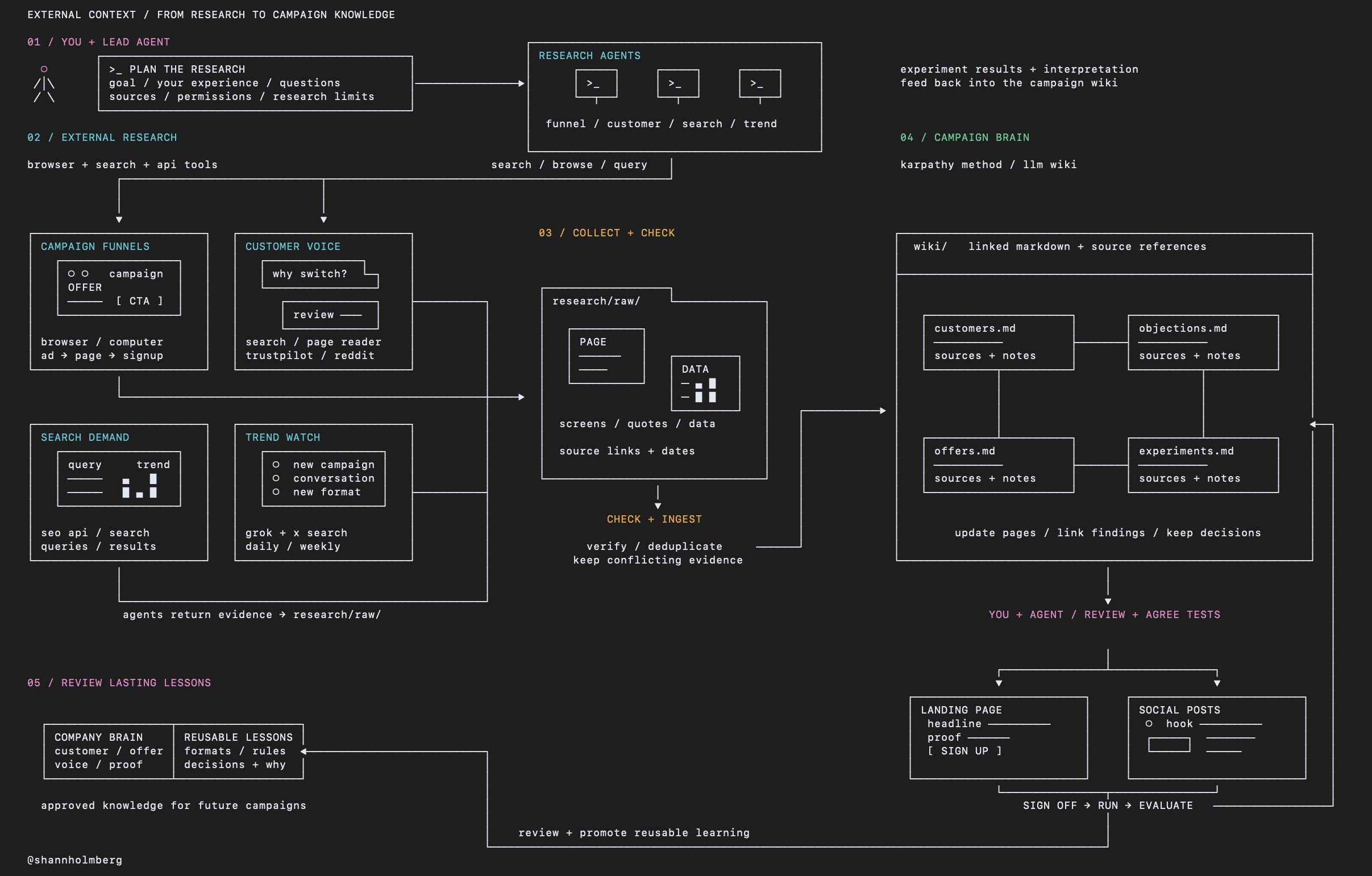
how to set up marketing agents that go out and get the context your campaigns need when you're planning a campaign, your agents can research competitors, explore marketing campaigns and signup funnels, read customer conversations and follow what's happening on the channels you're using give them the tools to access those sources and a process for turning what they find into a campaign knowledge you can use for planning, execution and experiments 1. start with what you need to understand give the agent your campaign idea and goal / objective, then have it read the relevant company knowledge and previous campaigns your company brain holds reusable knowledge about the business. the campaign brain holds the context, decisions and working files for this campaign have the agent ask about your experience before planning the research. you may have already tested an approach or learned something that never made it into a file work together to define the questions the research should answer: > which alternatives are customers comparing us with? > what objections should we address? > how are similar offers being presented? > which formats could suit this audience and channel? > what do we need to understand before choosing an angle? include the audience, market, language and how recent the information needs to be 2. connect the tools and write the research skill your agent needs tools for finding sources, reading pages, inspecting visual experiences and retrieving data connect web search, a page reader, browser or computer access, and relevant data apis through your agent environment test each connection with a small task and check that the agent can retrieve the content and keep its source then write a research skill explaining: > how to turn the brief into research questions > which sources and tools to use > what evidence to collect > where to save the material > when to ask you for direction > when it has enough evidence to return set request and spending limits, with approval required for purchases, account changes or form submissions 3. research marketing campaigns and signup funnels give your codex or grokbot setup browser access to explore how other companies attract users and guide them toward signing up have it follow the public journey from an ad, social post or search result through the landing page and signup flow ask it to collect: > the campaign hook, creative and offer > how the landing page follows up on the message that brought someone there > how pricing, proof and customer objections are presented > the calls to action and steps leading to signup > what information someone is asked to provide > links and visual references for ideas you could test review the examples together and connect useful findings to the relevant pages in your campaign brain 4. research customer language and objections send the agent to relevant trustpilot reviews, reddit communities, category-specific review sites, app stores and comment sections give it questions to investigate, like why customers switch products, what disappoints them and what they wish they had understood before buying keep exact phrases with their sources and dates. have the agent group recurring themes while preserving disagreements and differences between customer types review those findings against your experience, customer calls and support tickets before using them to shape the campaign 5. connect search data and investigate customer queries use an seo data api to retrieve keyword data and search results for the market you're targeting research agents can investigate different groups of queries, such as product comparisons, customer problems and buying questions record the query, location, language and collection date alongside the findings you can also have different search-enabled models investigate those questions and collect the sources they find. when testing how ai products answer customer questions, save the answers and cited sources separately from keyword demand data the lead agent reviews the findings across these tasks and identifies what needs further investigation 6. check trends daily and weekly give the research agent a watchlist based on your audience, category, competitors and active campaigns connect the campaign to a grok bot or grok cli with x search enabled to investigate relevant keywords, accounts and conversations. add browser access where you want it to inspect timelines and visual posts for daily checks, have it look for developments that could affect work already underway: > conversations involving your audience > competitor launches or offer changes > emerging hooks and creative formats > questions your campaign could help answer > relevant events and creator activity use the weekly review to compare findings over time and decide which deserve an experiment each proposed opportunity should include the sources, why it fits your audience and what you could test 7. ingest the research into your campaign brain keep original pages, screenshots, transcripts and data in research/raw/, with their sources and collection dates have the agent review that material and ingest useful findings into wiki/, the campaign brain this follows the karpathy method, his llm wiki approach, applied to a campaign: the agent reads raw sources and builds a wiki of linked markdown pages that it maintains as new information comes in as it learns, it creates or updates linked markdown pages about customers, competitors, offers, objections, campaign examples and experiments those connections form a knowledge graph the agents can navigate a customer objection might link to a competitor's offer, a landing-page decision and the experiment you're running to test it. each page also links back to the evidence behind it have the agent check existing pages before creating new ones, update findings when evidence changes and record conflicting evidence or unanswered questions alongside the relevant topic the campaign brain also holds the brief, decisions, ideas and working documents, with links to designs and performance data kept in other tools 8. review the findings and use them in experiments build evals into the research skill, meaning checks against the requirements you agreed check whether sources support the claims, quotes are exact, dates fit the brief and findings apply to your audience then work through the recommendations together. your experience may change how the research should be used, and that reasoning belongs in the campaign brain for each experiment, record: > the finding that prompted it > what you expect to happen and why > the asset or campaign element you will change > how you will evaluate the result > what needs your sign-off before execution agents creating copy, designs and other assets can follow the wiki's links to the relevant findings, evidence and agreed decisions
This post quotes another post: x.com/1455999313453195265/status/209916672539692…