Opus 5.5 for research and Jev for decisions: a one-person trading stack
The setup splits research and decision-making: Opus 5.5 handles research only, while Jev gates trades through Choice, Score and Noul calls, with position size set by confidence.

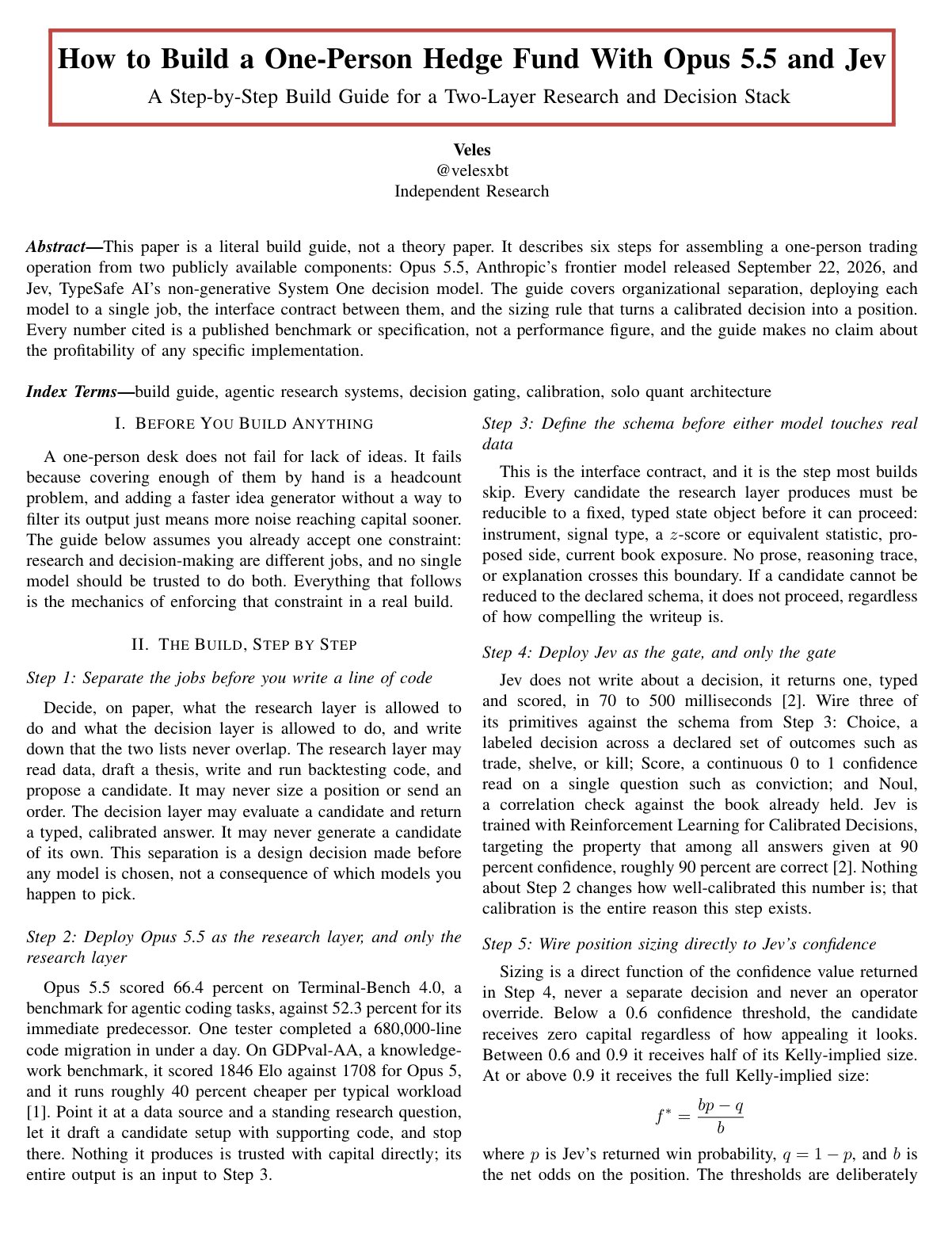
Opus 5.5 + Jev just built the MOST POWERFUL one-person trading stack that exists. Here's how to actually set it up. Opus 5.5 is the first model cheap and fast enough to research at team-scale alone, and Jev is the only one built to never explain a trade, just decide one. That combination is the whole unlock. 1. Split the desk into two jobs, not one. Research and decision are different skills. Don't let one model do both. 2. Let Opus 5.5 own research only. It's already covering ground that used to need a team, 66.4% on Terminal-Bench, a 680,000-line migration finished in under a day, at 40% less cost than the model before it. Point it at data, let it draft and test setups. Nothing more. 3. Reduce every output to a fixed state object before it goes anywhere near capital. No prose crosses the line. Instrument, signal, z-score, side, exposure. That's the whole handoff. 4. Jev owns the gate, not Opus. Three calls: Choice (trade, shelve, kill), Score (conviction, 0 to 1), Noul (correlation with the book). Typed and scored, under 500ms. 5. Size off Jev's confidence, never off how convincing the research read. Below 0.6, zero capital. 0.6 to 0.9, half-Kelly. Above 0.9, full Kelly. 6. Know which variable you actually upgraded. IR = IC x sqrt(BR). Opus 5.5 didn't touch IC, your skill. It touched BR, breadth, how many ideas you can research. Double breadth from 10 to 60 a year and IR moves from 3.2x to 7.7x your skill. Same skill. Most people upgrade the model and expect to get smarter. You didn't get smarter. You got wider. Cover more ground, let the gate keep saying no. Full paper on the architecture below.
This post quotes another post: “Building an HFT trading bot with Jev: one buy/sell decision per block”