GPT Image 2.5 prompt for a Manhattan street-style portrait
An English prompt for a photorealistic editorial portrait of a woman in sportswear against a Manhattan glass facade, with details on figure, outfit, lighting and film emulation, asking for four images at once.
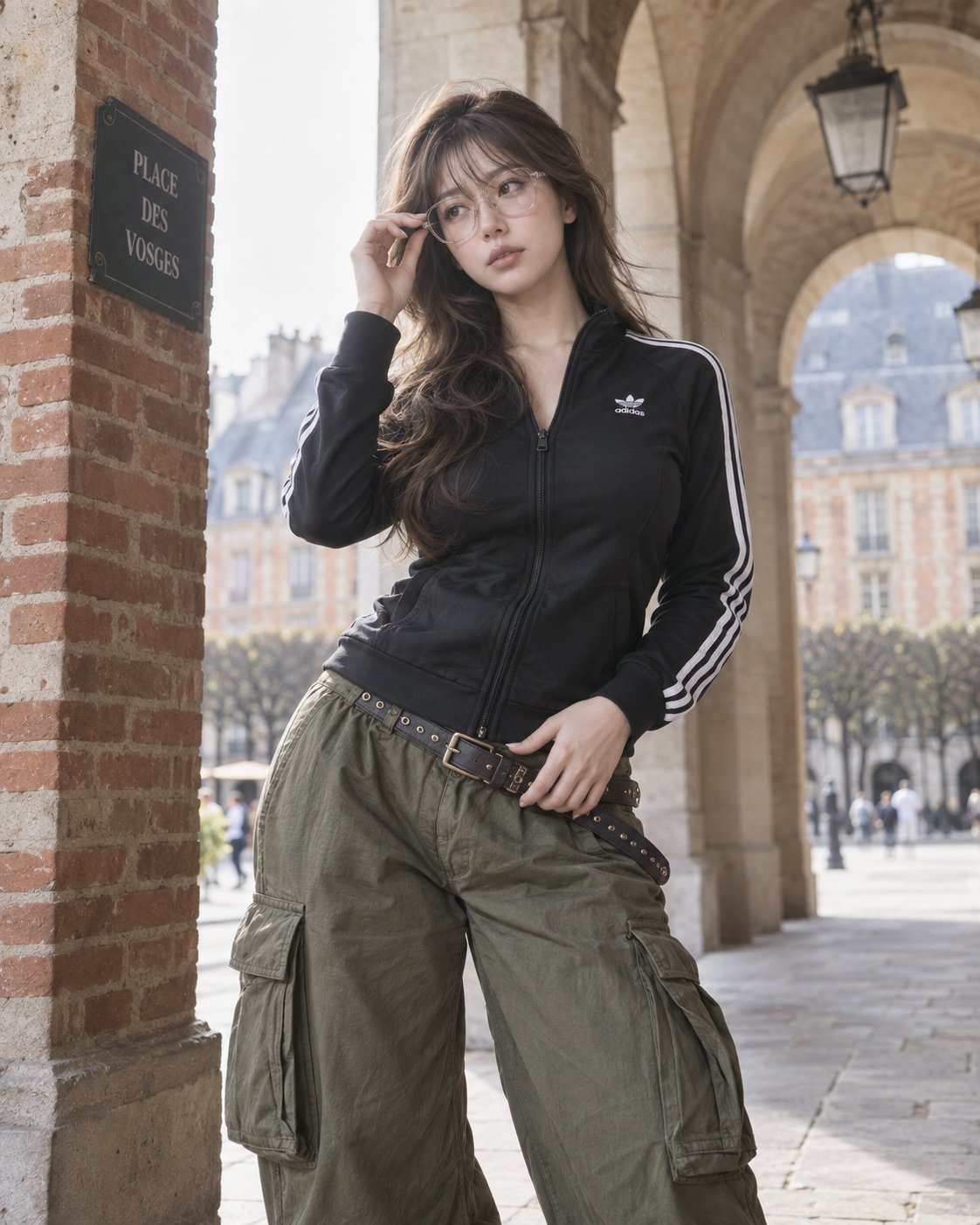
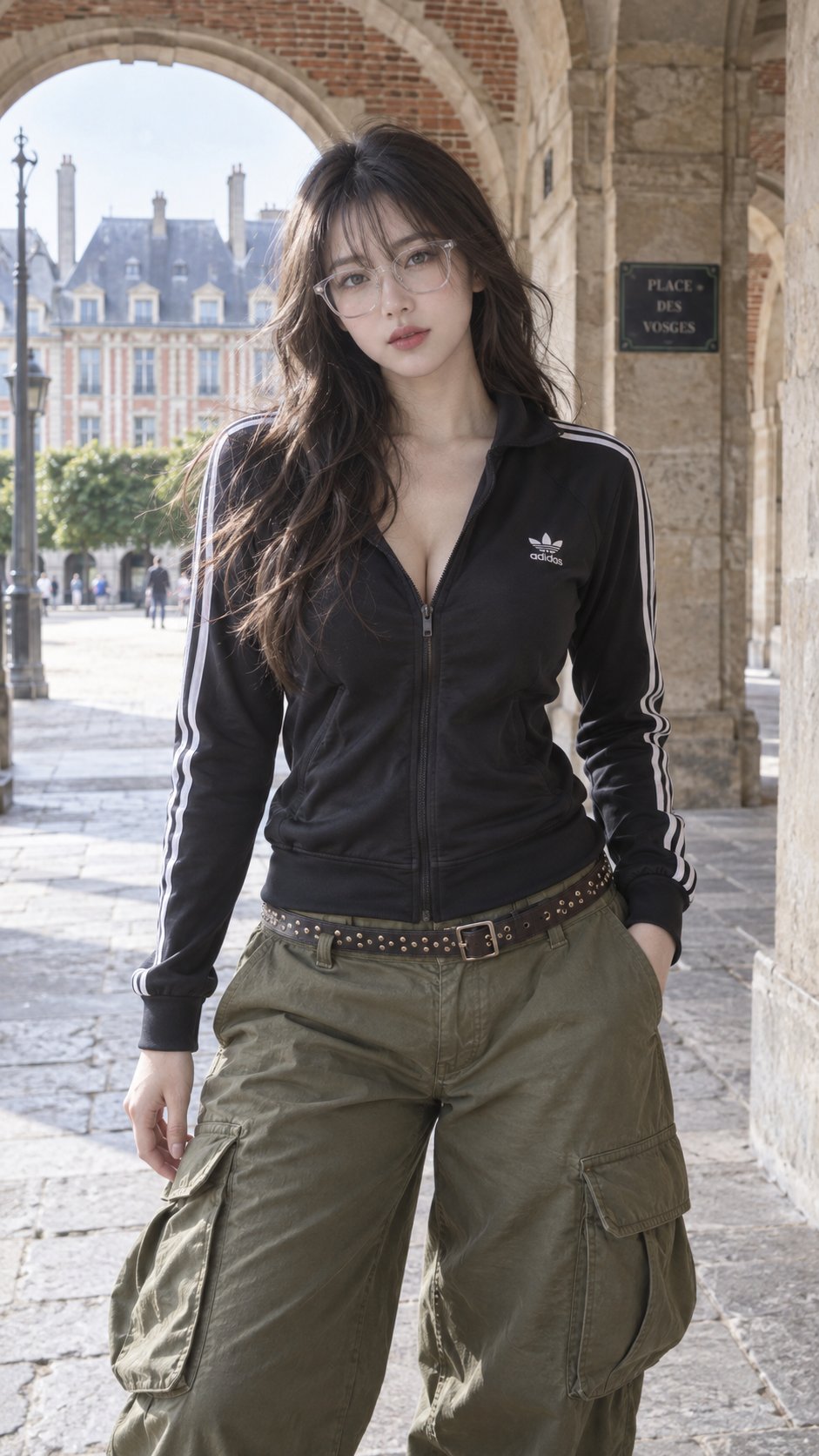
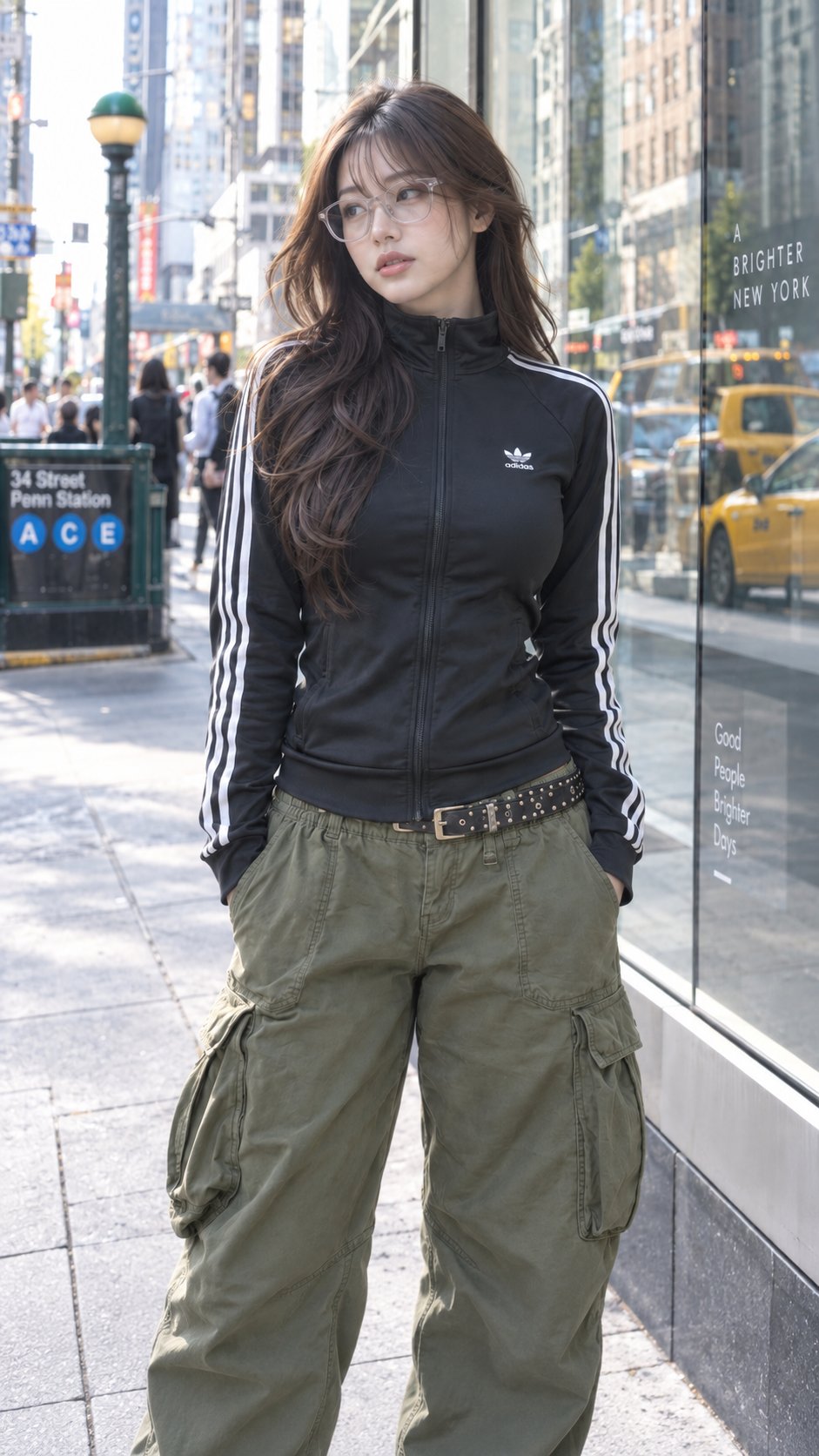
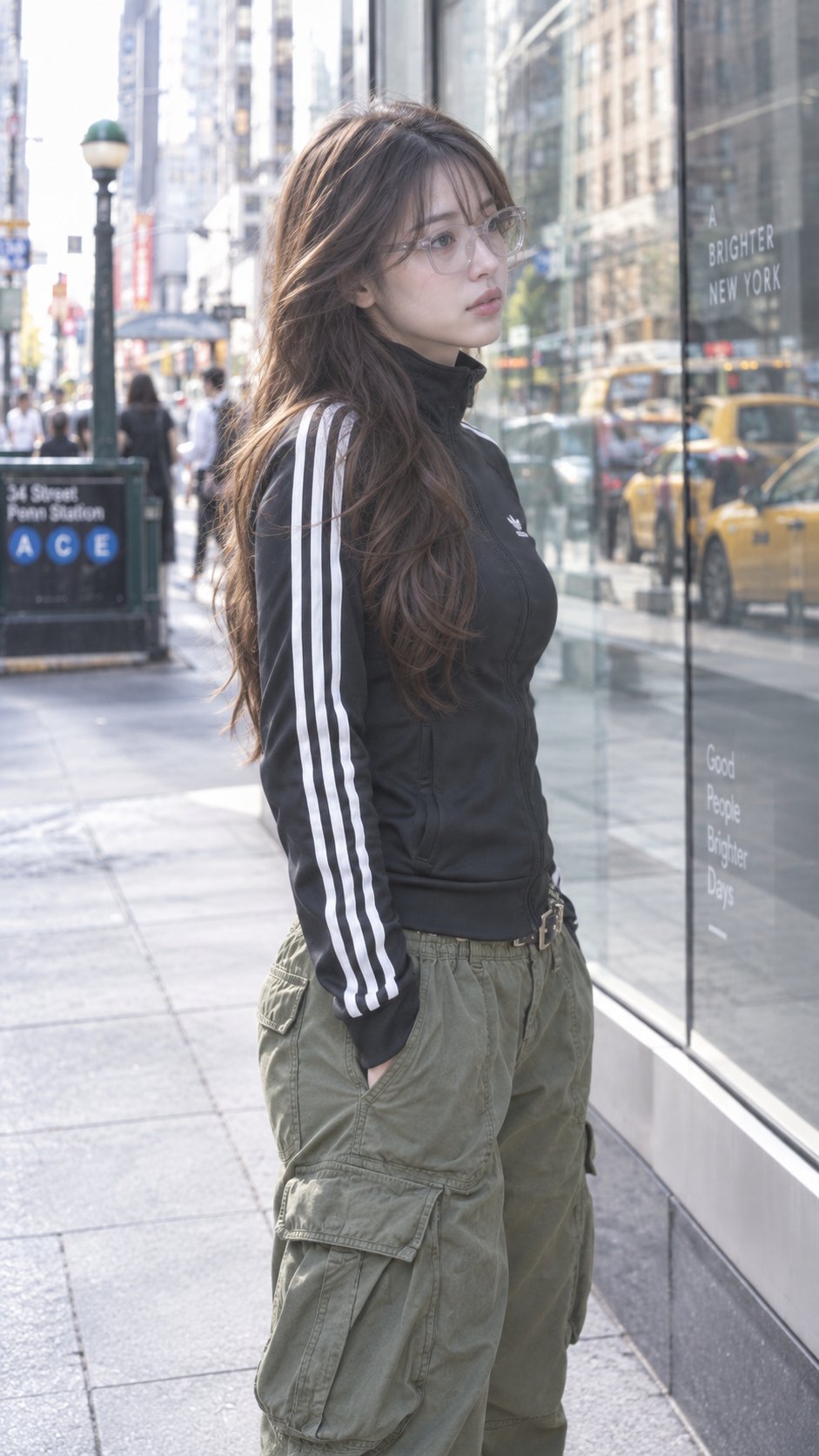
GPT Image 2.5 : Photorealistic editorial portrait. The setting is Manhattan corner glass facade, reflective storefront wall, taxi shapes reflected in glass. She presents a standing pose. Diffused wraparound light, broad soft fill across the subject. Knee-up cowboy shot. A 20s seductive stunning Japanese or Korean woman with clear transparent frame, bold thick-frame glasses, F–G cup bust, lean limbs, narrow defined waist, rounded hips, long legs, dramatic lean hourglass silhouette; height 168–173 cm, bust–waist–hip 94–58–92 cm, long soft waves with see-through bangs, defined romantic wave shape, clean face-framing ends, lightly wind-swept movement, gentle directional flow, a few naturally loose strands, controlled overall silhouette, soft black-tea brown hair, muted brown-black salon tone, thoughtful reflective expression, slightly drawn inner brows, softened eyelids, relaxed lips, subtle facial tension. She wears black fitted adidas zip-front track jacket, stand-up collar, smooth tricot fabric, three parallel contrast stripes from shoulders to cuffs on both sleeves, front zipper fully zipped closed, its hem draping naturally over the waistband and upper portion of the lower garment, partially concealing it, olive green balloon cargo pants, high-volume barrel legs, deep knee shaping, large bellows side pockets, tapered cuffs, decorative studded leather waist belt worn loosely around hips with metal studs and compact off-center buckle. Rinko Kawauchi-inspired airy high-key image language. Fujifilm Provia film simulation, clean balanced color, transparent skin tones, bright natural contrast, crisp daylight-neutral rendering. Please generate four separate photographs of the same moment. For the first photograph, follow the original prompt’s camera angle and composition. For photographs 2–4, freely choose three other clearly different camera viewpoints. All four photographs must have distinct viewing angles, with no repeated or nearly identical viewpoints. Changing only the crop, zoom, or image tilt does not count as a different viewpoint. Keep the same character, clothing, accessories, pose, expression, head direction, scene, lighting, and visual style across all four photographs. Keep the person and the physical arrangement of the scene unchanged; move only the camera. The person must not turn or adjust their pose to face each camera. For photographs 2–4, override only the original camera viewpoint and adjust the framing as needed. Allow perspective, visible background, and natural cropping to change with the camera position. Generate all four photographs together for comparison, as four separate images, not a collage. Keep the cameras outside the frame. --ar 9:16