Google's Gemini 4 Argon: pricing and benchmark results at a glance
Gemini 4's top model Argon is priced at $2/$10 per 1M tokens, supports up to 1M output tokens per run, and is compared with GPT-6 Astra and Opus 5.5 on several benchmarks; Google already uses it internally for memory optimization, quantum subroutines and C/C++ to Rust migration.

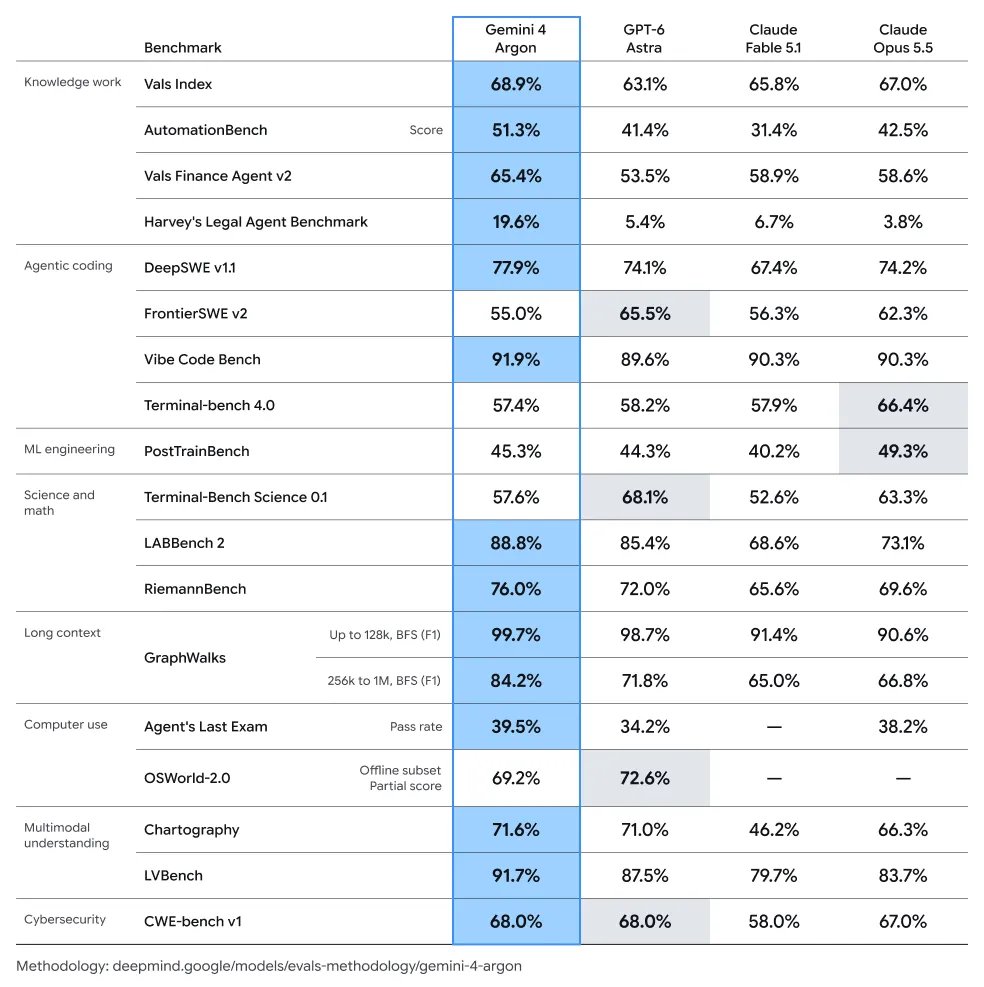
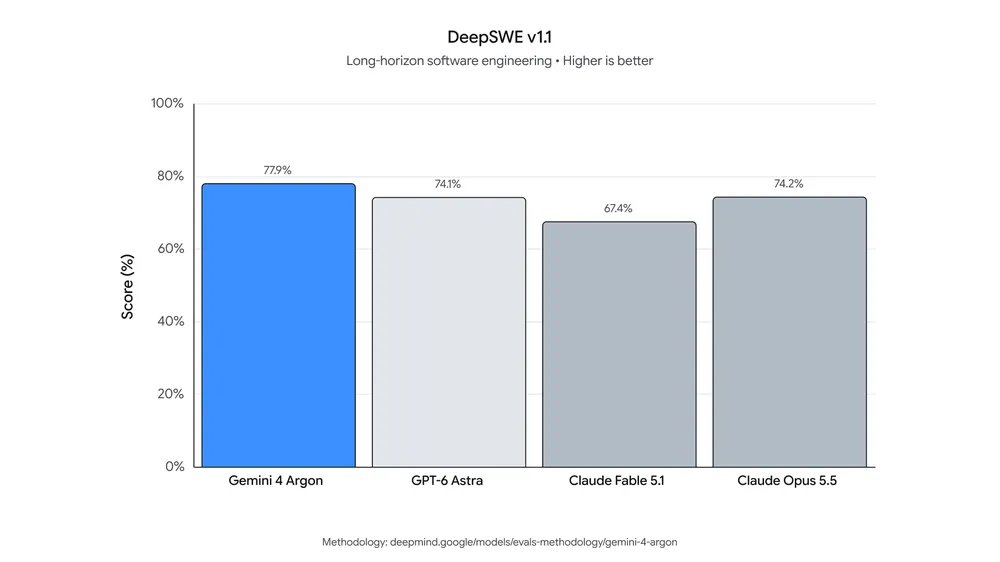
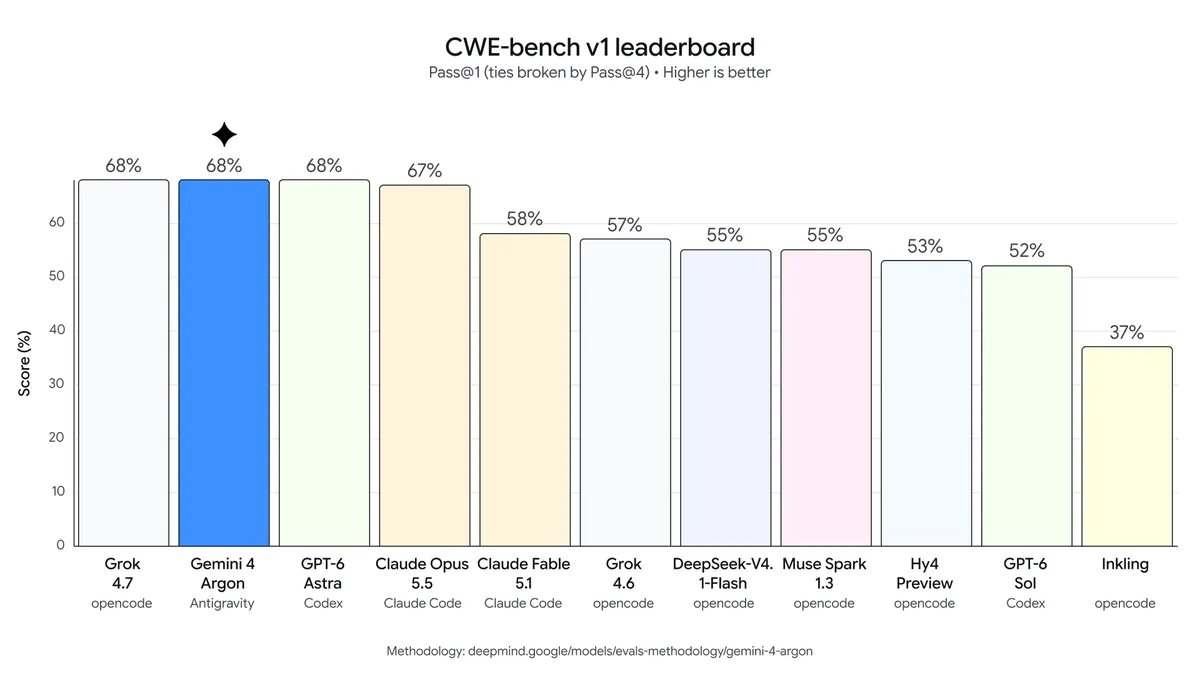
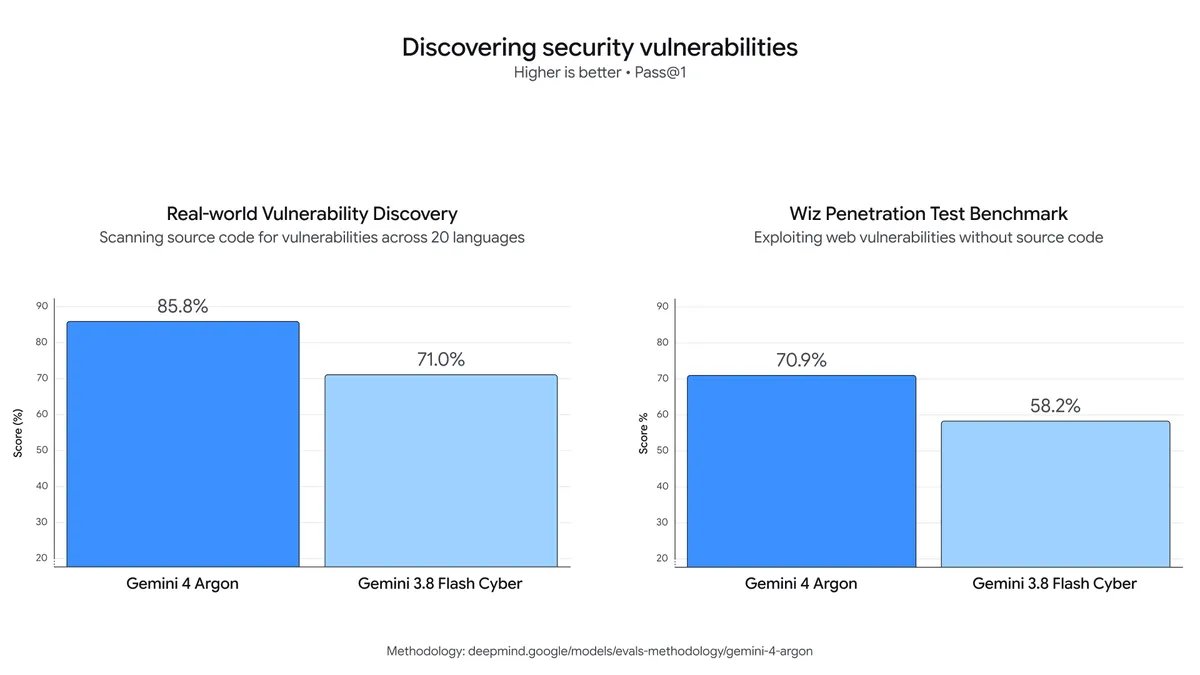
$GOOGL UNVEILS GEMINI 4 ARGON Google unveiled Gemini 4 Argon, its new frontier model and the top model in the Gemini 4 generation. Here’s everything you need to know: Pricing: $2 per 1M input tokens and $10 per 1M output tokens, with cached input priced 95% lower. Output limit: Argon can generate up to 1 million output tokens in a single trajectory, up from 64K previously. Performance: Google says Argon is competitive with OpenAI’s Astra and Anthropic’s Opus 5.5 across coding, enterprise work and cybersecurity. It leads several published benchmarks, including: Vals Index: 68.9% AutomationBench: 51.3% Finance Agent v2: 65.4% DeepSWE v1.1: 77.9% LVBench: 91.7% Internal use at Google: Argon is already being used by thousands of employees. Google says Argon agents identified memory optimizations that freed more than 300 TiB across its data centers, with an estimated 500 TiB to 1 PiB of total savings. It also helped optimize a quantum computing subroutine by 40%, and is being used for large-scale C/C++ to Rust migrations, including 800K+ lines for the Fuchsia Zircon kernel. Cybersecurity: Argon scored 68% on CWE-bench v1, tying for the top score, and Google says it can autonomously find, validate and patch software vulnerabilities. Trusted cybersecurity partners will get access without the model’s normal cyber guardrails so they can use its full defensive capabilities. Availability: Argon is initially rolling out to select cyber defenders and Google’s internal teams. Google says broader access will come later, starting with paid API customers and Google AI Ultra subscribers, but no public release date was given. Google is also participating in the Trump administration’s voluntary pre-release model access process before wider availability