把 harness、知识图谱、Jev 讲成人话的科普帖
用「给 AI 一个工位」的比喻解释 harness、知识图谱、工作流图和 Jev 各自负责什么,并顺带梳理省钱思路。

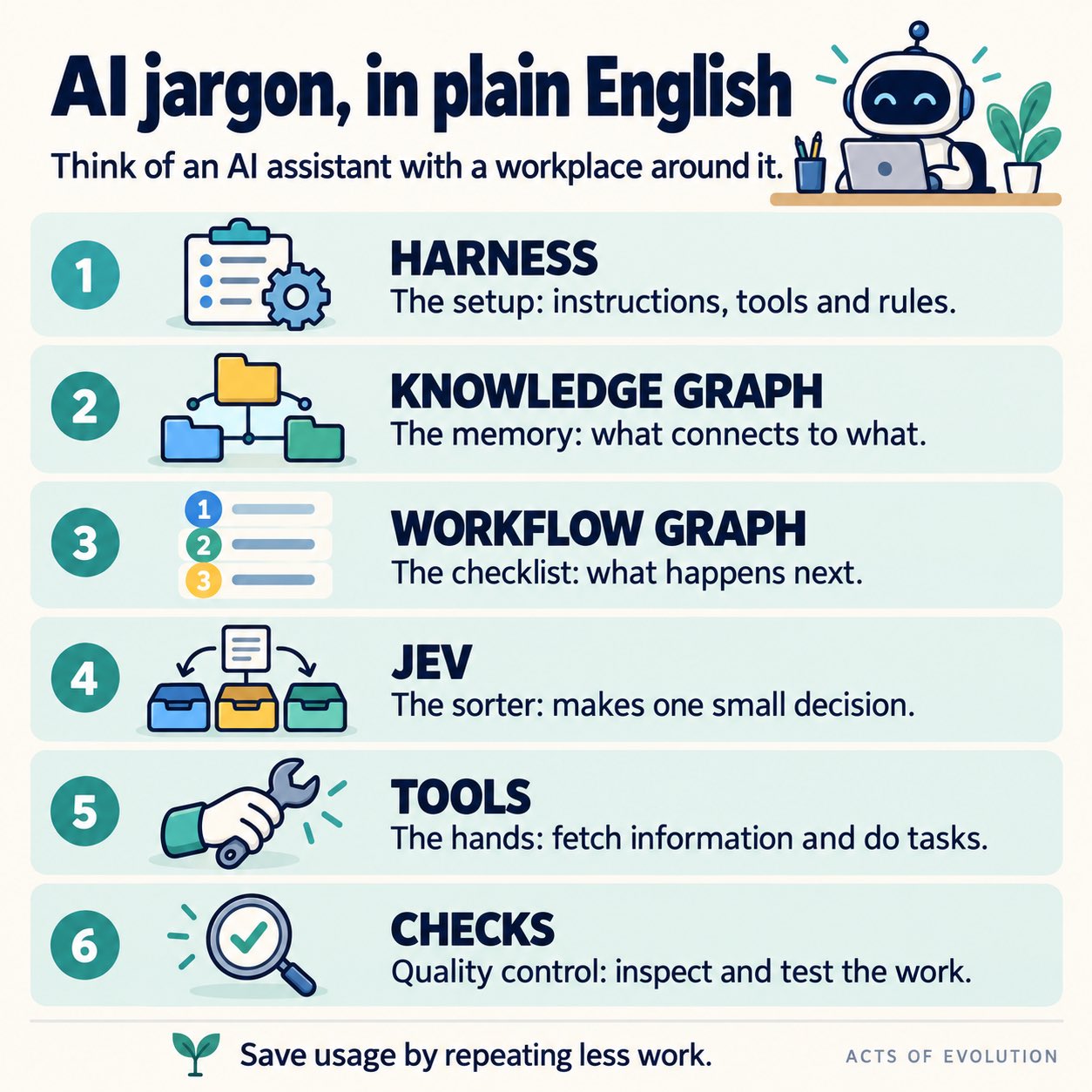
I kept seeing “harnesses”, “graphs” and “Jev” on X—and struggling to understand what people actually meant. Here’s the explanation I needed: Think of AI as an assistant. These tools give it a workplace. 🧰 HARNESS = the setup Instructions, tools, memory and rules that help the assistant complete a job. 🔗 KNOWLEDGE GRAPH = connected memory Who supplies whom? Which company uses which technology? What changed, and when? 📋 WORKFLOW GRAPH = the checklist Get the document → check the evidence → draft an update → request review. LangGraph helps organize these steps and remember progress. 🚦 JEV = the sorter Makes small decisions: “Which category?” “How important?” “Does a person need to check this?” 🗂️ MEMORY TOOLS Graphiti, Cognee and Hindsight help organize and retrieve information. Remembering past work doesn’t mean retraining the AI itself. 🌐 WEB TOOLS Browser Use, Scrapling and Agent-Reach help collect information. Finding something online doesn’t make it true. 🔍 CHECKING TOOLS Langfuse helps show what happened. DeepEval and Promptfoo help test whether the system works. 🏗️ BUILDING TOOLS PydanticAI, Mastra and Agno are different ways to build agents. You don’t need all of them. The useful lesson for me: saving credits starts with repeating less work—reading only what changed, retrieving relevant evidence and reusing completed research. That’s what I’m exploring for Acts of Evolution. Follow along as we map the AI economy and track the nine conditions shaping its boom-or-bust story.