10 种把 JEV 接入营销工作流的具体用法
把 agent 产出的草稿、简报、调研和广告数据交给 JEV 做结构化判断,用于品牌调性检查、广告停投/加预算决策、素材刷新判断和竞品广告分类。

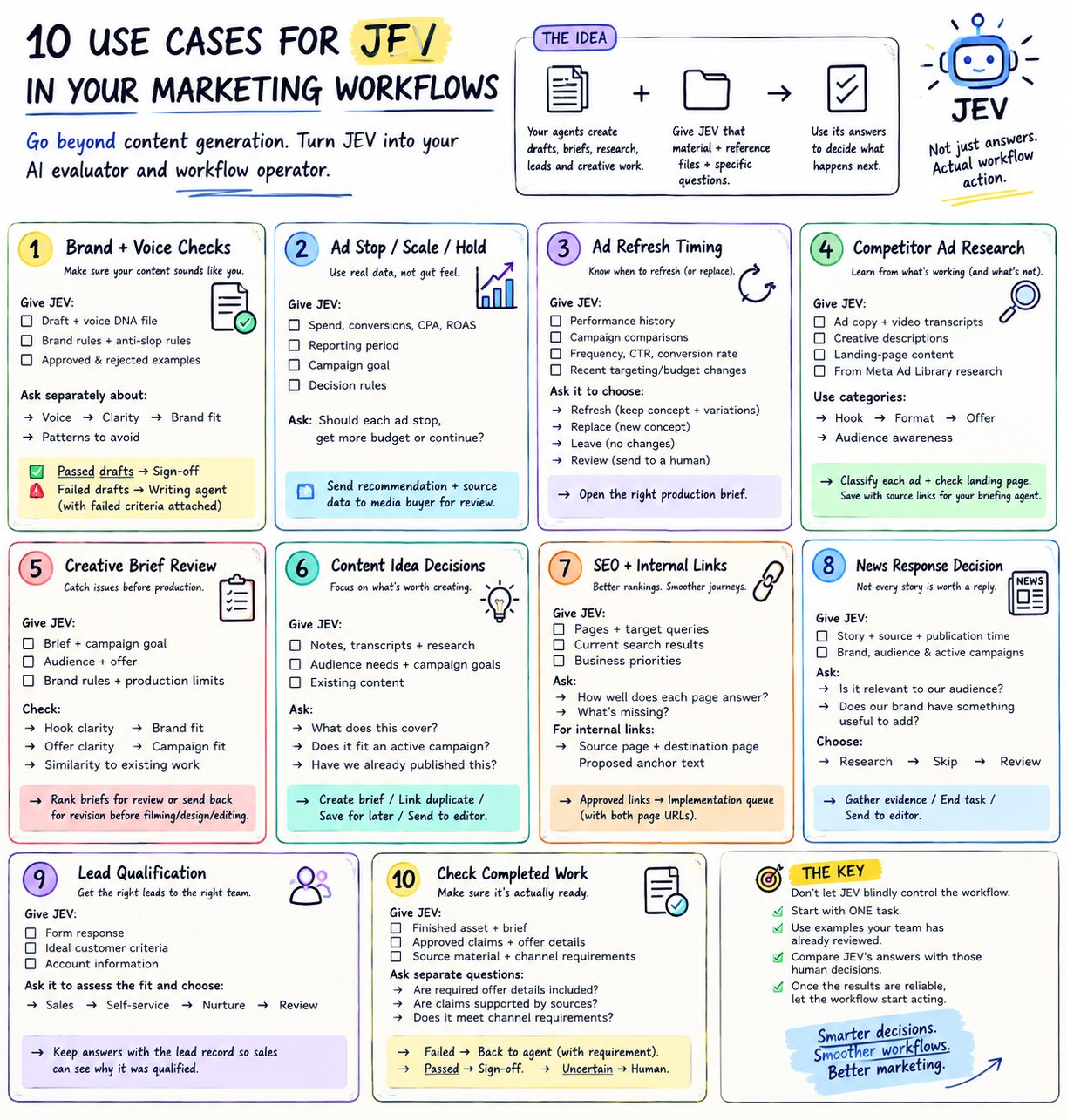
10 ways to use JEV inside your marketing workflows: the idea is simple: your agents create drafts, briefs, research, leads and creative work. give JEV that material + your reference files + specific questions. then use its answers to decide what happens next. brand + voice checks give JEV the draft, voice DNA, brand rules, anti-slop rules and examples of approved/rejected work. ask separately about: → voice → clarity → brand fit → patterns to avoid passed drafts go to sign-off. failed drafts go back to the writing agent with the failed criteria attached. ad stop / scale / hold decisions give it campaign performance data: → spend → conversions → CPA → ROAS → reporting period → campaign goal → decision rules ask whether each ad should stop, get more budget or continue. send the recommendation + source data to the media buyer for review. know when an ad needs a refresh give JEV performance history, campaign comparisons, frequency, CTR, conversion rate and recent targeting/budget changes. make it choose: → refresh = keep the concept + create variations → replace = develop a new concept → leave = no changes → review = send to a human your workflow can automatically create the right production brief. organize competitor ad research have a research agent collect: → ad copy → video transcripts → creative descriptions → landing-page content from Meta Ad Library research. give JEV categories for hook, format, offer and audience awareness. ask it to classify each ad and check whether the landing page actually supports the promise. save the classifications beside the source links so your briefing agent can reuse them. review creative briefs before production give JEV the brief + campaign goal + audience + offer + brand rules + production limits. check: → hook clarity → brand fit → offer clarity → campaign fit → similarity to work already in production use the results to prioritize briefs for review or send them back for revision before anyone starts filming/designing/editing. decide which content ideas are worth developing give it notes, transcripts and research alongside audience needs, campaign goals and existing content. ask: → what does this cover? → does it fit an active campaign? → have we already published this? then your workflow can: → create a new brief → link duplicates to existing content → save incomplete ideas → send uncertain ones to an editor prioritize SEO + internal links give JEV your pages, target queries, current search results and business priorities. ask how well each page answers the query and what information is missing. use that assessment to prioritize updates. for internal links, provide the source page, destination page and proposed anchor text. ask whether the destination actually helps the reader answer a relevant question or take the next step. approved links can enter the implementation queue with both page URLs attached. decide if a news story deserves a response give it the story, source, publication time and context around your brand, audience and active campaigns. ask: → is this relevant to our audience? → does our brand have something useful to add? then choose: → research = gather evidence + create a brief → skip = end the task → review = send to an editor qualify incoming leads give JEV the form response, ideal customer criteria and account information. ask it to assess the fit and choose: → sales = send to sales → self-service = send relevant product info → nurture = enter the right follow-up sequence → review = request missing information/human review keep the answers beside the lead so sales can see why the lead was qualified. check completed agent work before sign-off give JEV the finished asset + brief + approved claims + offer details + source material + channel requirements. ask separate questions: → are the required offer details included? → are the claims supported by the sources? → does it meet channel requirements? failed items go back to the responsible agent with the exact requirement. passed work moves to sign-off. uncertain claims go to a human. the key is not to let JEV blindly control the workflow. start with ONE task. use examples your team has already reviewed. compare JEV's answers against those human decisions. once the results are reliable, let the workflow start acting on them. that’s how you turn an AI evaluator into an actual layer of quality control across your marketing operation.