五款 GPT 模型 XHigh 推理速度实测
实测显示 GPT-6.1 Sol 比 GPT-5.6 Sol 慢 4.6 倍,同时 200 美元档额度疑似减半、新增 500 美元档。

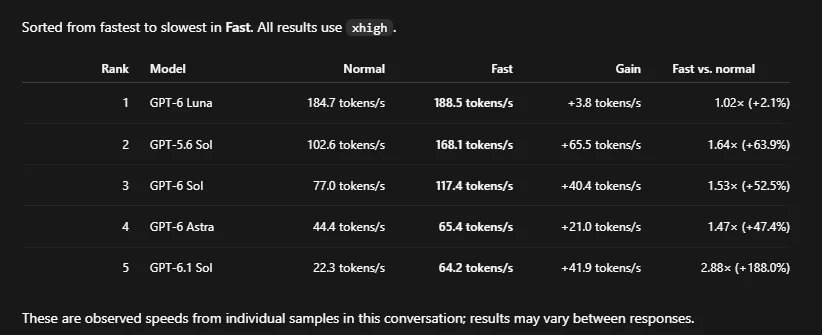
🚨Are we really getting cheaper models, or just slower ones? I benchmarked 5 GPT models at XHigh reasoning. Here are the results: - GPT-5.6 Sol: 102.6 tokens/s (Normal) | 168.1 (Fast) - GPT-6 Sol: 77.0 (Normal) | 117.4 (Fast) - GPT-6 Astra: 44.4 (Normal) | 65.4 (Fast) - GPT-6.1 Sol: 22.3 (Normal) | 64.2 (Fast) - GPT-6 Luna: 184.7 (Normal) | 188.5 (Fast) GPT-6.1 Sol is 4.6x slower than GPT-5.6 Sol in Normal mode, despite being marketed as 4–5x cheaper. Fast mode boosts its speed by 188%, but it still falls far behind GPT-5.6 Sol. Meanwhile, the $200/month plan has reportedly lost half its previous quota, and a $500 tier has appeared. In my experience, coding tasks that older GPT models or Claude finished in an afternoon have taken weeks with Sol 6.1 without satisfactory results. I've also seen Claude Opus 5.5 reach 300–400 tokens/s. These benchmarks don't prove intentional throttling, but the question remains: If a model is 5x cheaper but nearly 5x slower, while quotas shrink and speed costs extra, is it really a better deal? I'd love to hear whether others are seeing similar results in real-world coding and agentic workflow.