Jev 实战指南:把 agent 决策拆成三步
12 页指南讲 Jev 的定位与用法:LLM 写、编排器执行、Jev 决策,用 Choice/Score/Noul 三种原语替换昂贵的 agent 分支判断。

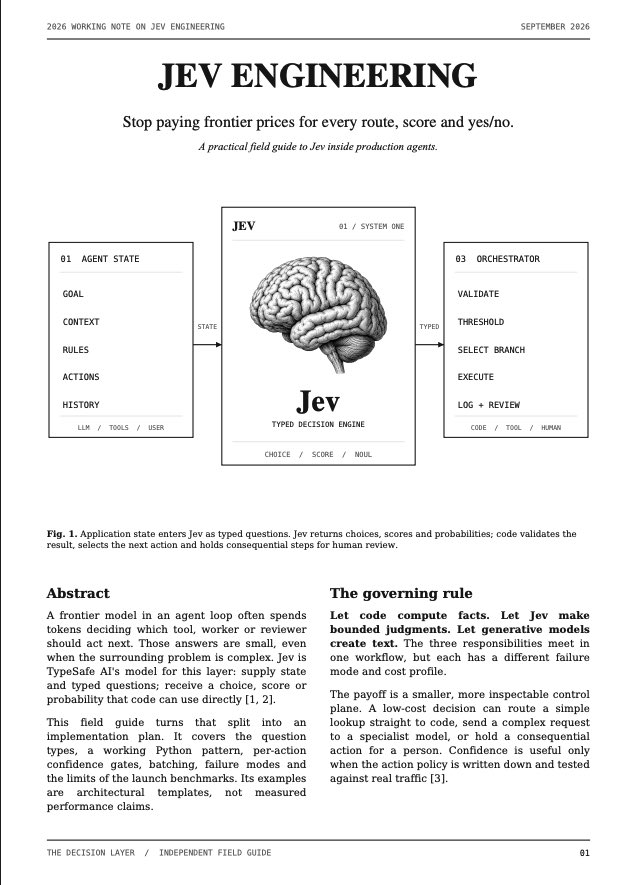
Jev is the missing brain for AI: up to 193x faster and 444x cheaper What is Jev, how to use it and where it actually pays off in my 12-page field guide: step 1 → meet Jev: the LLM writes, the orchestrator executes, Jev decides the next move. split intelligence from execution step 2 → find the tax you're already paying: your frontier model spends tokens picking which tool, worker or reviewer acts next. tiny answers, frontier prices step 3 → turn every agent fork into three primitives: Choice selects one route, Score rates a defined scale, Noul returns the probability of yes step 4 → hand Jev typed state, not a conversation: goal, context, rules, available actions and history go in. typed answers come out that code uses directly step 5 → follow one governing rule: code computes facts, Jev makes bounded judgments, generative models create text step 6 → route every request by cost: simple lookups go straight to code, complex requests go to a specialist model, consequential actions wait for a person step 7 → set confidence gates per action, not per agent: a low-risk draft passes easily, a payment or a deletion needs a much higher bar step 8 → batch decisions instead of serializing them: one state, many typed questions, one call step 9 → wire the orchestrator: validate the answer, apply the threshold, select the branch, execute, then log and review step 10 → treat launch benchmarks as a ceiling: confidence only means something once your action policy is written down and tested against real traffic the result: one expensive agent loop becomes a small, inspectable control plane where frontier models only do frontier work Send this PDF and the article below to your Claude Code or Codex instance and start shipping 200× faster.
这条是引用着另一条写的:「长文:用 Jev 做 agent 的决策大脑来砍成本」