GPT Image 2.5 上下分栏艺术海报提示词
提示词把每张照片做成 4:5 双栏海报:上半保留原照,下半用色块与留白做手绘风艺术重构。

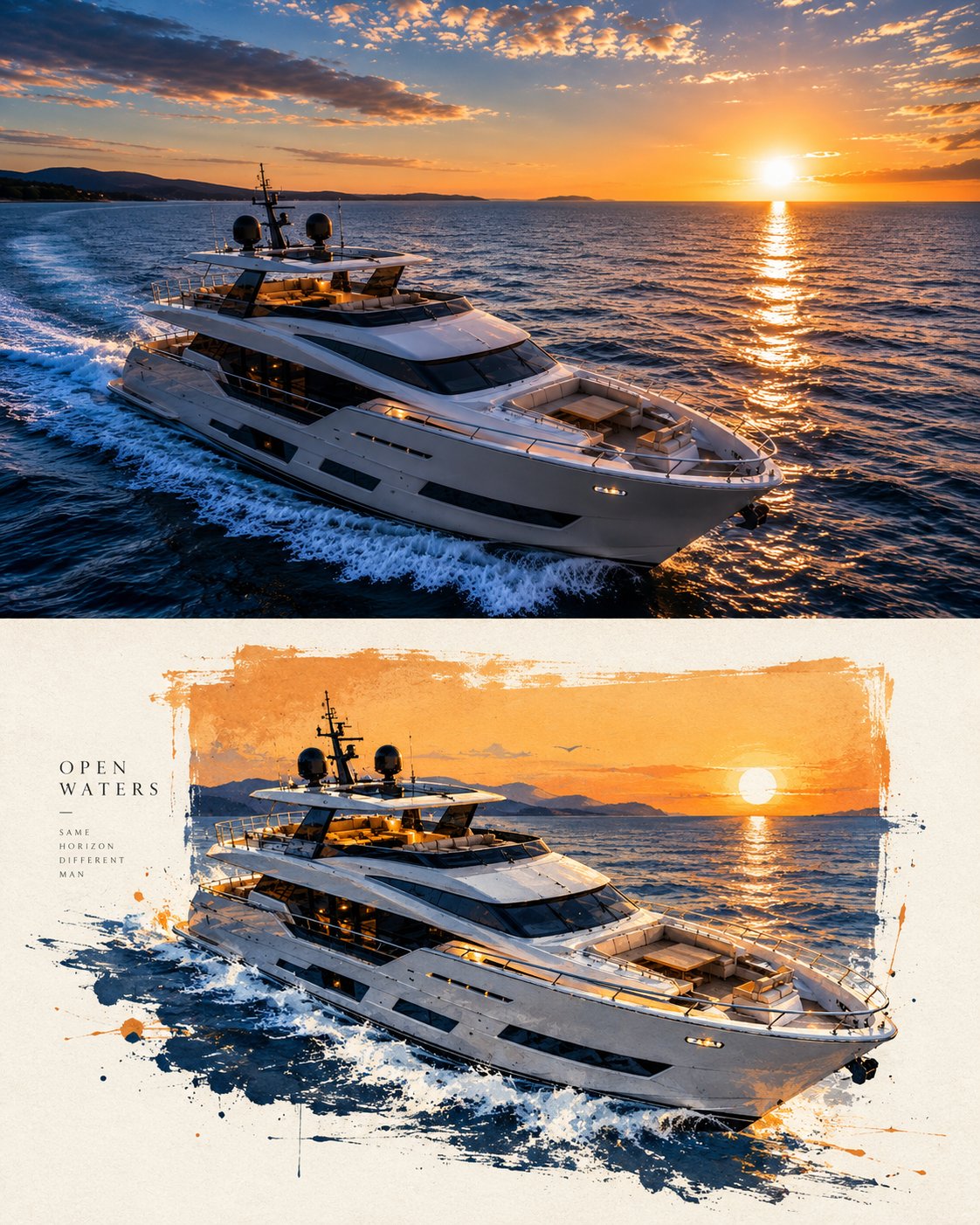
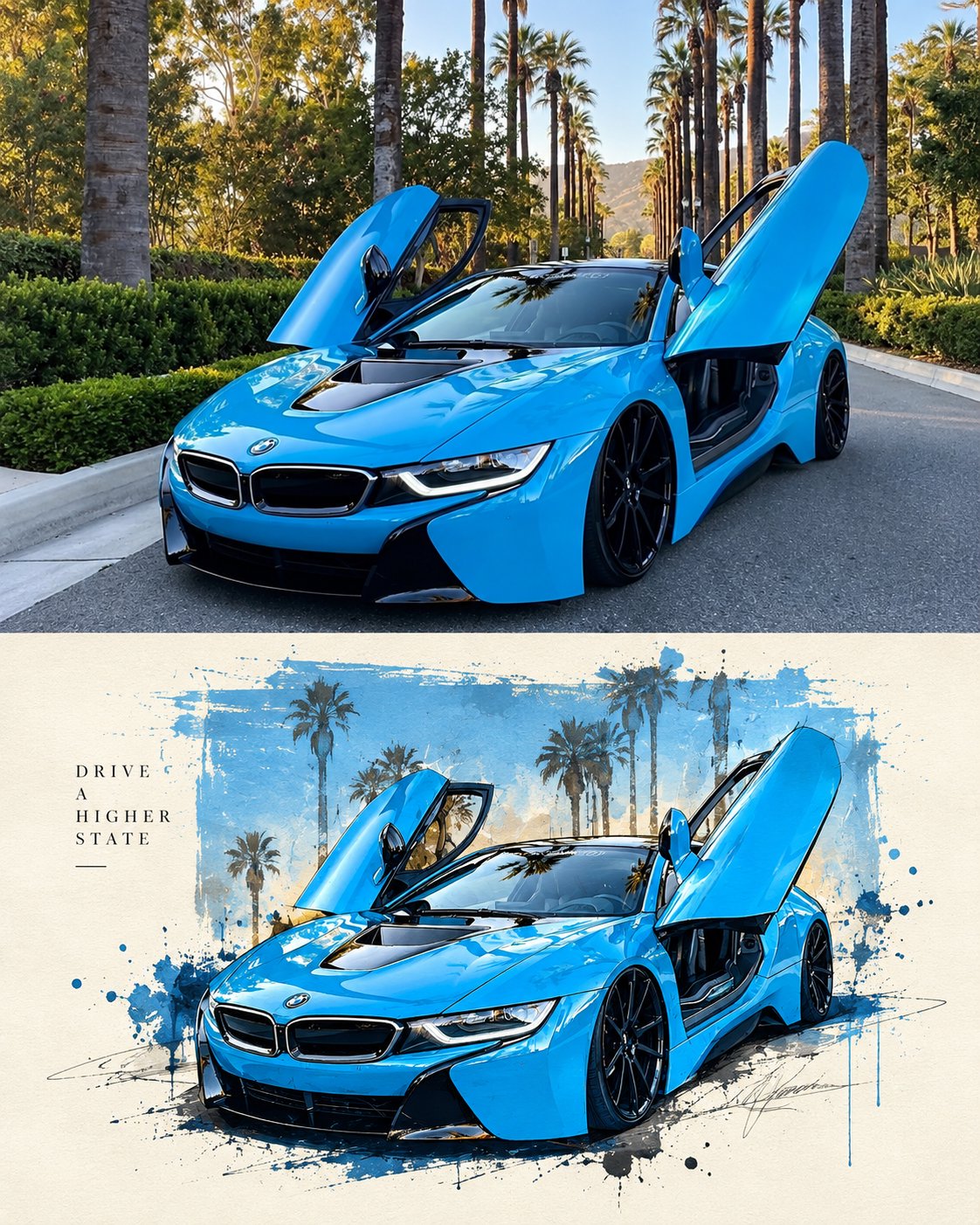
GPT Image 2.5 Prompt: Create a separate high-end poster for each uploaded photo, never combining multiple images. Use a 4:5 vertical format, divided into two equal sections: 50% upper and 50% lower. UPPER HALF — ORIGINAL PHOTO Preserve the subject’s identity, proportions, posture, structure, texture, lighting, and natural atmosphere. Apply only subtle premium color grading inspired by art magazines and gallery photography. Expand the background naturally if needed, but never distort or alter the subject. LOWER HALF — ARTISTIC RECONSTRUCTION Reinterpret the image using only its most recognizable elements—subject, silhouette, posture, structure, movement, and key visual relationships. Remove most of the original background and unnecessary details. Use cropping, simplification, scaling, repositioning, and negative space to create a stronger artistic composition while keeping the connection to the original photo immediately recognizable. Place the reconstruction on a warm white/off-white paper background with an irregular rectangular hand-painted color field. Keep generous white margins around it, with subtle brush marks, smudges, imperfect edges, and uneven paint texture. Allow a few important lines, shapes, leaves, or details to break outside the color field for a refined break-the-frame effect. Use strong negative space and avoid filling the composition. The subject can be centered, offset, cropped, suspended, or edge-aligned depending on its natural visual direction. The lower artwork should feel hand-drawn and editorial, using simplified color blocks, selective outlines, minimal details, and moderate abstraction rather than realism. Extract 2–4 memorable colors from the original photo and build a cohesive, bright yet restrained palette. Add only minimal editorial typography when appropriate—short words or phrases inspired by the subject, location, action, or emotion, placed subtly within the negative space. Overall, create a premium contemporary art-magazine/gallery aesthetic focused on negative space, handmade color fields, artistic reduction, break-the-frame composition, and visual storytelling. Avoid clutter, excessive background details, literal duplication, stiff layouts, hard edges, and template-like designs. Less is more.