Jev 单次决策比前沿模型便宜 76 倍,以及杰文斯悖论为何让账单反而变高
作者用杰文斯悖论解释:决策便宜到 0.04 美分后你会做更多决策而非省钱,并列出 DiffJury、jev-curate、jev-ultrafast 三个围绕「大量小决策」的项目,提醒置信度不等于正确、需设阈值回退大模型。

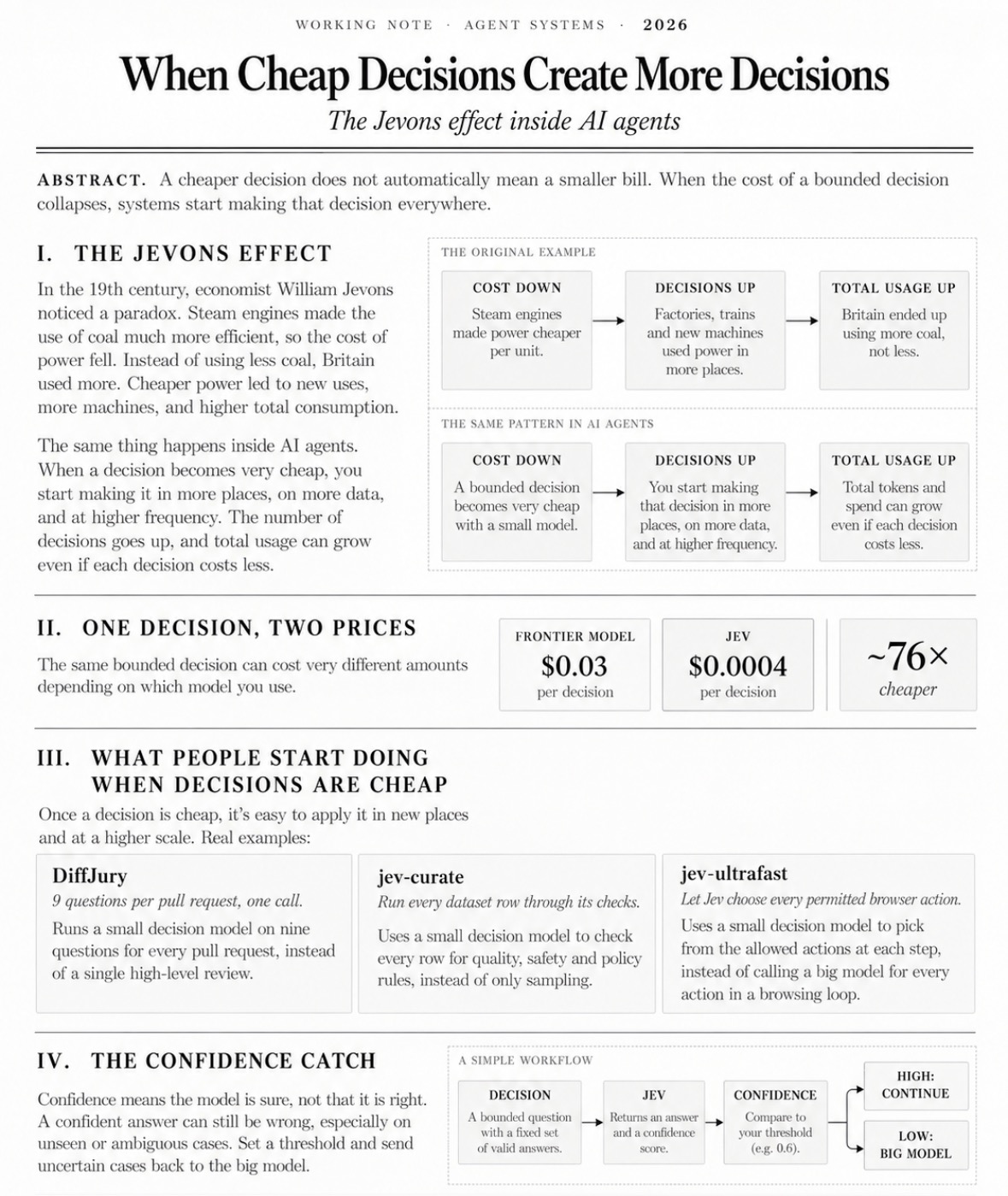
On one task, a Jev decision cost 76 times less than a frontier model's. In 1865 an economist explained why your bill may still go up on that task, one decision cost about 3 cents on a frontier model and about 0.04 cents on Jev William Jevons noticed that when steam engines got more efficient, England burned more coal, not less, because cheaper power found new uses. Jev is named after that idea so when a decision costs almost nothing, you stop rationing them and start making far more. three projects built around many small decisions: → DiffJury asks nine questions about each pull request you give it, in one call → jev-curate runs every row of a dataset through its checks → jev-ultrafast lets Jev pick every action in a browser one catch: a high confidence number means Jev is sure, which is a separate thing from being right. set a threshold, and anything under it goes back to the big model tonight: find one place where you only check a sample, and price checking all of it. input costs $0.042 per million tokens, and output is free full Jev guide below
这条是引用着另一条写的:x.com/imryven/status/2104255840819491030