TxBench 寡核苷酸发现基准:Astra 加 Codex 得分最高
新基准用 113 项评测考察 AI agent 做 ASO/siRNA 药物发现决策,GPT-6 Astra 配 Codex 以 55.5% 平均通过率居首,但仍有 38 项三次全败。

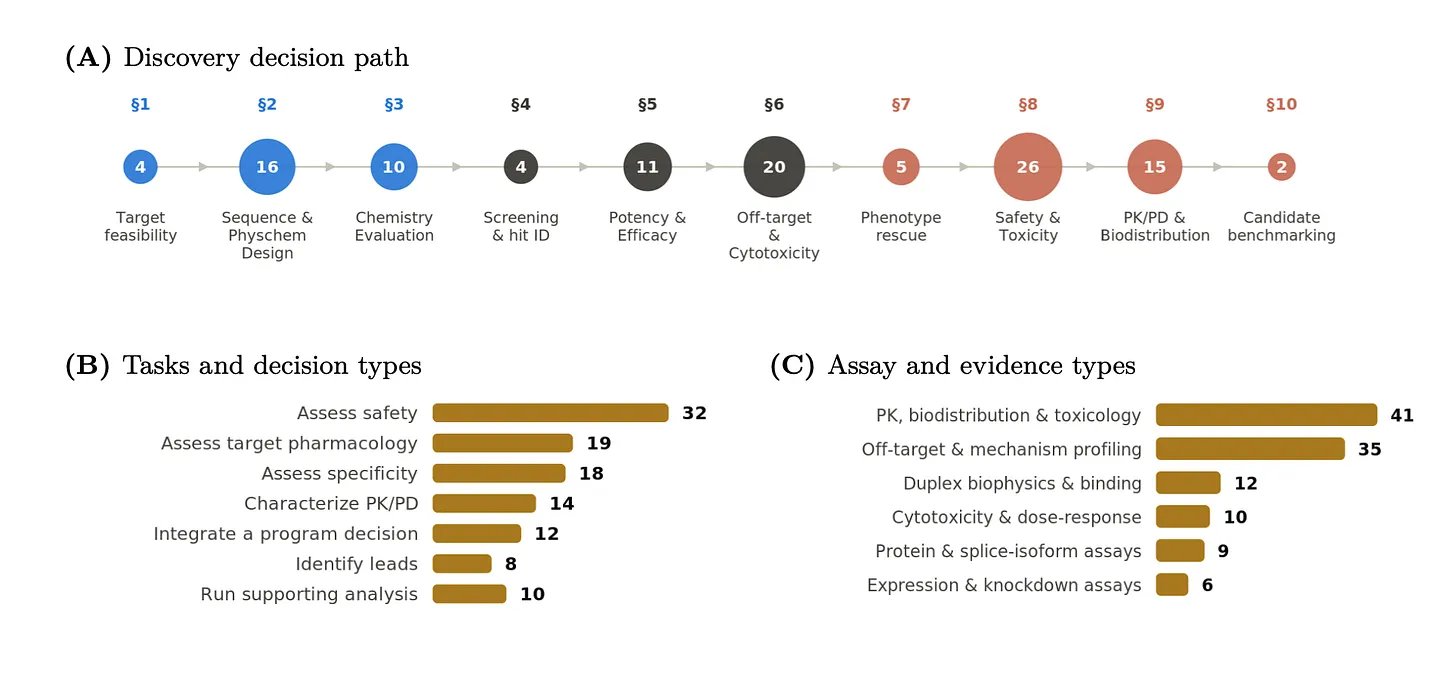
Can agents help develop therapeutic ASO/siRNAs? We introduce TxBench-Oligonucleotide Discovery, a benchmark for testing whether AI agents can make scientific decisions across the discovery of antisense oligonucleotide (ASO) and small interfering RNA (siRNA) therapeutics. 113 evaluations span ten stages across 21 discovery programs: from target feasibility, sequence design, and chemistry selection through screening, potency, off-target profiling, phenotype rescue, preclinical safety, and in vivo pharmacology. Oligonucleotide discovery requires interpreting efficacy alongside specificity, toxicity, and drug exposure. Sequence, chemical modifications, and delivery all affect how an experimental result should inform the next decision. Some concrete examples: - An off-target effect may reflect sequence-dependent silencing or a chemistry-driven effect unrelated to hybridization. - Liver toxicity may arise from phosphorothioate backbone modification or a particular sequence motif. - Loss of sustained knockdown may reflect target re-expression or declining drug exposure. Agents received experimental data and worked without internet access. Across 21 model–harness configurations, GPT-6 Astra with OpenAI Codex achieved the highest mean pass rate at 55.5%, followed by GPT-6 Astra with Pi at 53.4% and Claude Opus 5 with Claude Code at 48.1%. Even the strongest configuration failed all three attempts on 38 of 113 evaluations. Performance also varied by discovery stage. Among the highest-scoring configurations from each model family, Astra led on screening, potency, and off-target profiling, while Opus led on target feasibility, sequence design, chemistry evaluation, and phenotype rescue. Manuscript: http://latch.bio/txbench-oligo Leaderboard: http://benchmarks.bio/txbench-od