GBENCH:GPT-6.1 Terra 编码成绩介于 Gemini 4 Argon 与 Opus 5.5 之间
GBENCH 上线 GPT-6.1 Terra 编码结果,称其处于 Gemini 4 Argon 与 Claude Opus 5.5 之间,并讨论各模型编码助手体验差异。

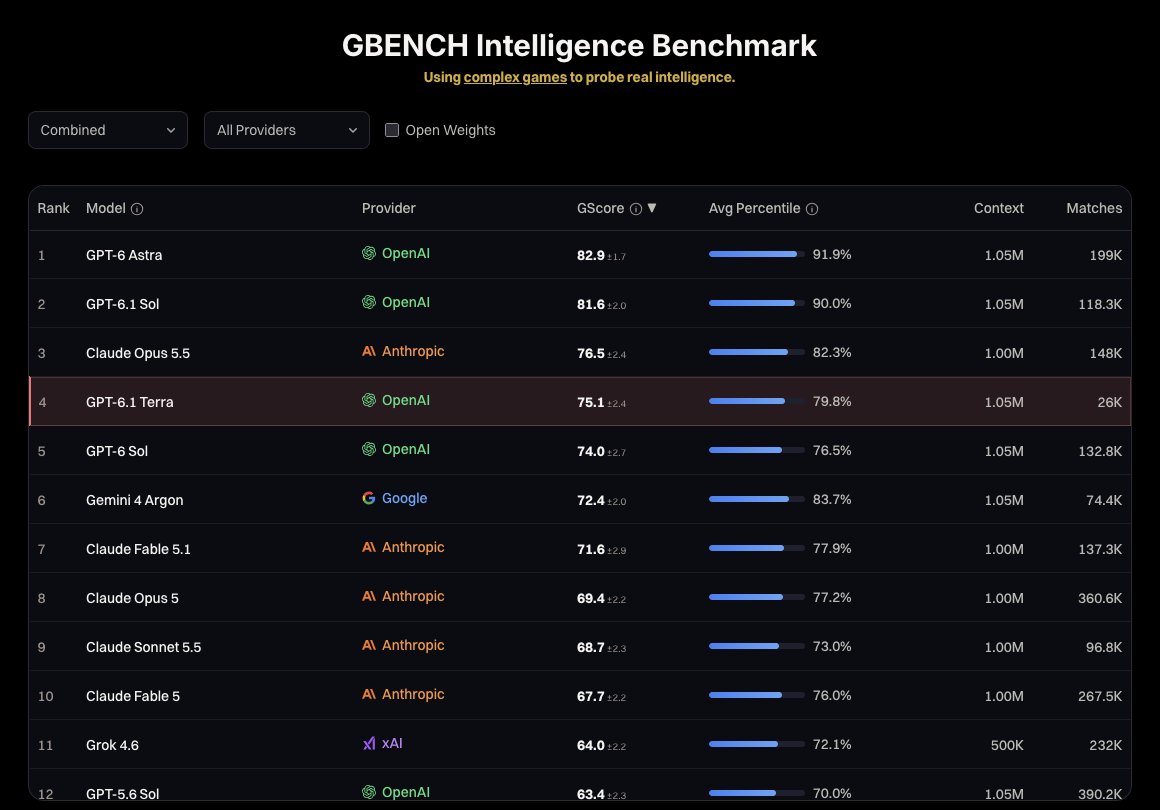
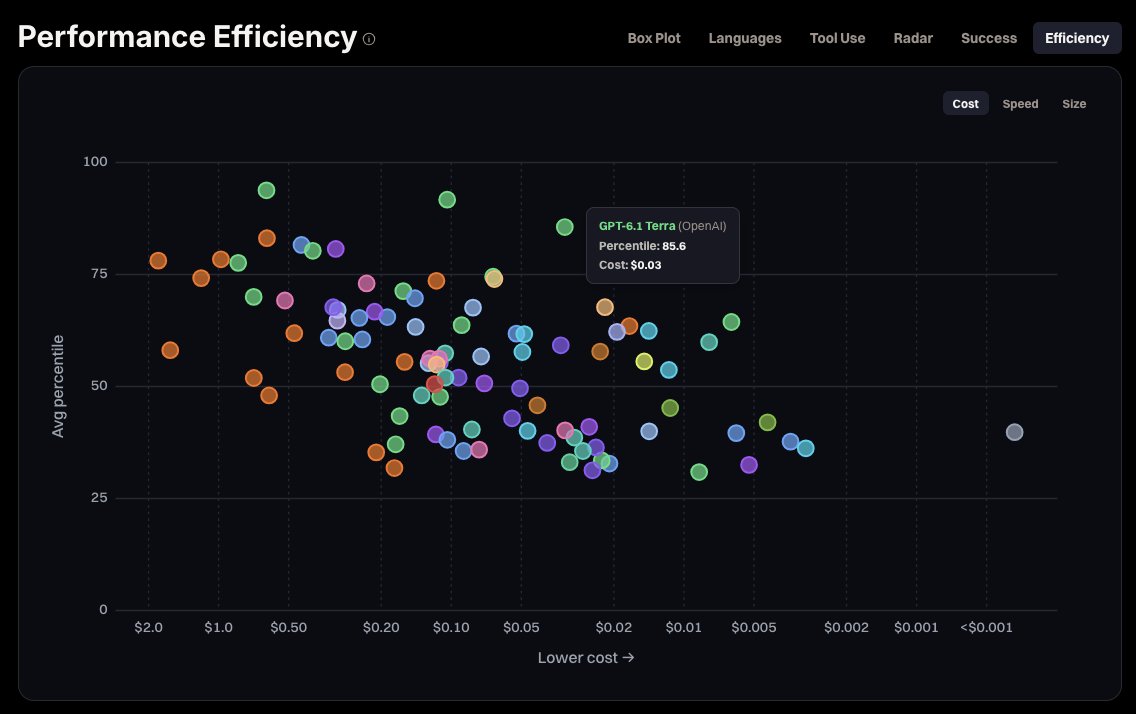
GPT 6.1 Terra coding results are live on GBENCH. It's an outlier on the Pareto frontier, making the entire Pareto front dominated by OpenAI models. And it's a near-frontier model in its own right, between Gemini 4 Argon and Claude Opus 5.5 in our testing. It's no wonder that OpenAI is leading in math breakthroughs, but it also shows how our benchmark results tend to translate: for objectively difficult, open-ended technical problems with a well defined spec, GPT-6 series models dominate by a comfortable margin. These models, especially Astra and GPT-6.1-Sol, are clearly very intelligent and capable of solving well-defined technical objectives better than any other model. In contrast, I still use Opus 5.5 for roughly half of my coding assistant work, because although it is not quite as good as Astra at solving hard problems or finding hyperefficient optimizations, it has a more usable personality as a coding assistant. It takes initiative in ways that are usually more productive and aligned with my intent than Astra, which interprets prompts quite literally. If OpenAI can solve this personally shortcoming, they will be leading on all fronts (intelligence, price, and product). For now, it's raw intelligence and price.