Jev 定位解析:LLM 负责生成,Jev 负责决策
解释 TypeSafe AI 的 Jev 是独立决策层,用 Choice/Score/Noul 返回带概率的类型化答案,并给出分类 1018 篇论文 $0.08 等成本案例。

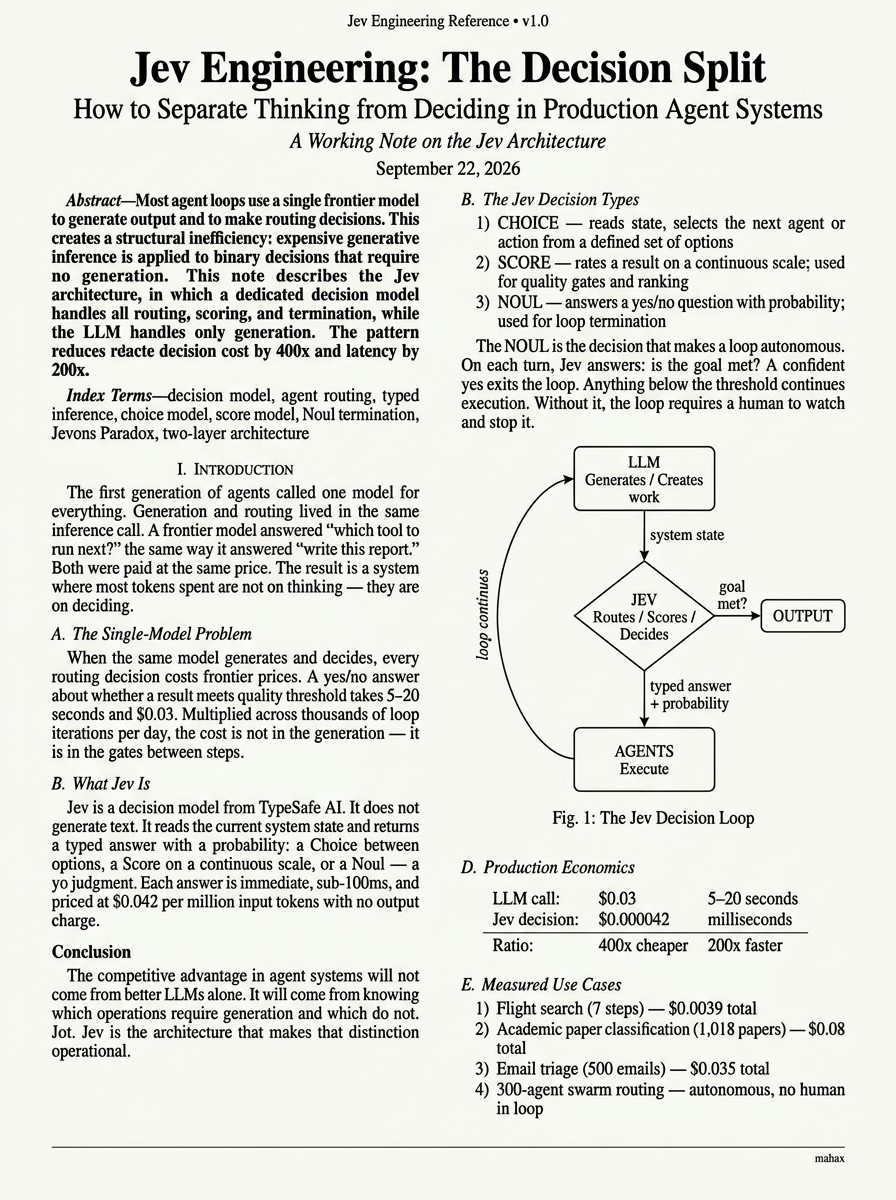
JEV engineering is not what you think it is. Most people hear "200x faster, $400 x cheaper" and think: cheaper routing. That's the wrong frame. What TypeSafe AI actually built is a split in how AI systems work. Not a cheaper alternative to the LLM. A separate layer that does the one thing LLMs are terrible at: deciding. Your LLM is a generative engine. It thinks, reasons, creates. But inside every agent loop, it's also doing something else, choosing which tool to run, rating whether a result is good enough, deciding whether to go again. Binary questions. No generation needed. And you're paying frontier model prices for every single one. Jev reads the system state and returns a typed answer with probability: Choice - which agent should act next? Score - is this result good enough to keep? Noul - is the goal met? No reasoning. No text. Just the answer. That's a completely different layer of the stack. The architecture it creates: LLM creates work. Jev decides what happens next. Agents execute. When you build it that way, the economics change completely. 1,018 papers classified for $0.08. 500 emails triaged for 3.5 cents. 300-agent swarms that run on autopilot without a human watching the loop. This is Jevons Paradox in AI infrastructure. Make decisions cheap enough and you stop rationing them. Systems that were financially impossible become routine. One model to think. One to decide. The diagram below maps how the split actually works in a running system.
这条是引用着另一条写的:x.com/mahaximus_/status/2085024744387092973