亚马逊封堵 Meta Muse 购物代理
亚马逊以隐私与授权为由阻止 Muse 代下单,作者认为这预示 agent 时代入口争夺将冲击谷歌搜索广告。
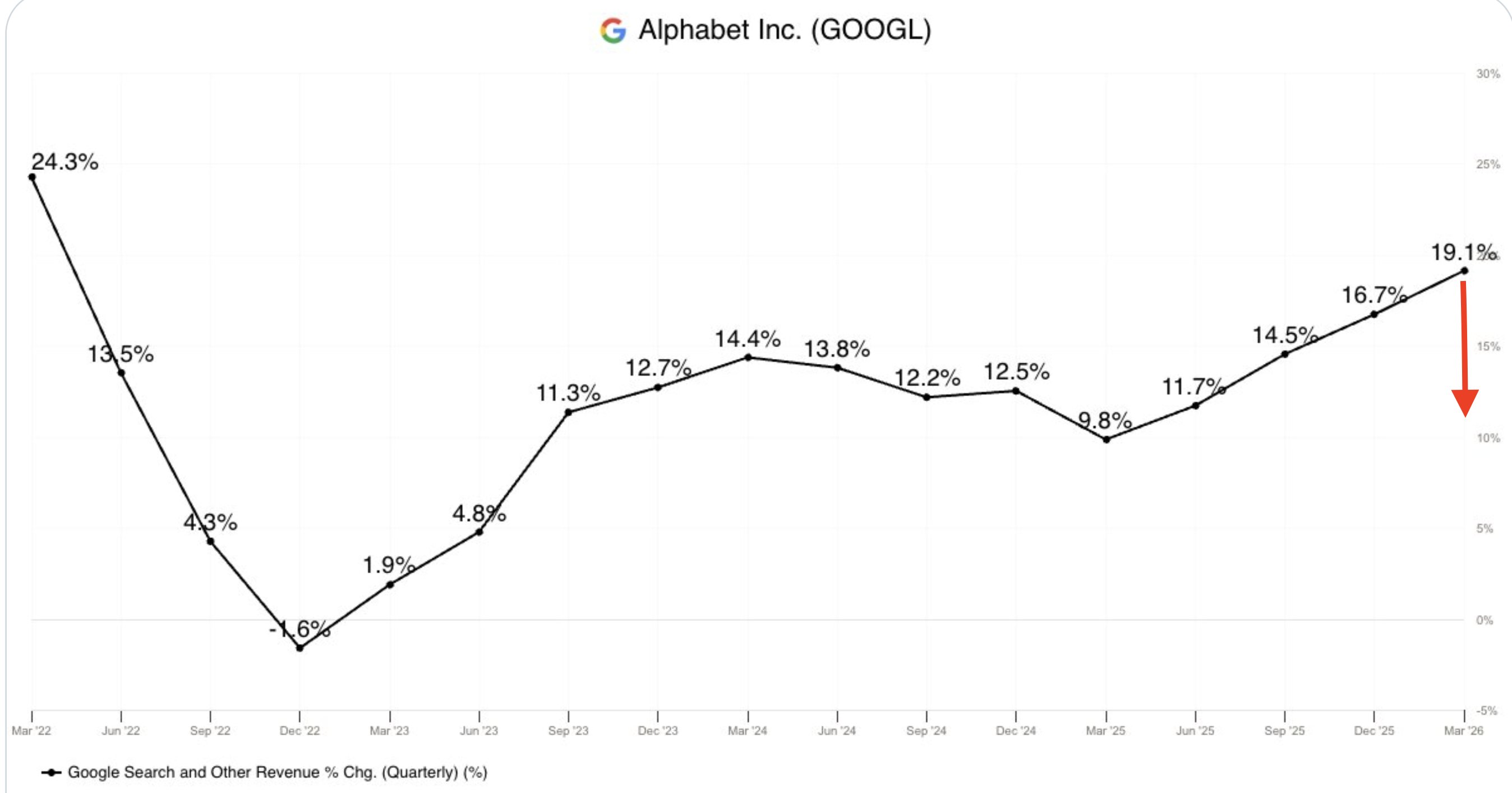
I am genuinely worried that Google could lose the internet’s most valuable tollbooth over the next several years if it does not get its act together. Amazon blocking Meta’s Muse agent is a huge warning about where the internet is heading. Amazon publicly cited privacy, security and authorization concerns but it also acknowledged that outside agents can bypass parts of its personalized shopping experience. Amazon is developing its own shopping agents, so allowing Muse to control product discovery and purchasing could hand Meta the most valuable part of the transaction, the customer relationship. That is the real battle in an agentic world. Today, people search for something, scroll through advertisements, open several links, compare their options and complete the transaction themselves. Tomorrow, a person will simply tell an AI agent what they want and let it research the products, compare prices and complete the purchase. The agent could collapse ten searches, several advertisements and multiple website visits into a single conversation. That threatens every business that makes money by standing between a consumer’s question and the final transaction, but nobody has more to lose than Google. Google generated $60.4 billion from Search and other advertising during the first quarter of 2026, representing roughly 55% of Alphabet’s total revenue. Total Google advertising revenue reached approximately $77.3 billion, or around 70% of the company’s revenue. Google’s business works because billions of high intent searches create valuable advertising inventory. Advertisers bid to appear when someone searches for a credit card, hotel, insurance policy, restaurant or product because those users are often close to spending money. If consumers begin asking Muse to make those decisions for them, Google does not merely lose a search, itcan lose the advertisement, the click, the behavioral data and eventually the transaction. Amazon’s decision to block Muse shows that the largest internet companies understand this danger. The company controlling the agent can decide which products get recommended, which merchants receive the order and which payment system processes the transaction. That position could eventually become more valuable than owning the website the agent visits. Google Search currently looks stronger than ever. The chart shows Search revenue growth accelerating from 9.8% in early 2025 to 19.1% in early 2026, while Alphabet subsequently reported that first-quarter Search revenue increased 19% to $60.4 billion. Google says AI Overviews and AI Mode are increasing Search usage rather than cannibalizing it and management reported that queries reached an all time high. However, the financial damage from a platform shift often appears after consumer behavior has already begun changing. AI generated answers are already reducing the need to click traditional search results. One 2026 study found that the first organic result’s click through rate fell from 20.02% to 9.69% when an AI Overview appeared, while a randomized field experiment found that AI Overviews reduced outbound organic clicks by 38%. Organic clicks are not the same as paid advertisements, so this does not prove that Google’s advertising revenue is about to collapse. However, it demonstrates the broader behavioral shift, users increasingly receive an answer without visiting the underlying websites. Agents take that shift one step further by completing the action without requiring the user to browse at all. Google therefore faces an uncomfortable conflict. It must replace traditional Search with a more direct AI experience before competitors do, but every query it converts into one synthesized answer creates fewer obvious places to display the familiar list of advertisements. Google can insert advertisements into AI Mode and build agent driven shopping tools, but it still needs to prove that one AI conversation can monetize as effectively as an entire search results page. If it cannot, AI could improve the user experience while weakening the economics of the business. Google clearly understands the threat, but it does not feel like the company is setting the direction of the consumer AI market. ChatGPT owns much of the mindshare, Claude is becoming a leading platform for coding and professional work, and Meta’s Muse is showing early momentum as an agent that can move across applications and complete real tasks. Google has Gemini and enormous distribution but it still has not produced a consumer agent with the same cultural momentum. It often feels like Google is responding to the industry rather than forcing everyone else to respond to it. The talent losses make this concern more serious. Over the past year, 25% of departing DeepMind researchers and advanced engineers reportedly moved to Anthropic, 21% went to Meta and 14% joined OpenAI. DeepMind’s ratio of arrivals to departures reportedly fell from approximately 12 to 1 in 2023 to roughly 2 to 1 in 2026.. Those departures reportedly include Gemini co-lead Noam Shazeer, AlphaFold leader and Nobel laureate John Jumper, and Gemini contributors Jonas Adler and Alexander Pritzel. Google still possesses some of the strongest assets in technology because it owns Android, Chrome, Search, YouTube, Gmail, Maps, Google Pay, Cloud and one of the world’s most accomplished AI research organizations. Those products give Gemini distribution, personal context and transaction capabilities that most competitors cannot reproduce. The problem is that Google must use those advantages while protecting an extraordinarily profitable advertising machine. Meta, OpenAI and Anthropic can attack traditional Search without worrying about cannibalizing a $60 billion quarterly business. Google must move fast enough to lead the agentic transition while moving carefully enough to avoid destroying the economics that finance the rest of Alphabet.