ChatGPT Images 2.5 哥特风秋装提示词
日本作者用 ChatGPT Images 2.5 生成秋季哥特穿搭,并公开可替换衣装的服装提示词模板。


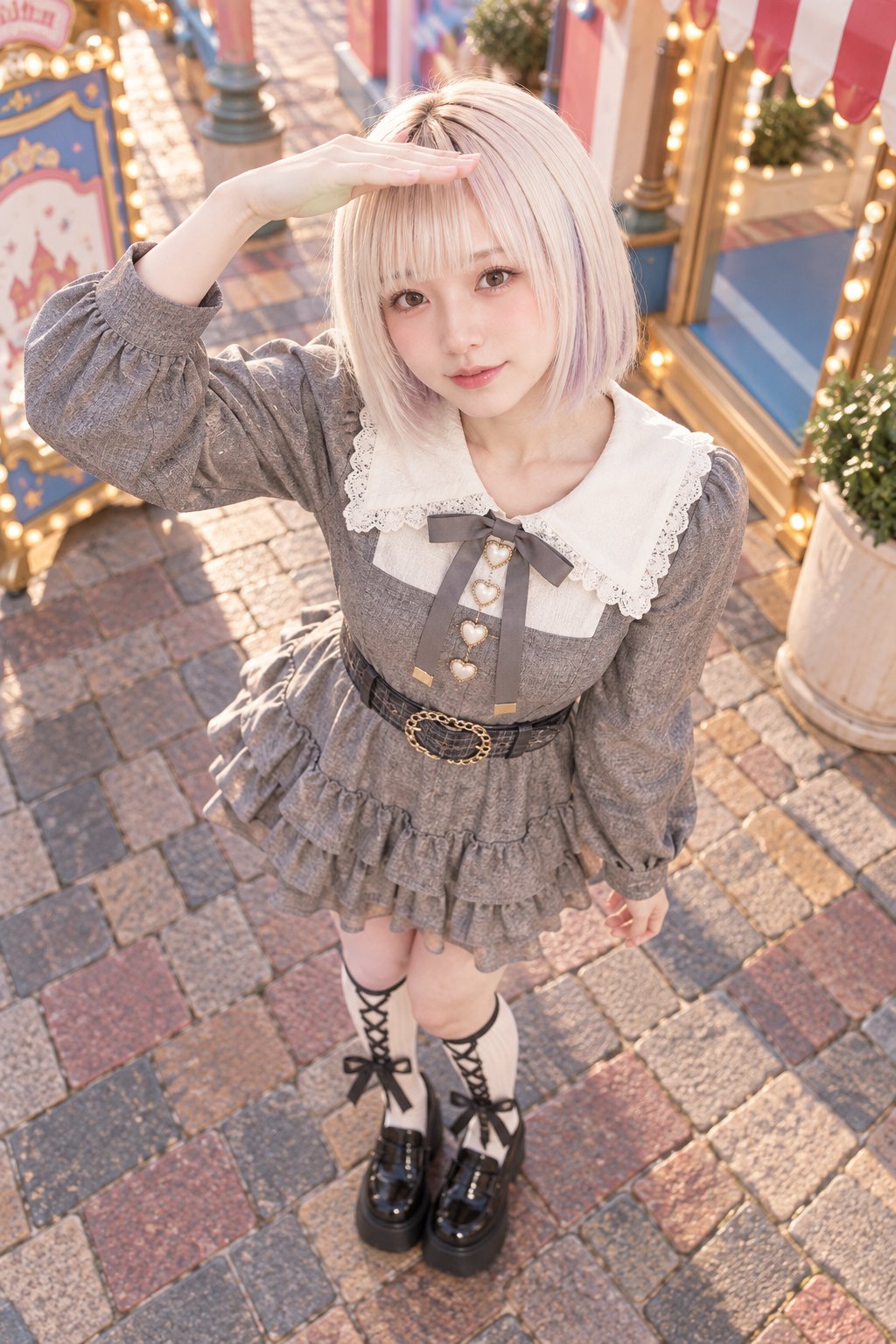
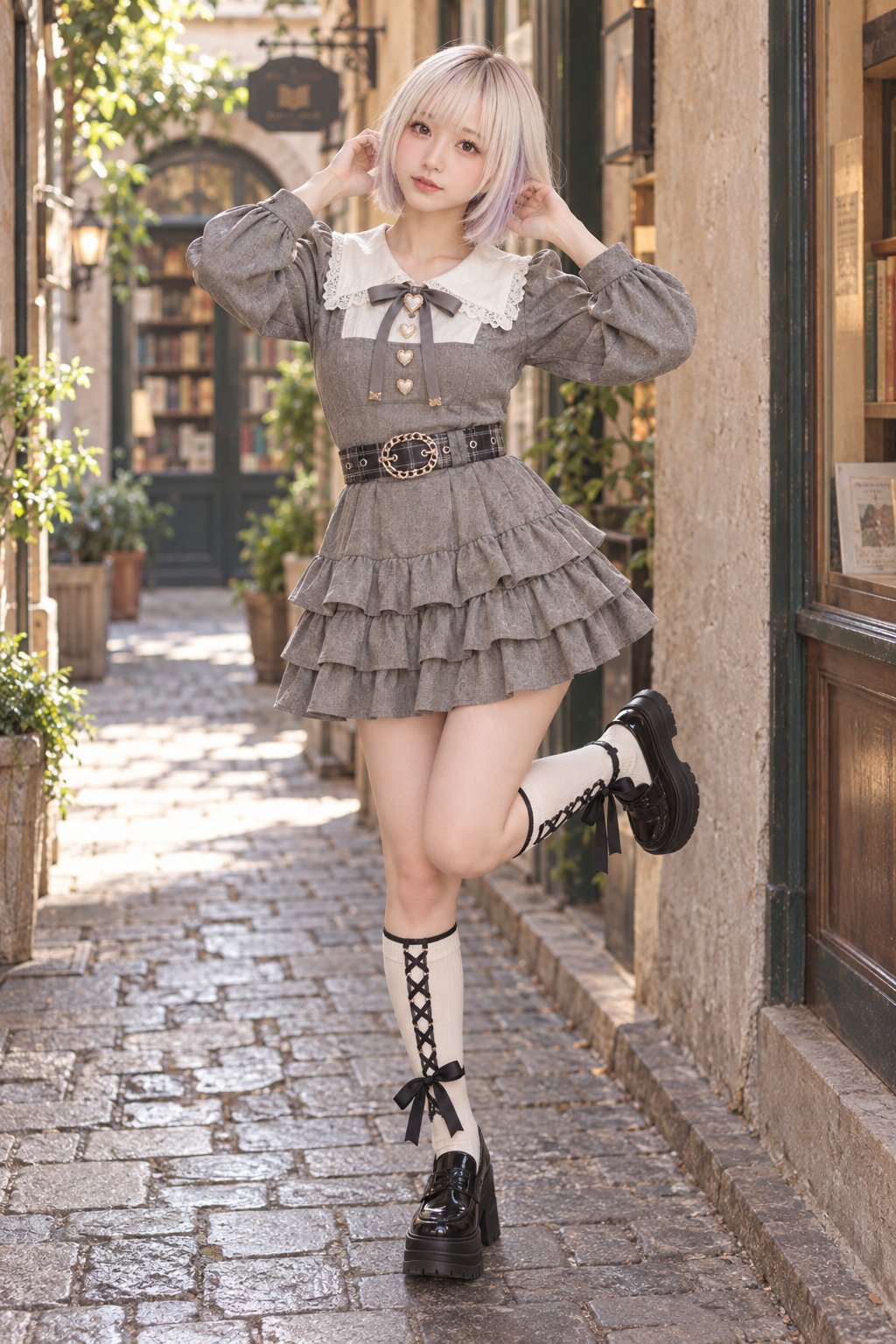
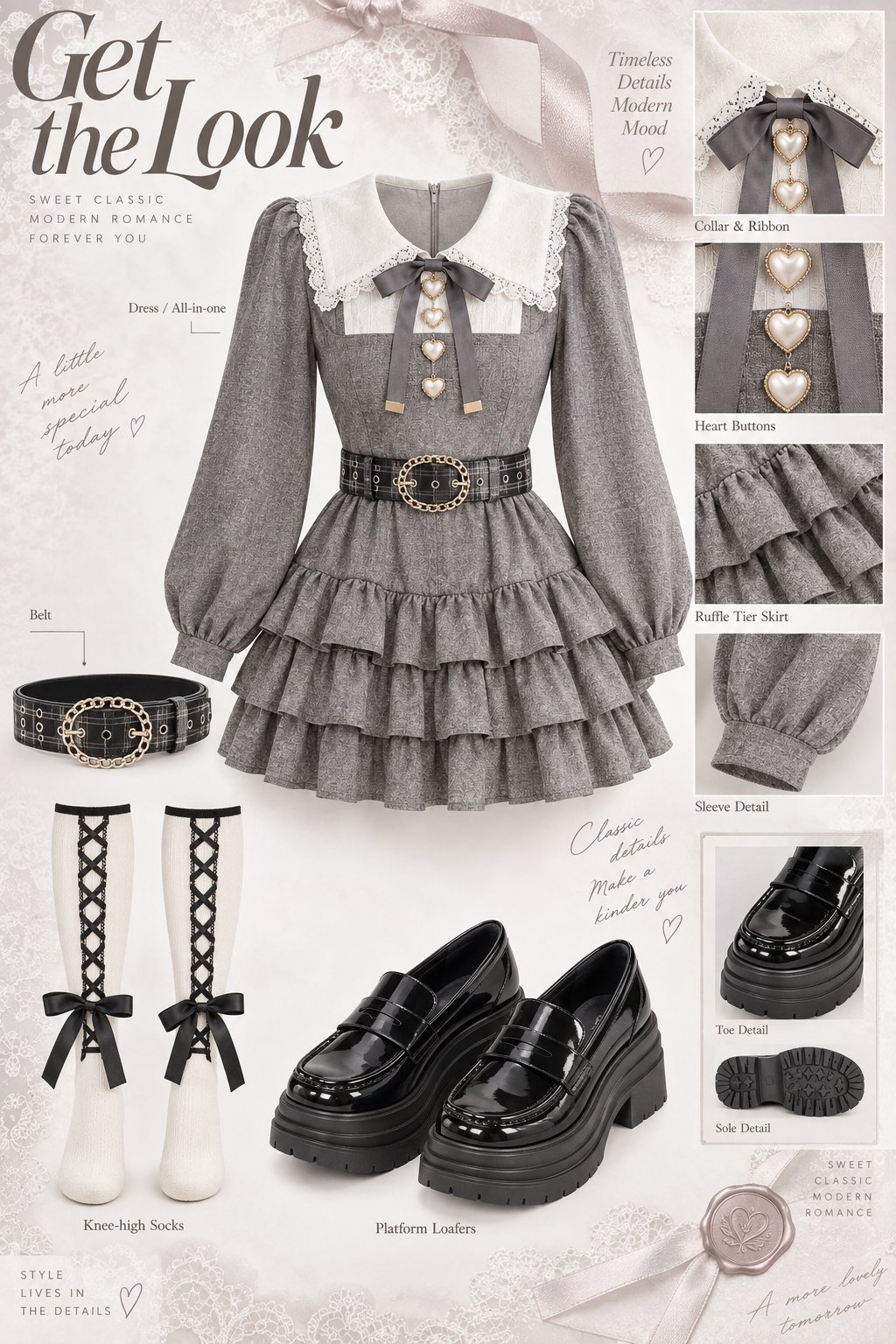
秋用控えめゴシックコーデ🤍 最近、生成AIの調子が悪い💫 カテゴリごとに交換可能な衣装プロンプトを配布中✨ 生成環境:ChatGPT Images 2.5 #AIart️️️️️️️️️️️️️️️️️️️️️️️️️️️️️️️️️️️️️️️️️️️️️️️️️️️ #プロンプト PROTECTED WARDROBE RULE — HIGHEST PRIORITY: Treat each garment description below as its immutable final product identity. Preserve construction, parts, hardware, material, pattern, and every registered graphic or marking—its surface, side, orientation, scale, colors, content, spelling, and count. FINAL WORN STATE overrides only the scoped item's use, position, side, orientation, fastening, layering, folds, tucks, knots, and drape. If source prose omits or misclassifies a component required by an explicit selection, that selection corrects only that component. A SOURCE GARMENT label describes the unstyled item, never the completed silhouette. Do not redesign, add, remove, mirror, duplicate, relocate, or redraw protected details. Wardrobe: Dress / all-in-one: A fitted-and-flared mini dress in softly textured heather grey (#797A76) fabric, with a dart-shaped bodice, gently gathered shoulders, full long sleeves gathered into narrow cuffs, and two slim matching bands encircling the waist. The flared skirt finishes in three overlapping gathered ruffle tiers continuing around the hem. An integrated warm ivory (#F2F0E9) lightly textured inset fills the square-edged upper bodice, topped by a broad pointed collar with delicate scalloped lace edging. A matching grey ribbon runs across about 90% of the inset width and ties centrally into two flattened bow loops, with two narrow tails descending onto the bodice and ending in soft gold (#C9A65D) metal caps. A small heart-shaped gold ornament edged with ivory beads hangs immediately beneath the knot; three lustrous ivory heart buttons form a vertical row below, between the ribbon tails at its upper end. A concealed center-back zipper closes the plain matching back through the waist. Legwear: A pair of ivory knee-high socks in smooth opaque stretch knit, with narrow black binding around the tops and down a slim open slit along the front of each shin. Flat black ribbon passes through closely spaced black fabric loops on both slit edges, crossing repeatedly from just below the top to the ankle and leaving small openings between the crossings. Each ribbon finishes in a large loose ankle bow with long trailing ends. The ivory knit continues into plain fitted heels, soles and closed toes. Footwear: A pair of square-toe platform loafers with mirror-glossy patent black (#121216) uppers, broad toe boxes with softly rounded corners, and raised moccasin-style apron seams outlining the toes. A plain broad saddle crosses each vamp, leading to a continuous low-top slip-on opening and closed heel counter with a smooth lining; there are no laces or separate straps. Thick rubber charcoal (#333333) platform soles project beyond the uppers, with two pronounced horizontal stepped ledges around the fronts continuing into the side and heel profiles, and textured undersides. Belt: A wide black-backed belt faced with black, charcoal-gray and white tartan fabric. Groups of fine pale lines cross broad dark checks along the strap, with two parallel rows of silver-tone eyelets for adjustment. A large oval buckle made from substantial polished curb-chain links frames the front fastening and incorporates a double-prong closure. A matching keeper secures the tail. Final worn state: - Belt placement: Place the complete belt horizontally around the outside of the selected Dress / all-in-one item at the wearer's anatomical natural waist. Do not move it to the hips or ribcage; preserve the separately selected routing, buckle position, and tail treatment. Keep the selected position and fastening state; change only contact pressure and physically available ease. Natural handling within this same operation: Keep the registered fastening secure and use light stable contact with a small amount of material-correct ease distributed around the complete belt circuit. - Buckle position: Center the single existing buckle on the wearer's anatomical front midline and fasten it using only its registered closure mechanism. For a frame-and-prong buckle only, pass the existing prong through exactly one existing hole and seat the strap against the frame; for a ratchet, clasp, plate, or automatic buckle, engage only its registered mechanism. Do not invent a hole, prong, or closure part, and preserve the separately selected height, routing, and tail treatment.