Jev 批量提问架构:一次状态问多个独立问题
讲 Jev 文档里的批量请求模式:冻结一份工单状态,同时问 Choice 选团队、Score 评紧急度、Noul 判断退款意图,由代码组合答案,避免串行重复发送状态。

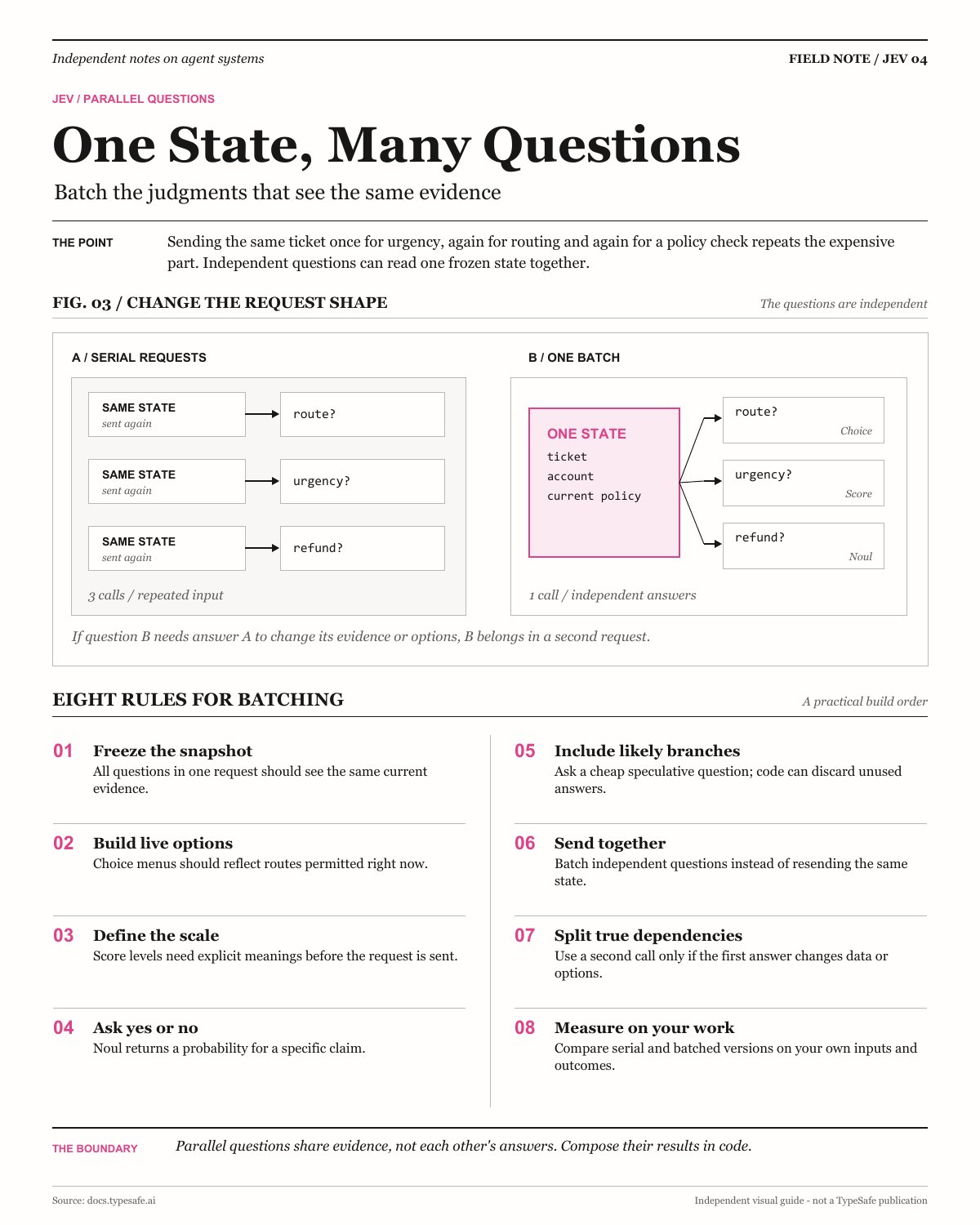
Jev founder Diogo Almeida introduced Jev, and its docs describe a small architecture change that matters more than another model benchmark: - send one state, ask several independent questions and let code decide which answers it needs Most agents do the opposite. They ask whether a ticket is urgent, wait, send the same ticket again to choose a team, wait, then send it a third time to check whether it needs approval The repeated state is doing nothing except adding time and cost Here is the batch I would build: step 1 → assemble one frozen view of the ticket, account and current policy step 2 → ask Choice for the destination team from a list built from live routes step 3 → ask Score for urgency against levels you defined before the request step 4 → ask Noul whether the message explicitly requests a refund step 5 → include a question the code may not use, such as bug severity; discard that answer if the ticket is not a bug step 6 → send those independent questions together, because each reads the same state step 7 → make a second request only when an earlier answer changes the evidence or the options for the next one step 8 → compose the answers in code and measure the batch against the serial version on your own traffic This is not a trick for getting Jev to reason through a chain in parallel. It cannot see one answer while producing another in the same request That limitation is useful: it forces the dependencies into the program where you can inspect them The document below draws the two request shapes. The article shows how to turn the cheaper shape into a workflow that is still understandable when something goes wrong
这条是引用着另一条写的:x.com/morpphhhaw/status/2102740313953439950