Cascade 省 23% token,Cue 让 agent 拿钱包
解读 Manus 2.0:Cascade 按需调用工具省 token 与成本,云电脑与事件触发让 agent 持续运行,Cue 则给每个 agent 邮箱、电话、钱包和预算上限。

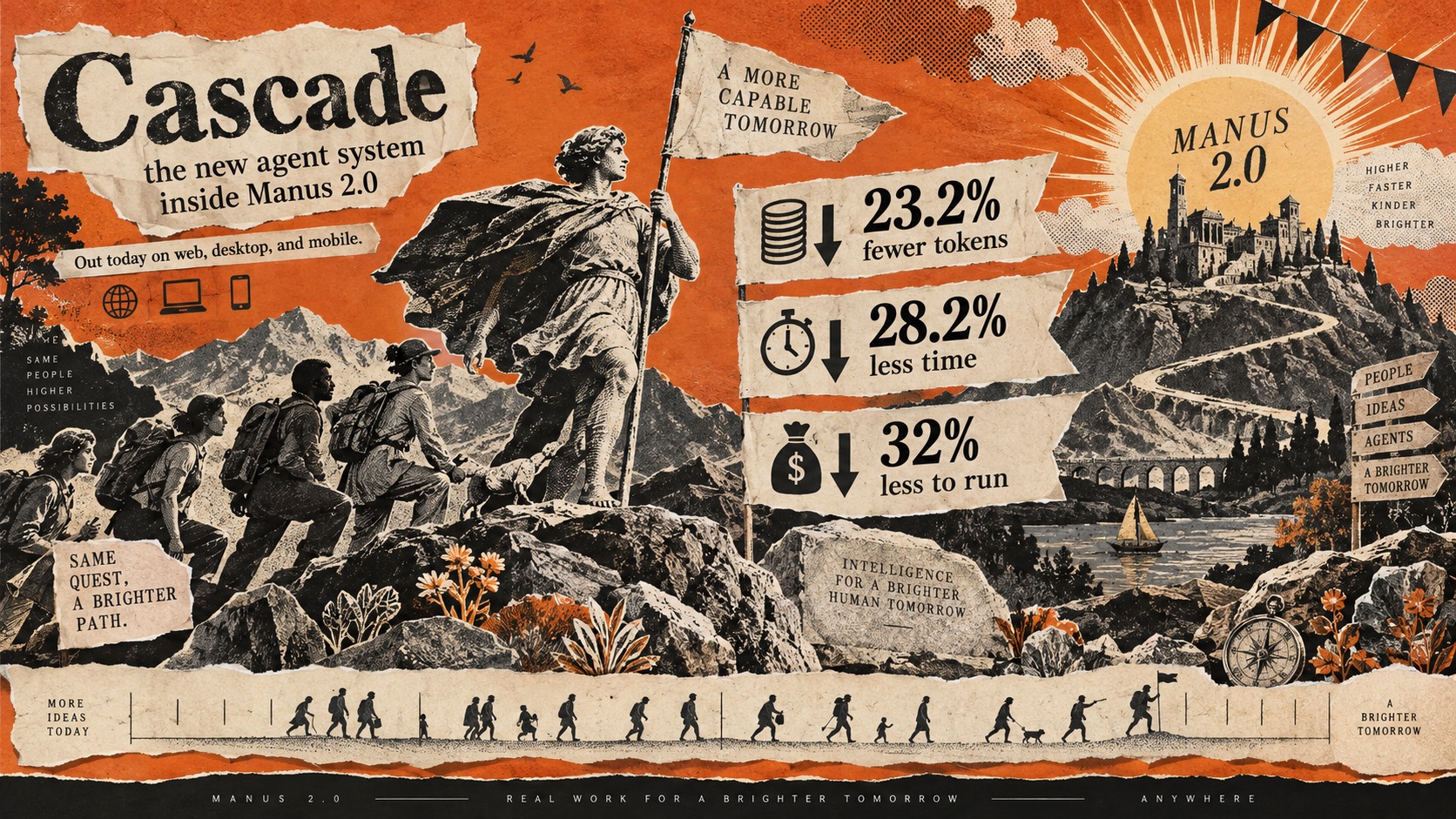
Cascade, the new agent system inside Manus 2.0 (out today on web, desktop, and mobile), used 23.2% fewer tokens, finished tasks in 28.2% less time, and cost 32% less to run than the previous system in one tested configuration. Read that line before the one about giving a villager silver hair. An agent that drags every tool into every task pays rent on context it never touches. Cascade keeps a project light and pulls in the video editor, the game engine, or the spreadsheet only when the work asks for it. Fewer tokens in means a smaller bill from the model provider, and for any company reselling frontier models by the task, the gap between what the user pays and what the model charges is the entire margin. Feature launches get the applause, but token counts decide who is still around in two years. The other half of the release is about compute that keeps running when nobody is typing. Users can now buy a Cloud Computer, a dedicated environment for a game server or a round-the-clock automation. Automations themselves now fire on events, a new email, a Slack message, a Notion update, a change in ad performance, rather than waiting for a scheduled time. Persistent machines plus event triggers turn a chat product into something that bills whether or not a human opens the app. Then there is Cue, a standalone app where each personal agent gets its own email, phone number, wallet, and computer, and can pay within a budget the user sets. Agents holding wallets with spending caps means the category is now touching payment rails, not just running demos. Cue is in early access and free with an invite code. MEETCUE works for the first 1,000 people, with iOS still waiting on App Store review.