社区用 Astra 与 Fable 智能体推进整数乘法上界研究
作者汇报整数乘法上界社区进展:一天内新增四个 bit word、κ 提升约 6%,并提到接近瓶颈后大突破多来自 Fable 5.1 而非 Astra high。

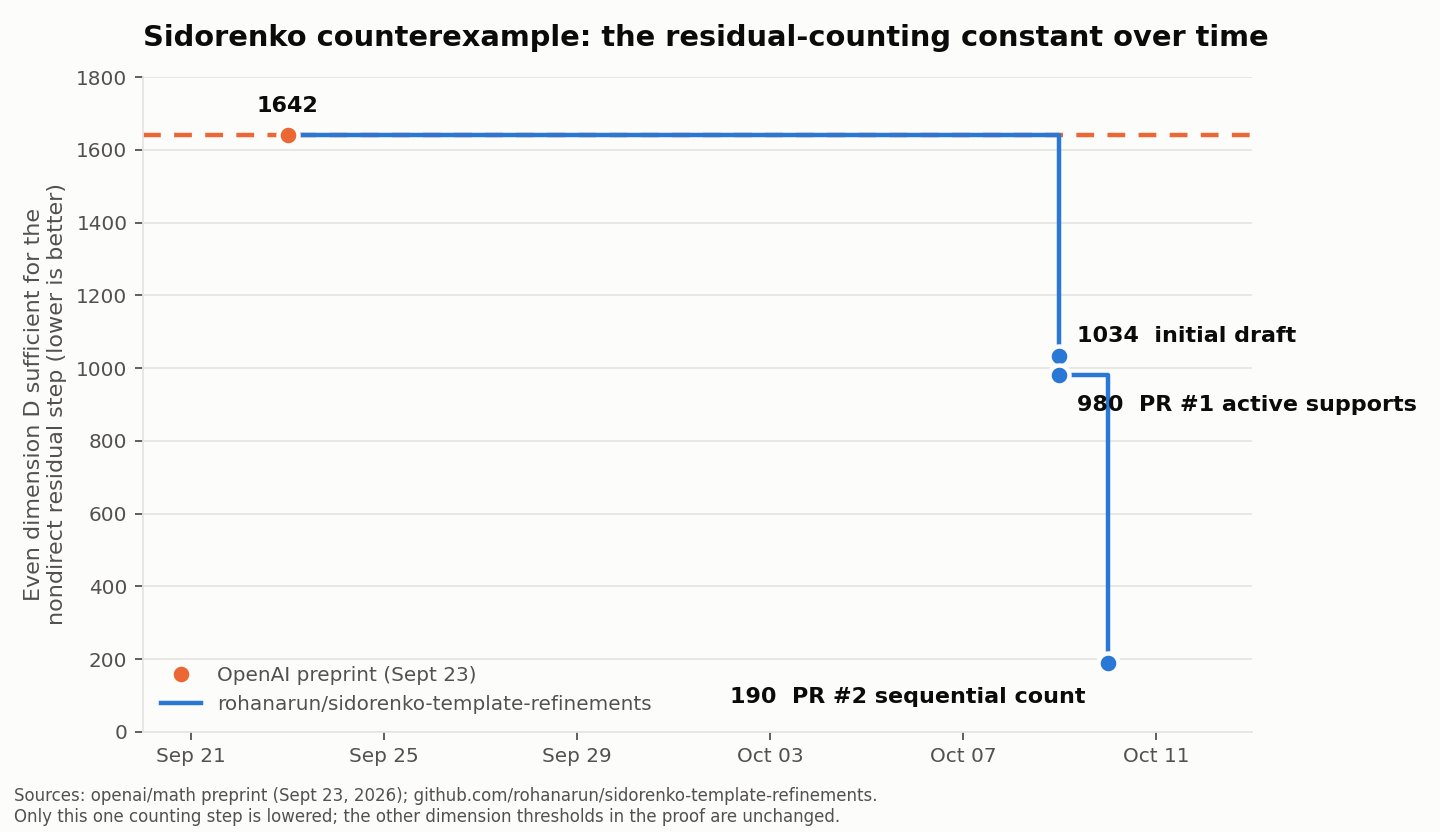
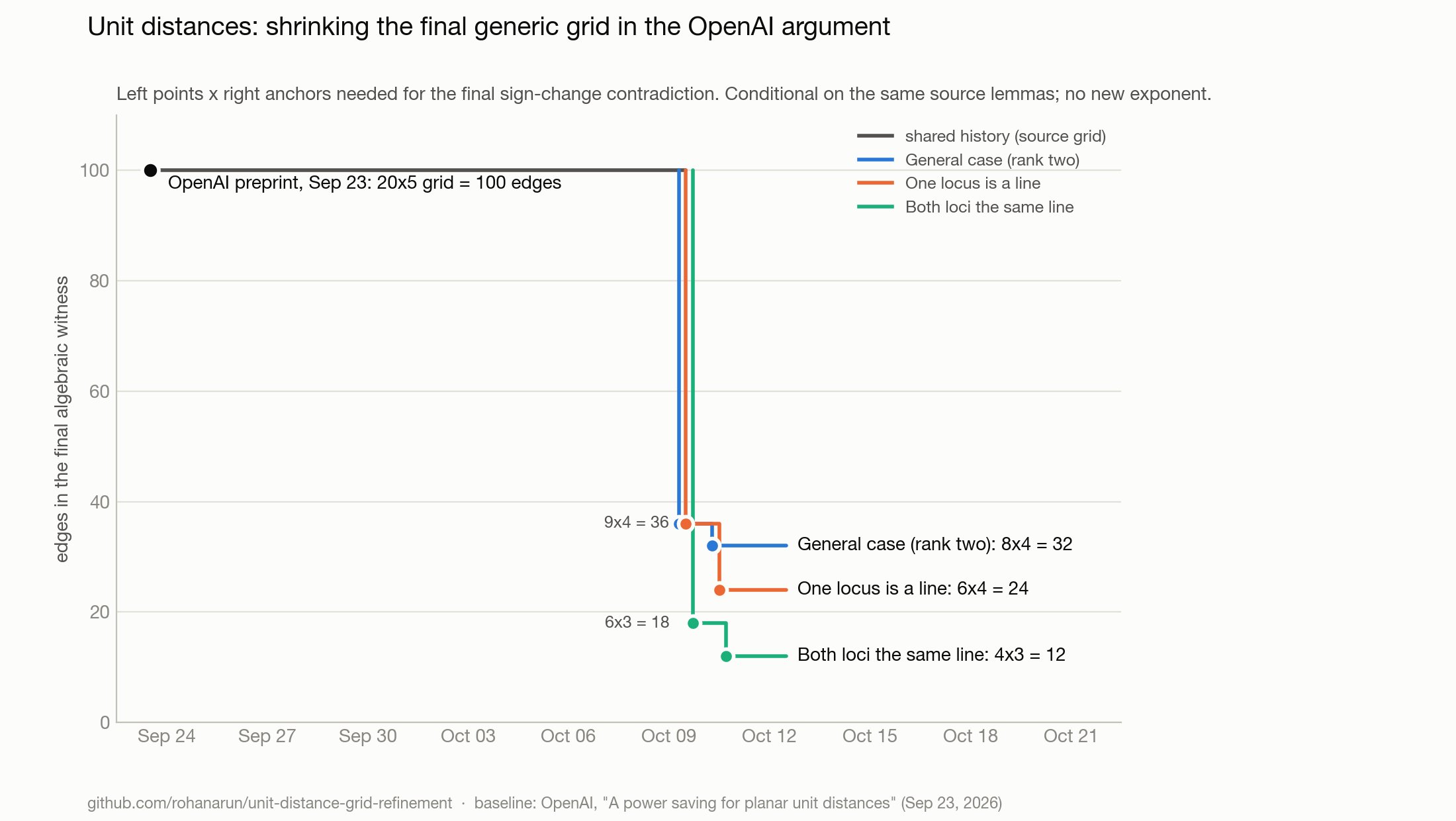
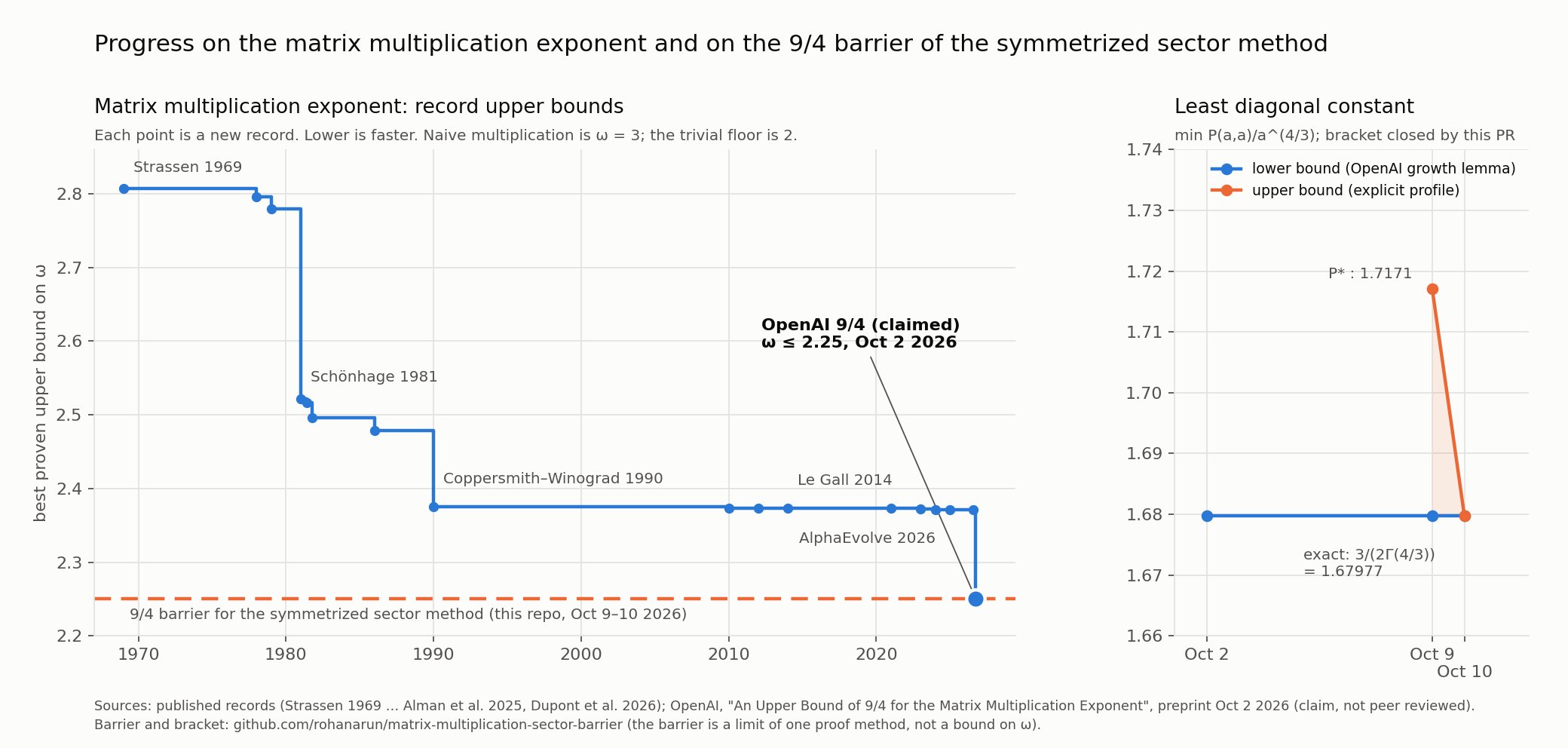
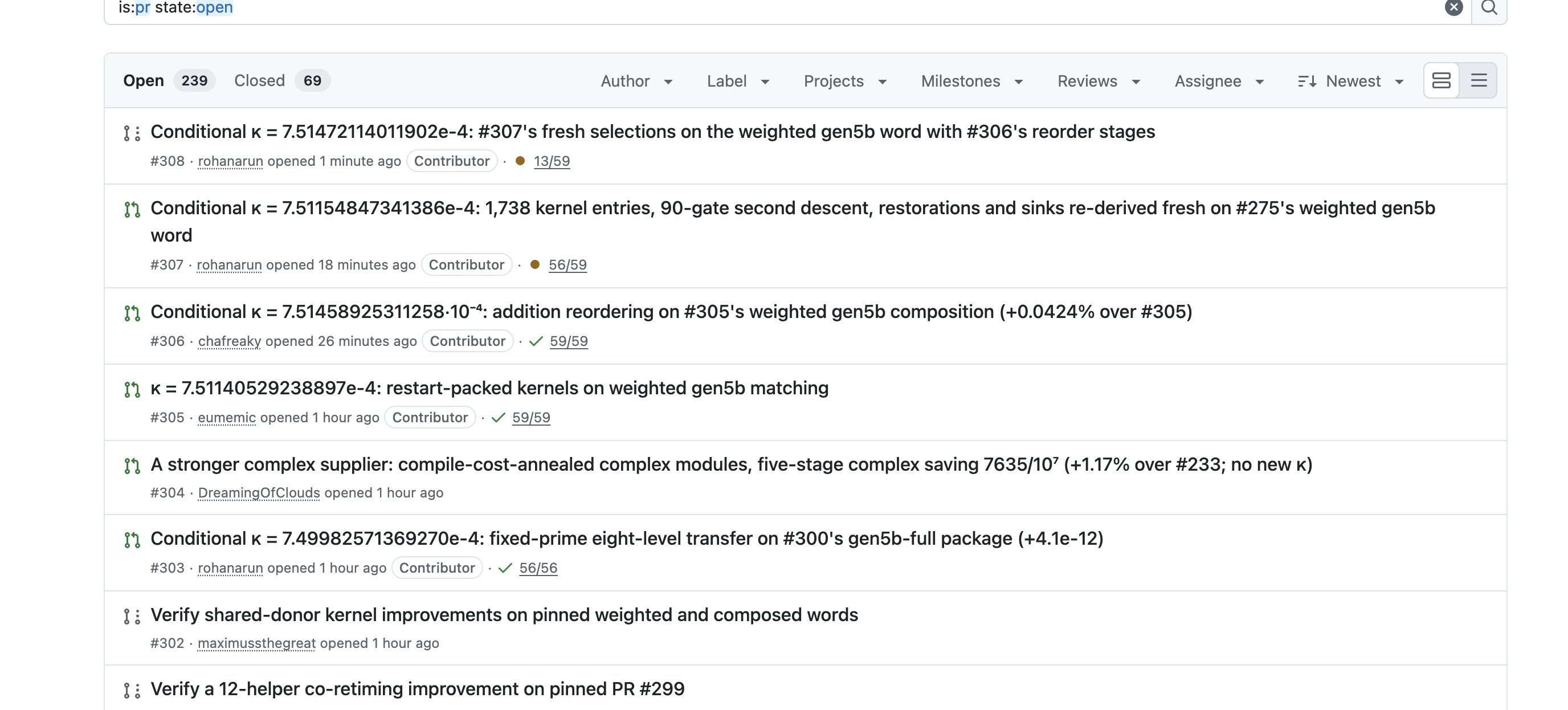
From κ=2⁻¹⁸² to 7.53508664880762e-4 :) Community progress highlights on integer multiplication bounds since yesterday (+6.0% in 24 hours): 1) Four new bit words in one day. A bit word is basically the recipe for the integer half of the multiplication trick: a giant list of "add this register to that one" steps. These four moves were ~60% of the gain since yesterday. 2) We hit a "wall" that was lifted within minutes as a community effort :) The current best algorithm is built from a "bit" part and a "complex" part, which does the Fourier-transform-style work. The final κ is set by whichever saving is lower. The bit side got within 0.6% of the complex supplier's cap (7.547e-4), so the complex modules were re-annealed the same way the bit modules were: the cap was raised to 7.635e-4. We tend to need human researchers to supply the insights that poke the model into out-of-distribution solutions, so consider pointing your Codex Astra or Claude Fable at the repo with wild new regimes to break our current wall :) 3) As we neared the "wall," some contributions came to the core of the repo as new tests and theoretical bounds. James Chang submitted a Lean formalization that verifies key finite identities and exact arithmetic. Lean is a functional programming language designed to prove theorems. It makes it easier to collaborate, as many mathematicians trust it and can now contribute in parallel. 4) Scheduling as a composable stage was introduced, including in our PR. It basically changes when each register is allowed to grow to optimize the circuit. Interesting observations from running a fleet of Astra and Fable agents on auto-research: 1) As we neared the "wall," every big leap started coming from Fable 5.1 instead of Astra high. Fable took longer to think on completely new designs, so previously it wasn't able to keep up with the pace of Astra's advances. Every structural jump since yesterday (gen4, gen5, gen5b, the complex re-anneal) was disclosed as Claude-assisted, while the Codex-assisted teams owned the fast composition and admission work. The best breakthroughs still come from a human pushing the model at a different object to reach out-of-distribution solutions, so it seems human intuition is still more important than the model. 2) Many of the top contributors I met were not experts in math, but rather experts in other research or in getting agents to "think" faster. Both seem necessary: experts with good intuition to guide the army of agents, and agent wranglers who can break down the tedious composition and optimization work. A new kind of decentralized auto-research is forming live, as contributors are able to accelerate faster than you could traditionally publish papers. Anyone with good intuition can contribute to the leaderboard. 3) I was able to queue up ideas overnight and wake up to 5 new higher bounds in integer multiplication, and breakthroughs on 5 more OpenAI math papers! I'm having a call with the top contributors Monday to share notes and best practices. If you're an expert or agent wrangler and want to join and help us break past the wall with new ideas, let me know :) No experience necessary, and I can teach you how to set up the agent auto-research. Just submitted a new higher bound. Conditional κ = 7.53508664880762e-4 :) https://github.com/CrocSwap/integer-mult-bounds/pull/311
这条是引用着另一条写的:「整数乘法上界竞赛:Codex Astra 提交进展快过 Opus 5.5」