Jev 决策原语的白话科普
把 Jev 讲成给五岁小孩听:Noul/Choice/Score 三类决策问题,70–500ms、比前沿模型快 193 倍便宜 444 倍,也提醒会幻觉。

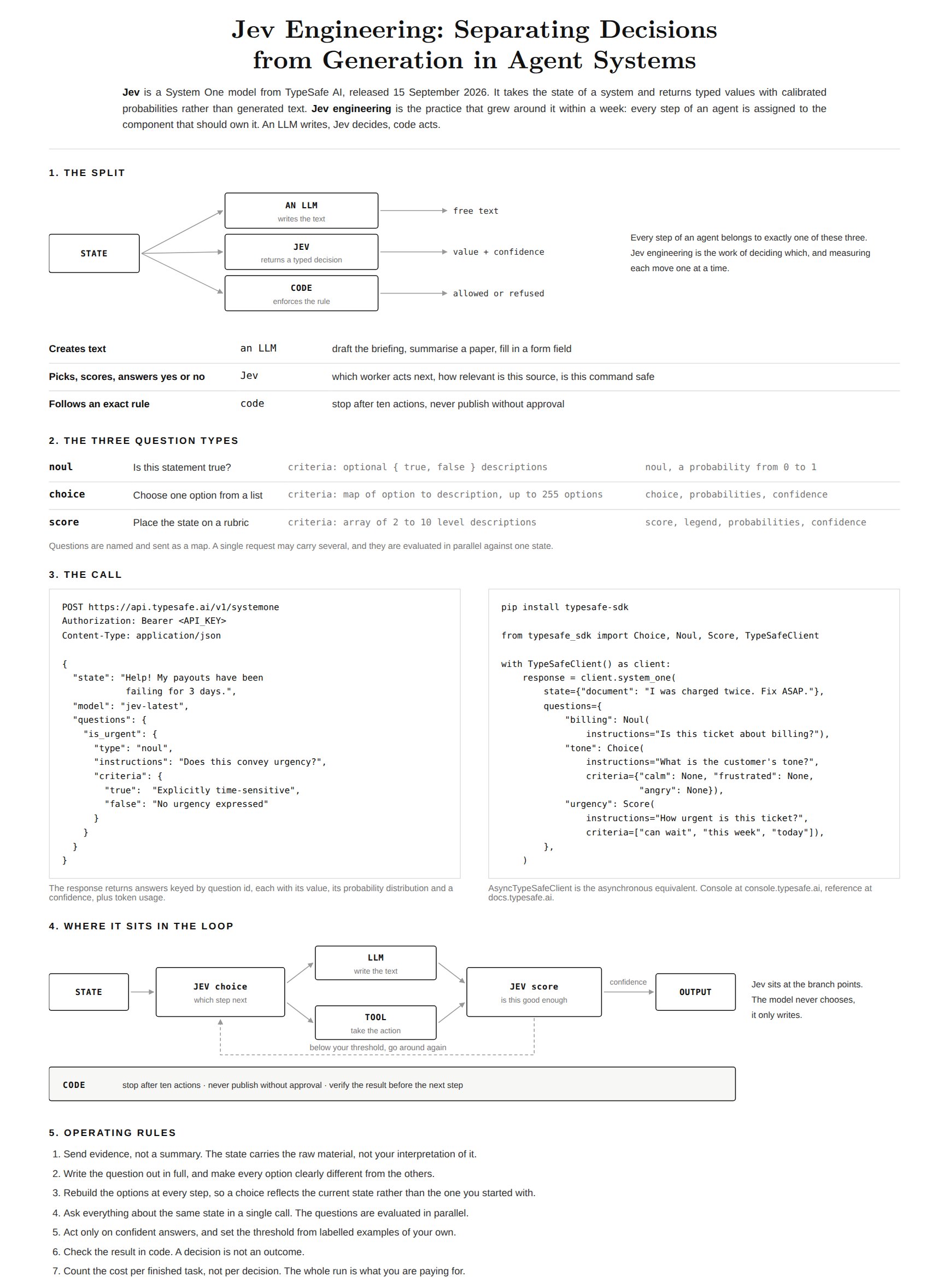
Jev engineering explained like you are five. What it is, how it works, and how to use it. In simple terms So. Your regular agent makes two types of calls: writing something and deciding. What action goes next. Is the specific source relevant. Is this command safe to run and so on. Right now one big model like GPT, Fable or Gemini does both, and you pay for an answer. Jev engineering splits them. It basically doesn't write the answer, but selects it from a list that was provided in advance. You send the model two things: 1. State - any text, just like for any other model 2. Question(s) - but not the usual ones like “How do I solve this?”, rather, standardized ones. That is, questions for which there is a known range of answers. There are three types of such questions: 1. Noul: yes or no 2. Choice: one choice from the list 3. Score: a scale from 2 to 10 The point of all this is that it works very quickly and is much cheaper than conventional methods: 70 to 500 milliseconds from start to finish against 3 to 329 seconds for a frontier model. And $0.042 per million input tokens, output is free. 193x faster and 444x cheaper. The smartest way to handle all this is to put Jev in front of the expensive model as a gate. That way, out of all the entries, he would let through, say, 10% - the portion that’s actually worth spending your main model’s tokens on. It’s also worth noting that there are instances of hallucinations. Jev may mix up dates, make mistakes when there are multiple nouls in a single query, calculate probabilities incorrectly, and so on. In short, just like any other model. Keep this in mind and test it thoroughly before putting it into production.
这条是引用着另一条写的:「ChatGPT 联合发明人发布新模型 Jev」