Devin adds /handoff and makes SWE-2 free for Pro, Max and Teams
Devin lets users move a local CLI session to a cloud VM with /handoff, and Cognition's new flagship SWE-2 model is free for Pro, Max and Teams users until October 8.

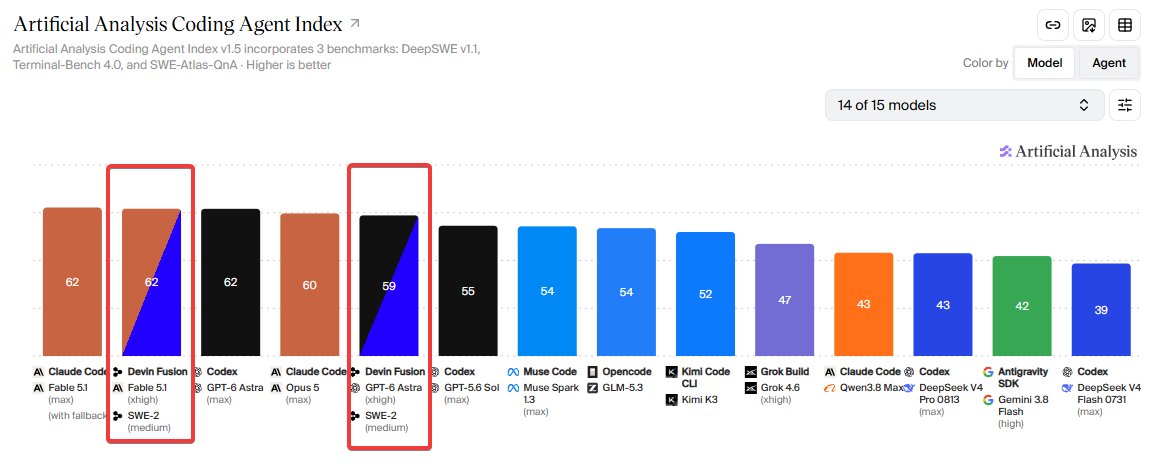

I've been using Devin pretty heavily lately, both from the CLI and Desktop, and I think the $20 Pro plan is probably one of the most interesting coding agent subscriptions you can try this month. The main reason is SWE-2. Cognition's new flagship coding model is currently free for Pro, Max and Teams users, including Devin Cloud, until October 8. So on the entry-level plan you can actually use SWE-2 properly without constantly thinking about how much each task is costing you. But after spending time with Devin, I don't think SWE-2 is even the main reason I like it. What I like most is how Devin changes the way I use a coding agent. I usually start a task locally from the CLI, inside the actual repo. I let Devin explore the codebase, give it some context, steer it a little and make sure it's going in the right direction (thats with SWE-2 free right now, so basically no usage credit wasted). Then, once I'm happy with what it's doing, I can just use /handoff and move the same session to Devin Cloud and have a dedicated VM running my agents h24. This is one of those features that didn't sound that important to me before using it, but now I use it all the time. I don't need to keep the terminal open or leave my PC running, and I don't need to start another agent and explain the whole task again. I can start locally where I have more control, hand the work off to the Cloud and come back later to the same session. That's probably one of the biggest differences I've noticed compared with how I use Claude Code. With Claude Code I'm usually much more involved in the session (expecially when using Opus 5 only...) from start to finish. With Devin I find myself delegating more and checking back when I actually need to. Another thing I didn't expect to care about this much is the model selection. With Claude Code, I'm naturally thinking about Antrhopic models. With Codex, I'm thinking about OpenAI gpts models. In Devin I find myself thinking more about the task than the model because I can switch between SWE-2, Claude, GPT and other models from the same harness, even during the same session. That sounds like a small thing, but in practice it's useful. Sometimes I want a stronger model to think through a problem, then I don't necessarily want to keep using that same model for every file read and implementation step. Other times I just want SWE-2 to keep working. I don't have to open another tool and rebuild all the context every time I want to change model. There's also Fusion (best Thing ever INVENTED), which pushes this idea further by letting a lead model work while another model handles parts of the exploration and execution. After using Devin for a while, I stopped thinking about the comparison as SWE-2 vs Claude vs GPT. For me it's much more Devin vs Claude Code vs Codex as harnesses and not anymore model. (You can see performance on the official https://artificialanalysis.ai/agents/coding-agents artificial analysis benchmark) The Cloud side is probably where Devin feels the most different in actual use. When I'm using a local agent, I'm always at least slightly aware that it's working on my machine. It's using my environment, my RAM, running processes locally and leaving things around in the repo. With Devin Cloud I can just give it the task and let it work on its own machine. I can also come back to the same session from another device, which makes me much more willing to give it longer tasks instead of sitting there watching everything happen. And then there's the Cloud Mac (this is gold), which is probably the feature that surprised me the most. Devin can work inside a macOS VM with Xcode and an interactive iOS Simulator. It isn't limited to writing Swift and hoping the project compiles. It can build the IOS and MacOS app, launch it, interact with it, inspect what happened, fix something and run it again. There's also a live Simulator view, so you can actually see and interact with what Devin is testing. The agent can use the accessibility tree of native macOS and iOS interfaces to find controls and understand the state of the app instead of relying only on screenshots. For someone who wants to experiment with native iOS or macOS development, having that included in the same $20 plan is kind of crazy. Especially this month, because you're combining the Cloud Mac, Xcode and the Simulator with SWE-2 being free until October 8. Desktop also made more sense to me after I started using multiple Devin sessions. At first I didn't really see why I would use it instead of the CLI. The CLI is still probably my favorite way to actively work with Devin because it's fast and stays out of the way. But when you have one task running locally, another in Cloud and another one you handed off earlier, Desktop starts becoming useful as a place to manage everything. I use it more as a control room than as an editor. I can see the different sessions, check what Devin is doing, review changes and jump back into something when it needs my attention. It's not perfect. There are still moments where I'd like more control over subagents and the Desktop app has a few rougher edges compared with the CLI. The CLI experience feels more mature to me right now. But those are mostly UX issues. The actual workflow is the part that keeps me using it. If I had to compare the three, I'd say Claude Code is still the most natural way to work directly with Claude. Codex gives you the same kind of tight experience around OpenAI's coding models. Devin feels more like you're giving work to another machine and managing the result. That's the distinction that matters most to me. I'm not only sitting in front of a model and prompting it. I can start locally, move the task to Cloud, switch models when I need to, let it work on its own environment and come back when there's actually something worth checking. And that's why I think the $20 entry level plan is especially interesting this month (kind of a steal). Not because you're paying $20 just to access another coding model. There are already plenty of good coding models. You're paying $20 to try the whole Devin workflow, while SWE-2 is free until October 8. For me, that's been much more interesting than simply benchmarking SWE-2 against Claude or GPT. (If you made it this far, thanks for reading 🙏)