Model releases shift toward agent harness design
Recent releases like LFM2.5, DeepSeek V4.1 Flash and Meta Muse Spark Open are trained around agent workflows rather than standalone benchmarks, making harness-free evaluation less useful.

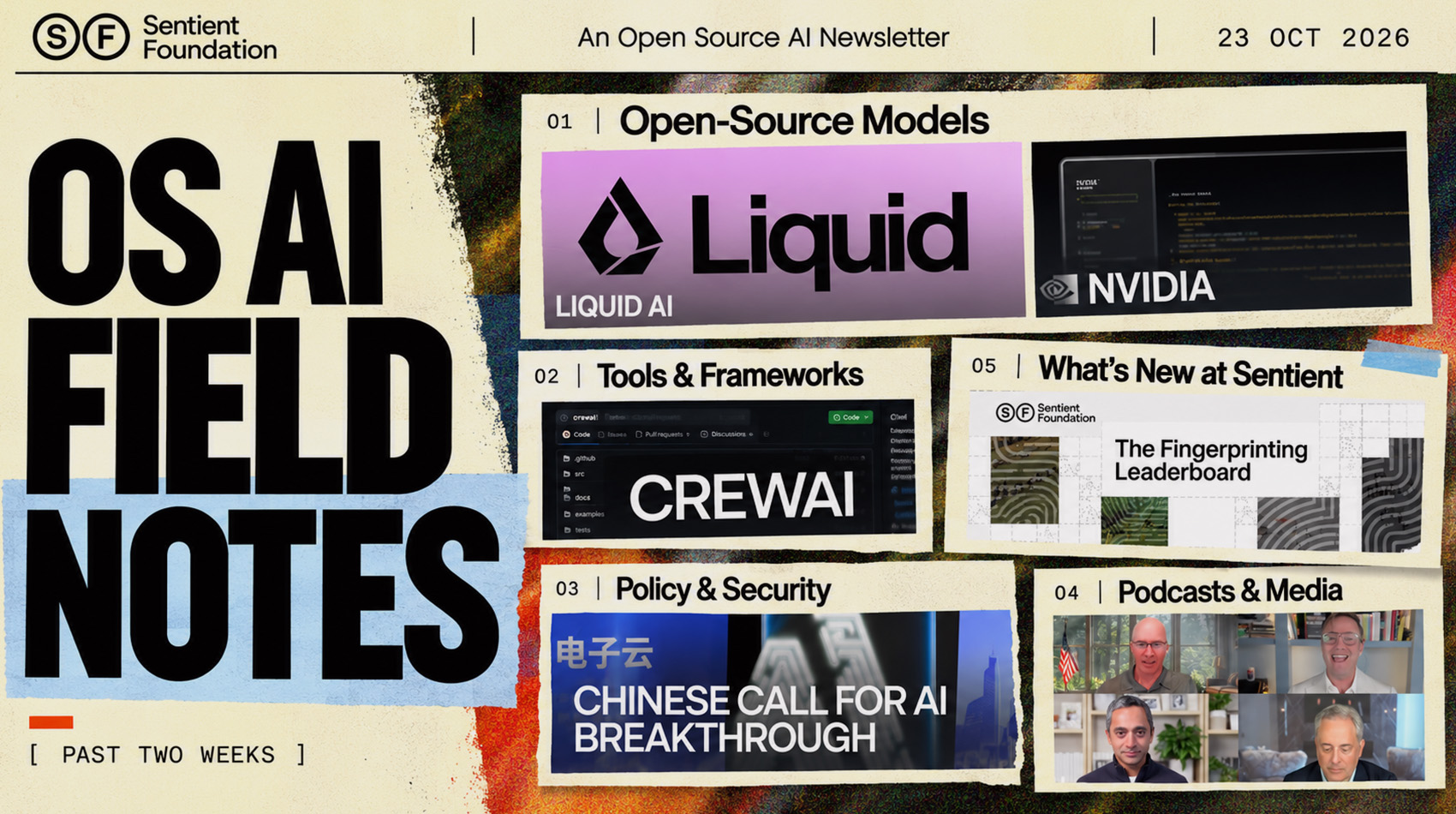
looking through this week's OS AI Field Notes, more and more model releases seem to be built around how agents actually operate rather than how well a model performs in isolation Liquid AI post-trained LFM2.5 inside OpenClaw, Hermes Agent, Pi and OpenCode. DeepSeek V4.1 Flash is optimized around its own harness. Meta built Muse Spark Open specifically for agentic workflows, while NVIDIA is trying to keep text, images, documents and video inside one model so an agent does not have to keep passing context between separate systems. Google Research takes the same idea from the other direction with Harness², where the harness itself can be improved recursively when agents encounter tasks that were not known when it was originally designed. There is a pretty clear pattern forming here. The model is still important, but judging it without the environment around it is becoming less useful once the actual job involves tools, files, long-running tasks and multiple steps. next generation of open agents might be defined just as much by how the model is connected, trained and orchestrated as by the model underneath @SentientAGI