How to make videos with Claude Opus 5.5: workflows, prompts and costs
Claude Opus 5.5 does not generate video footage directly, but instead writes executable code across formats like HTML Canvas, Three.js, Remotion, HyperFrames, or Blender scripts that a browser or rendering engine compiles into individual frames and an MP4 video file, an approach Anthropic packaged natively with the release of Claude Motion in beta on October 8, 2026 for Team and Enterprise subscribers. This guide synthesizes technical documentation from Anthropic, HyperFrames, and Remotion alongside analysis of 7,406 posts on X published between September 20 and October 17, 2026, including a 2,500-post classified sample and 245 posts that state what Claude cost them, with a median of about $11.
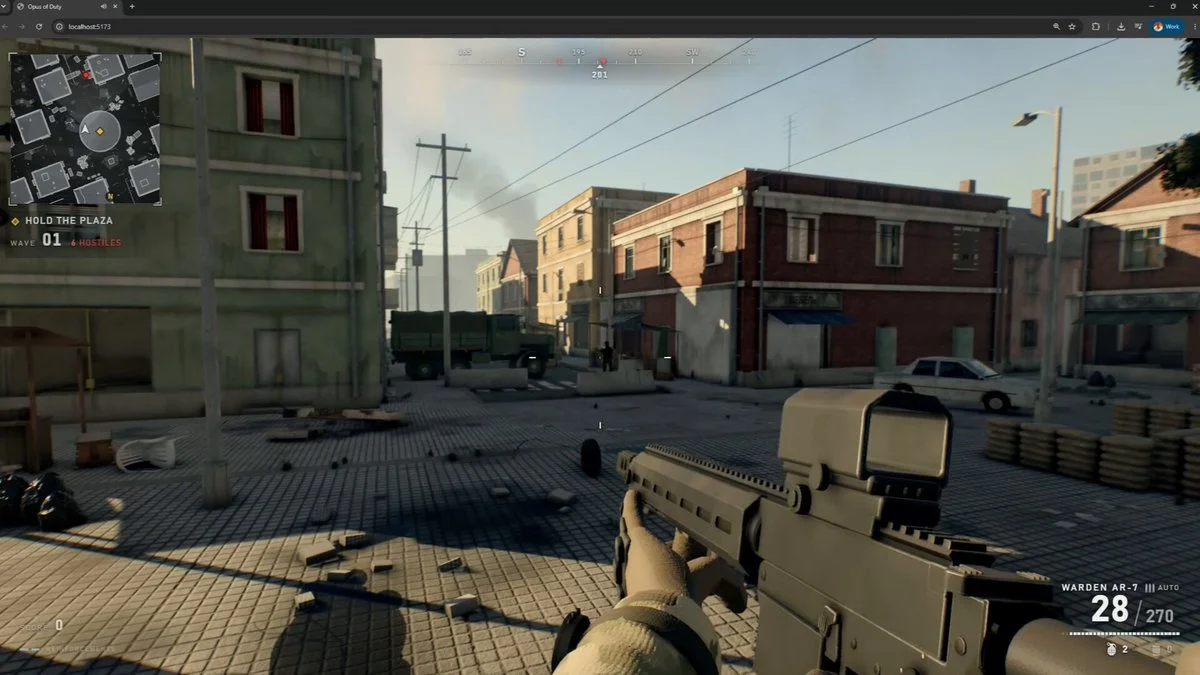
Claude cannot render video pixels using an internal diffusion or video generation architecture. Instead, Opus 5.5 writes the complete visual logic and animation timelines as code, leaving headless browser instances, Blender, or command-line FFmpeg pipelines to compute the geometry, rasterize each frame, and export the resulting MP4 container. Anthropic confirmed this mechanism directly in its documentation for Claude Motion, stating that it writes code to animate text, charts, shapes and images and does not use a video generation model.
In practice, creators on X rely on four distinct operational paths: native Claude Motion interfaces inside workspace accounts; terminal-driven Claude Code agents linked to frameworks like Remotion or HyperFrames; raw web code in Three.js or Python scripts executed inside Blender; and hybrid workflows where Claude generates motion scripts or scene blockouts alongside standalone video generation models such as Seedance or Veo.
An examination of 1,985 posts showing original creative work within our classified sample reveals that narrative stories, music videos, and cartoons represent the largest category at 20 percent of projects, followed by 3D scenes at 17 percent and commercial product promos at 15 percent.
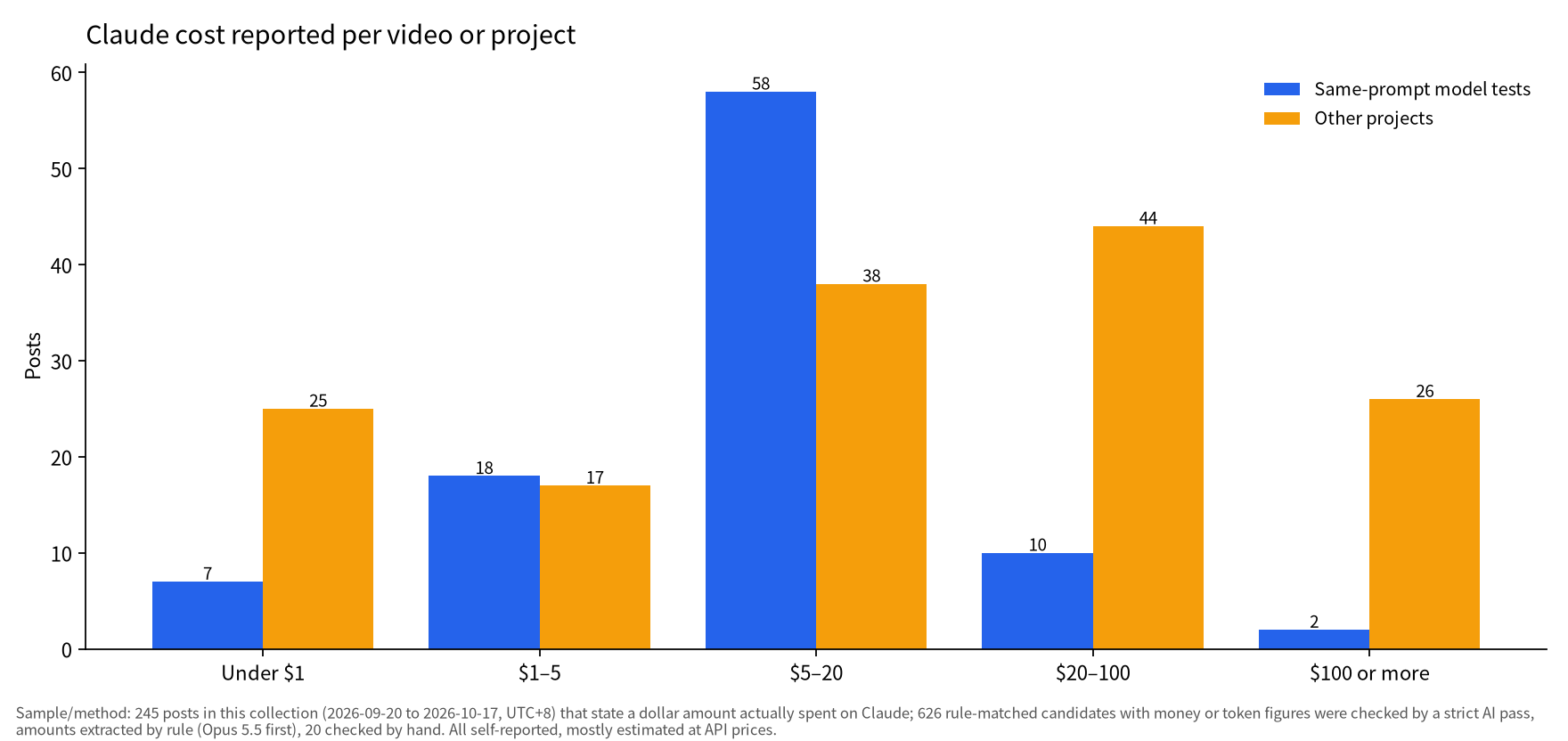
Financially, creating videos with Claude ranges from zero marginal expense to hundreds of dollars depending on the underlying toolchain and model choice. Across 245 posts in the collection that explicitly disclosed development costs, the median reported Claude expense was about $11, driven primarily by single-prompt tests clustering between $5 and $20, while extended multi-hour creative projects reached hundreds or even thousands of dollars in API token consumption. Twenty posts reported $0 because the usage came out of a subscription plan.
The figures in this report stem from rule-based filters and strict artificial intelligence classification with hand checks over posts collected from X, representing public discussion volume rather than real-world developer adoption totals. The editor did not render a benchmark video for this article, and all operational findings reflect public documentation and user reports.
Browse every original post in the collection of videos made with Claude. For Google's new model that users often compare with Opus 5.5, read Gemini 4 Argon review: benchmarks, pricing and real-world tests. For footage that code cannot draw, compare the AI video generation platforms collection and the product launch video examples.
Can Claude make videos? It writes code, not footage
Claude makes videos by writing code that draws every frame, meaning the visual pixels come from a browser, Blender, or a local renderer rather than a video generation model.
Anthropic officially launched Claude Motion on October 8, 2026, describing it as an in-product feature that writes code to animate typography, statistical charts, vector shapes, and user-supplied images. According to Anthropic, the feature allows creators to alter any word, numerical metric, or timing value directly in an editor, and says Claude Motion does not use a video generation model: no generated footage and no AI-generated people. Finished animations download as an MP4. The beta remains restricted to Team and Enterprise workspace tiers.
Local rendering engines follow this identical programmatic principle. The official HyperFrames repository explains that its renderer seeks each frame in headless Chrome and encodes the frames with FFmpeg, so the same input always produces the same video. The Remotion framework operates through the exact same philosophy by rendering React component states to disk frame by frame.
This programmatic reality is reflected across developer communities on X, where 344 posts in our collection explicitly stated that their published video consisted entirely of code without relying on generative video algorithms. At the same time, only 1,772 posts, or 24 percent of the 7,406 total posts analyzed, identified any specific software library or framework by name, as the vast majority of posters simply attributed the output broadly to Opus 5.5.
Anthropic officially released Claude Opus 5.5 on September 22, 2026, with input and output prices 20 percent below Opus 5. Our dataset spans from September 20 to October 17, 2026, capturing 7,406 posts from 3,729 unique accounts, with 96 percent of those posts including embedded video files demonstrating these workflows.
In the editor's reading of this architecture, producing videos via code provides complete programmatic determinism and granular version control, allowing developers to change a single layout dimension or timing offset and re-render the composition without random generative drift. The corresponding trade-off is that any project demanding photorealistic live-action footage or realistic human characters still requires an external video generation model.
Four workflows: Claude Motion, Remotion or HyperFrames, Three.js or Blender, and hybrids
Which route fits depends on your plan and on whether you need motion graphics or realistic footage.
Table: Four ways to make a video with Claude
| Route | Good for | What you need | Output | Posts naming it |
|---|---|---|---|---|
| Claude Motion | report and chart explainers, product walkthroughs | a Team or Enterprise plan | editable animation, MP4 export | 61 |
| Claude Code + Remotion / HyperFrames | promos, kinetic type, reusable templates | Node.js, FFmpeg, the plugin or skills | MP4 rendered locally | 174 / 168 |
| Web code (Three.js, Canvas) or Blender scripts | 3D scenes, interactive demos, game clips | screen capture or a Blender render | web page or rendered video | 539 / 325 |
| Claude plus a video generation model | footage with realistic scenes or characters | Seedance, Veo or similar, plus an editor | generated clips + motion or edits written by Claude | 378 |
Sample/method: Route details from Anthropic, HyperFrames and Remotion official pages (checked 2026-10-18); counts are rule-based matches across the 7,406 posts in this collection, including negative mentions, and measure discussion only.
The first route is Claude Motion inside Claude: you prompt, adjust in the editor or ask Claude to change it, and download an MP4. Anthropic says Motion projects can be opened in Adobe, Descript, HeyGen, Higgsfield, invideo, Luma AI, and Runway. Enterprise admins must turn Motion on in Organization settings > Artifacts.
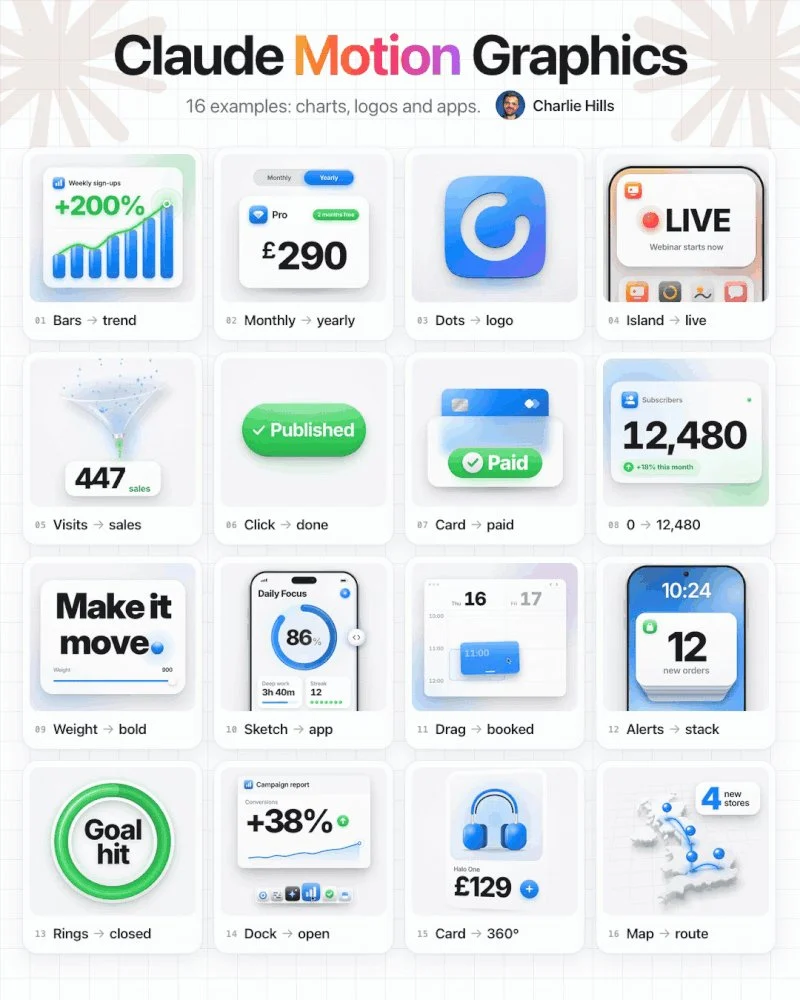
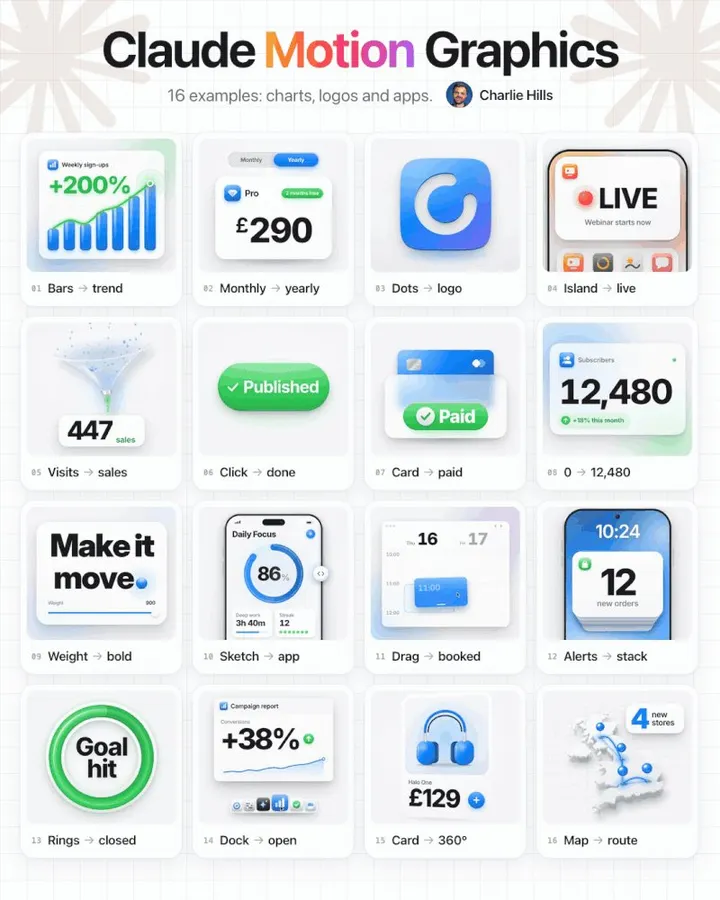
Charlie Hills (@charliejhills) shared a grid of 16 Apple-style Claude Motion graphic sequences on October 13, 2026, explaining that giving it his brand kit first got him more of the same, so he rewrote the brief around one bar, Apple quality, and now changes only the one line that describes the scene. Claude Motion is available only on Team and Enterprise plans for now. (Item: How Claude Motion produced 16 Apple-style animations)
The second route pairs Claude Code with Remotion or HyperFrames. According to Remotion documentation, you create a blank project with npx create-video --yes --blank my-video, add the skills with npx remotion skills add, start npm run dev, then run claude in the folder and describe the video. HyperFrames (Apache 2.0, from HeyGen, no per-render fees) installs as a Claude Code plugin, needs Node.js 22+ and FFmpeg, and renders plain HTML with npx hyperframes preview or render. Its README notes that Remotion uses a source-available Remotion License.
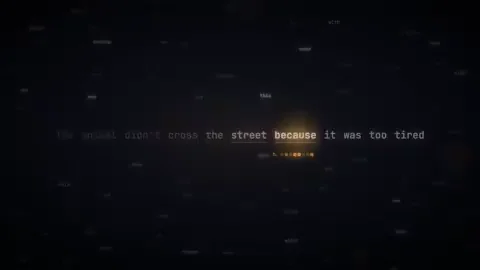
Chubby♨️ (@kimmonismus) reported producing a three-minute historical video about artificial intelligence on September 23, 2026, using roughly 7,400 lines of React and TypeScript written entirely by Claude Code inside Remotion with vector assets generated via SVG and Canvas. The project required approximately one hour of execution time and consumed 7 percent of his weekly account quota without stock footage or image generators, according to his post. (Item: Opus 5.5 renders a 3-minute AI history film entirely in code)
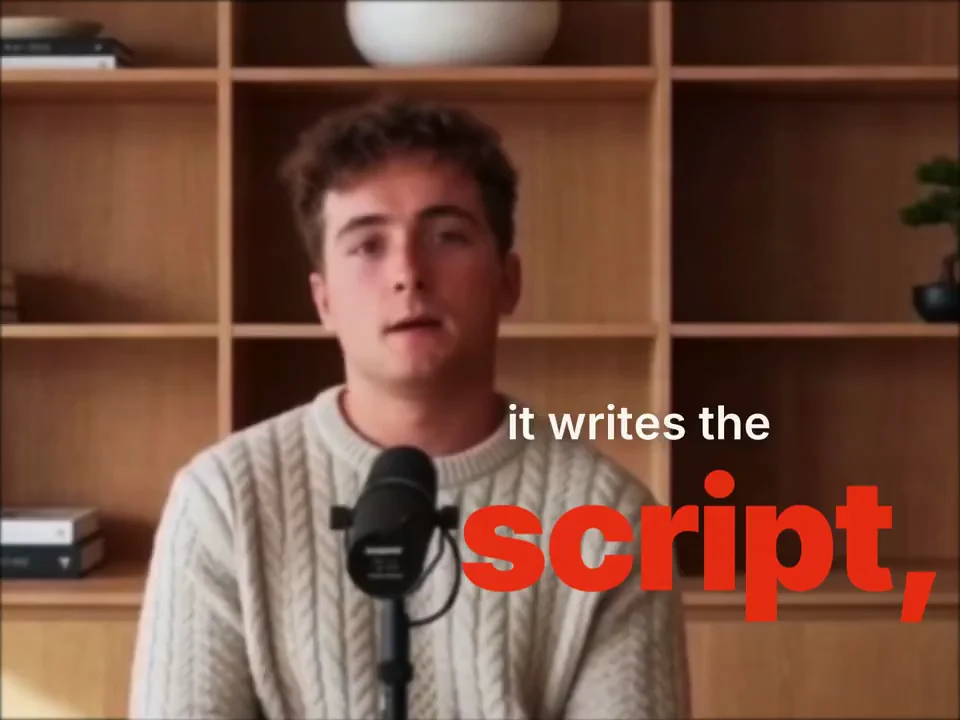
Jake Moran (@jake11moran) posted a clip on September 22, 2026, showing a 3D camera move and the 3D text "it writes the script," made with Opus 5.5 and HyperFrames. It shows code-driven text graphics layered over live footage. (Item: 3D camera moves and text effects with Opus 5.5 and HyperFrames)
The third route is plain web code or Blender scripts. Three.js/WebGL is the most-named tool in the collection (539 posts), Blender has 325. Many of these "videos" are screen recordings of interactive pages rather than rendered films.

Kevin Ngo (@kevin_t_ngo) demonstrated an animation on September 30, 2026, showing a boxy little robot playing a piano next to a black cat. He says Opus 5.5 wrote the piano music in Python, created the 3D animation in Python, and rendered it in Blender. (Item: Opus 5.5 writes piano music in Python and renders a 3D animation)
The fourth route is a hybrid. Across the collection, 378 posts name a video or image generation model such as Seedance or Veo. In these setups Claude writes the motion graphics, the edit or a 3D blockout, and the generation model supplies the footage.
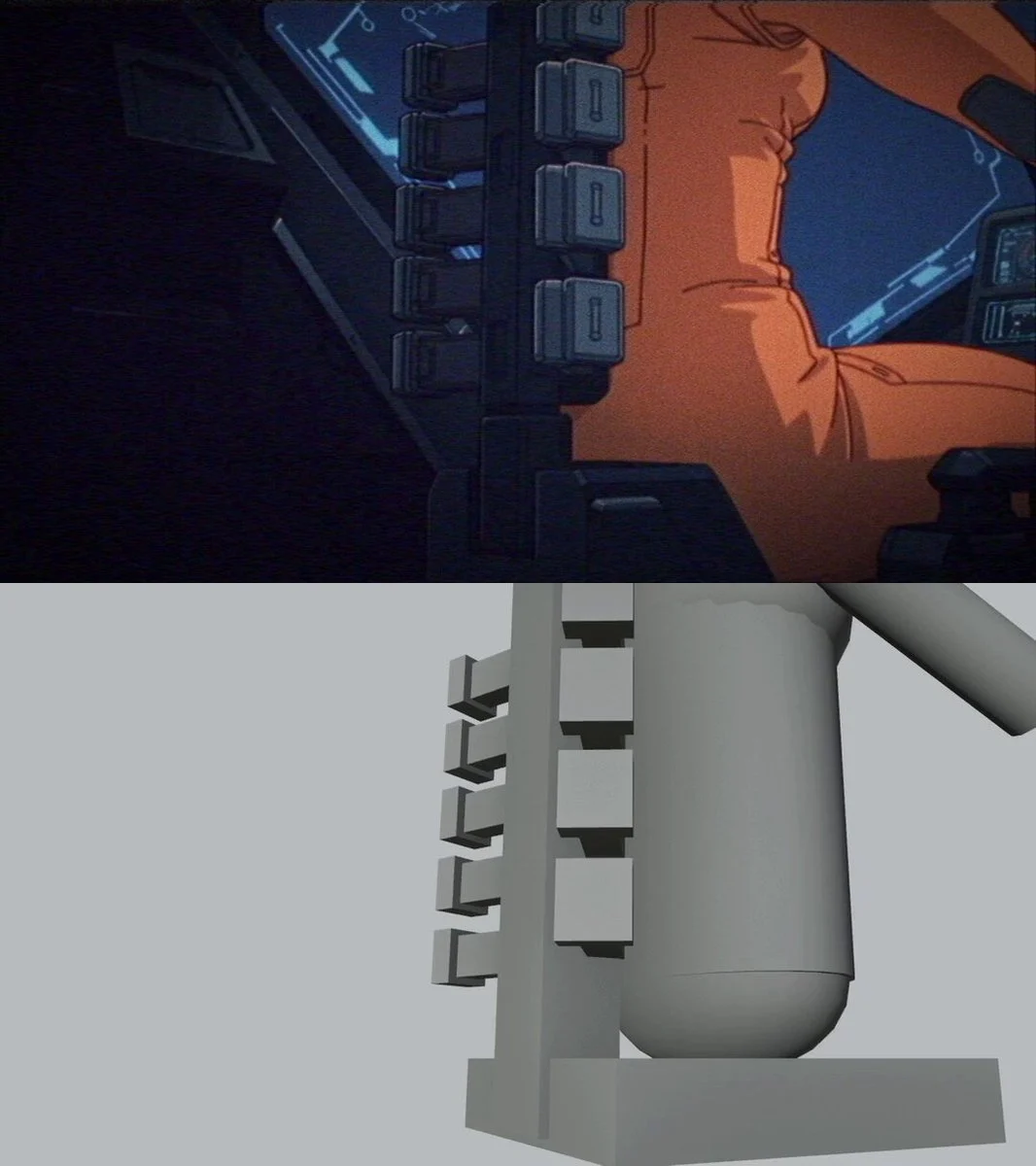
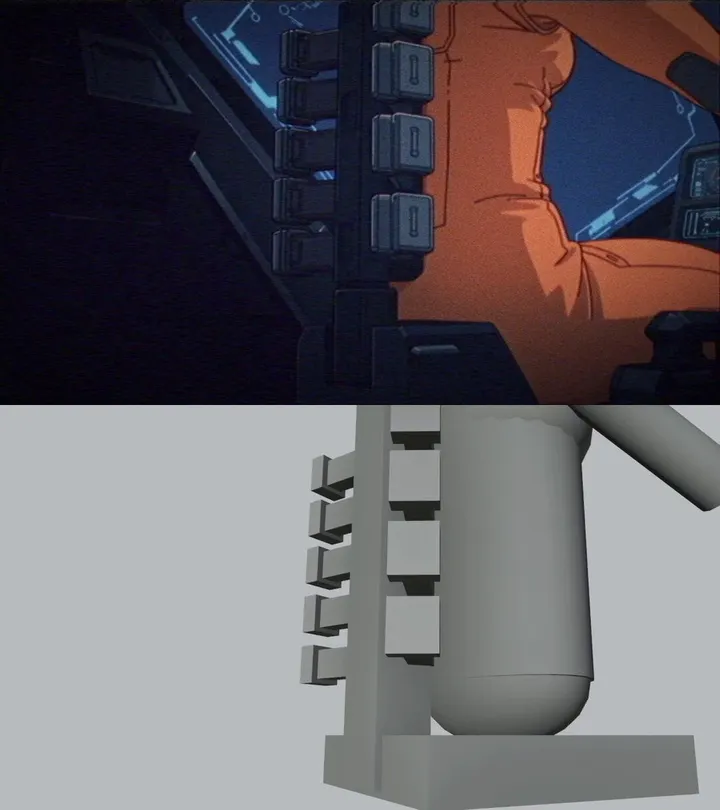
A.I.Warper (@AIWarper) presented a retro anime sequence on October 3, 2026, with the finished shots above and the grey Blender blockout below. His listed stack: Opus 5.5 with Blender MCP, Seedance 2.5 (a video generation model), and DaVinci Resolve Studio driven by Opus 5.5. (Item: Opus 5.5 drives Blender and DaVinci Resolve for a retro anime short)
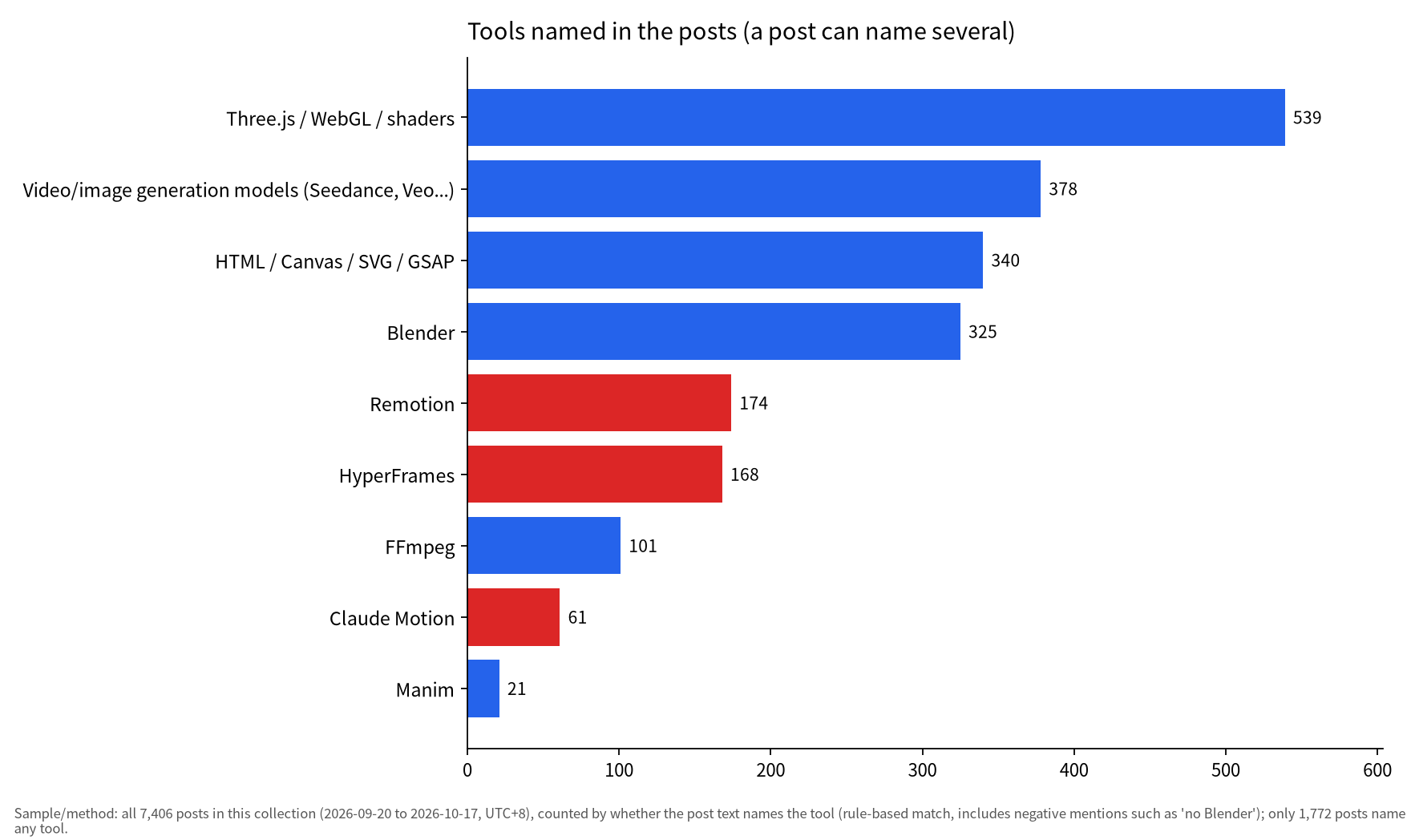
Sample/method: all 7,406 posts in this collection (2026-09-20 to 10-17, UTC+8), rule-based match on tool names in the post text, including negative mentions such as 'no Blender'; only 1,772 posts name any tool.
After 10+ hours of tuning, X user Deedy (@deedydas) shared tips we did not test: use Claude Code, not the app; Manim, HyperFrames or Motion Canvas for motion graphics; an image model for keyframes and Veo 3.1 or Seedance 2.5 for footage; reference images for consistency; an animatic before the full video; OpenTimelineIO to assemble.
What people make: stories and music videos first, then 3D scenes and promos
Among the 1,985 posts in our classified sample showing an author's original work, narrative stories, music videos, and cartoons represent the largest category with 391 examples, followed by 339 3D scenes and 289 product promos or ads.
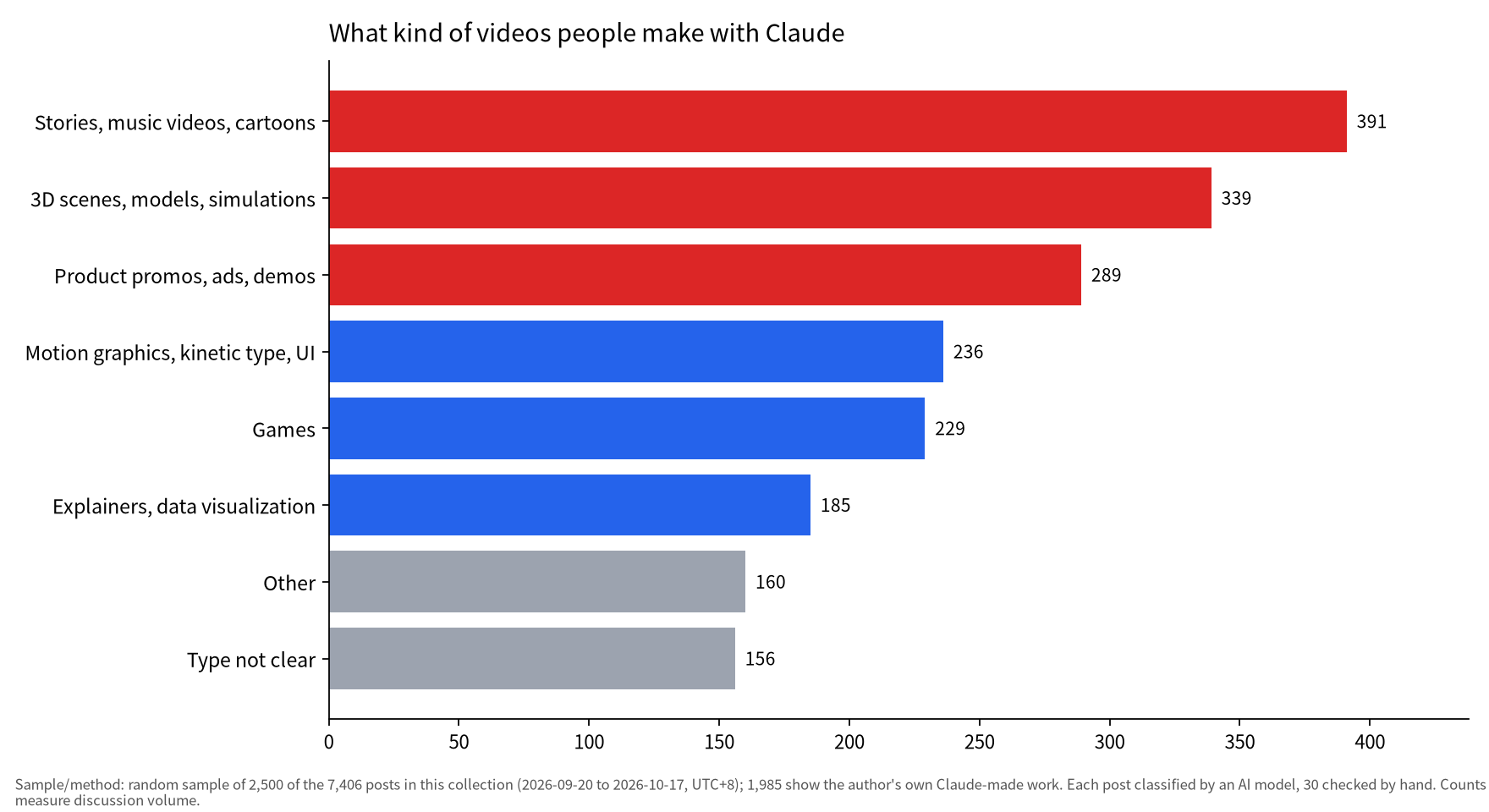
Sample/method: random sample of 2,500 of the 7,406 posts in this collection (2026-09-20 to 10-17, UTC+8), 1,985 of them the author's own work; AI classification with 30 hand checks. Counts measure discussion volume.
Motion graphics, kinetic typography, and user interface showcases accounted for 236 posts, games comprised 229 posts, and technical explainer videos or dynamic data visualizations totaled 185 posts. The remaining projects fell into generalized creative experiments or unclear formatting.
As an example of long-form narrative production, creator Ziwen (@ziwenxu_) reported producing a complete 25-minute animated episode titled Gus & Spark without traditional video diffusion models. According to his post, Opus 5.5 max worked on it for over 15 hours and wrote 34K lines of code, consuming 986 million tokens at an estimated API price of roughly $370.
Because our sample captures public posts on X, showy 3D visual experiments, game demos, and stylized music videos may be overrepresented relative to private corporate presentations, dashboard animations, and internal product explainers.
How to prompt: give references and specs, change one thing at a time
Creators who regularly publish functional video code converge on three distinct prompting behaviors: specifying technical constraints up front, providing an explicit aesthetic reference to emulate, and locking down a static brief while varying only a single scene parameter.
To ensure consistent browser rendering, developers frequently define the precise technical execution environment. On September 29, creator dawood46 (@notdwd) shared a prompt instructing Claude to generate a 12-second motion sequence at 1920 by 1080 resolution and 30 frames per second, packaged within a single HTML file where every animation tick is governed by a seek function rendered via Playwright, FFmpeg, and programmatic audio synthesis. The author offers a commercial development playbook based around this structure.
Providing concrete visual references prevents the model from defaulting to uninspired visual tropes. On September 28, dawood46 (@notdwd) warned that asking Opus 5.5 to invent animations from scratch causes it to fall back on generic compositions. Similarly, Archive (@ArchiveExplorer) noted on September 29 that without structural references, Claude's default design pattern is centered text, a gradient background and everything fading in. Archive recommends giving it a brand brain first: logo, colors, fonts and screenshots of your real product.
Maintaining a fixed structural template simplifies iteration across multi-scene projects. Charlie Hills (@charliejhills) found that giving it his brand kit got him more of the same, so he rewrote the brief around one bar, Apple quality; the brief never changes and he rewrites only the line that describes the scene.
For product walkthroughs, simple functional constraints can also succeed. Artem (@sl1ma4) quoted his baseline prompt directing Claude Code to create a dynamic presentation video about a specified project using Three.js, asking for it to be "not too fast" so people "should actually understand what it's about."
In addition, Deedy (@deedydas) suggested adding negative prompt instructions to discourage repetitive model habits, such as short punchy sentences or excessive numbers, advising users to instruct Claude to narrate like a university professor.
What it costs: about $11 at the median, thousands for big projects
Among 245 posts in the collection that explicitly stated what Claude cost for a video or project, the median reported expense was $10.75.
Sample/method: 245 posts in this collection (2026-09-20 to 10-17, UTC+8) stating a dollar amount actually spent on Claude; 626 rule-matched candidates checked by a strict AI pass, amounts extracted by rule with 20 hand checks, relays of one project counted once. All self-reported, mostly estimated at API prices.
Table: Claude 5.5 API prices (USD per million tokens)
| Model | Input | Output | Notes |
|---|---|---|---|
| Claude Opus 5.5 | 4 | 20 | cache reads 0.20; default effort medium |
| Claude Sonnet 5.5 | 2 | 10 | |
| Claude Haiku 5.5 | from 0.10 | from 0.50 |
Sample/method: Anthropic's Opus 5.5 announcement (2026-09-22) and Claude Platform model docs, checked 2026-10-18; the Batch API is 50% off.
Reported figures split into two primary distributions. A group of 95 same-prompt model benchmark tests showed a median cost of $9.94, with 58 of those runs falling tightly between $5 and $20. In contrast, 150 diverse multi-step production projects exhibited a wider spread with a median of $14.02, including 26 complex initiatives that reached $100 or more in self-reported API costs.
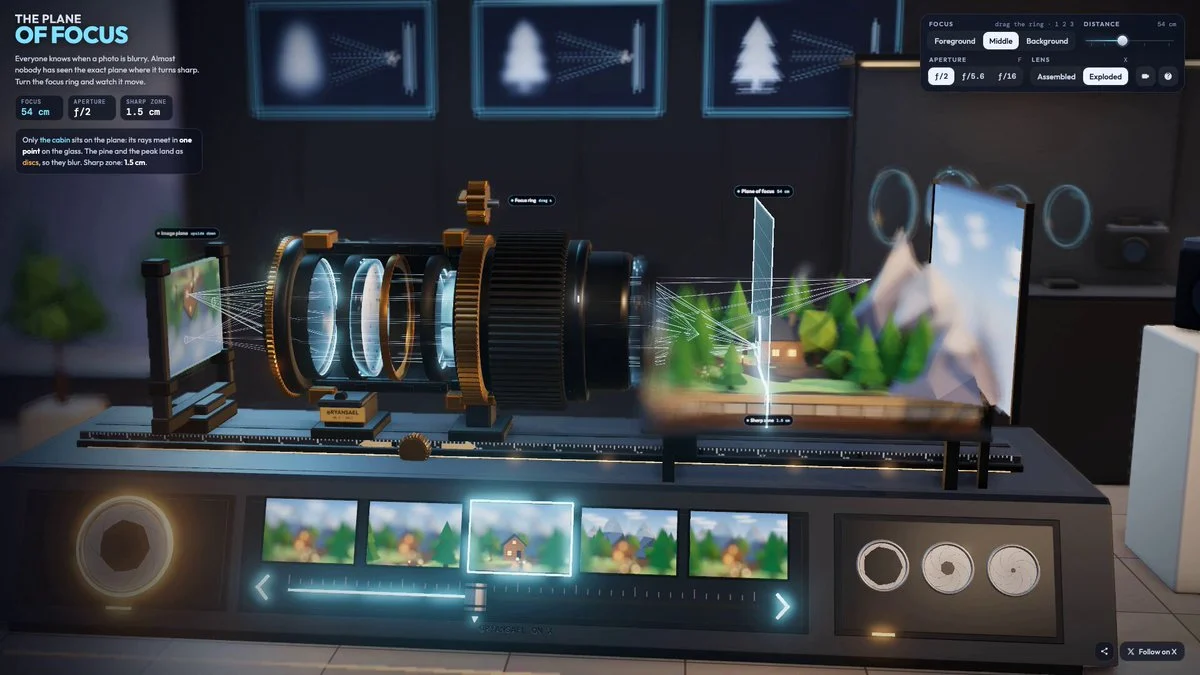
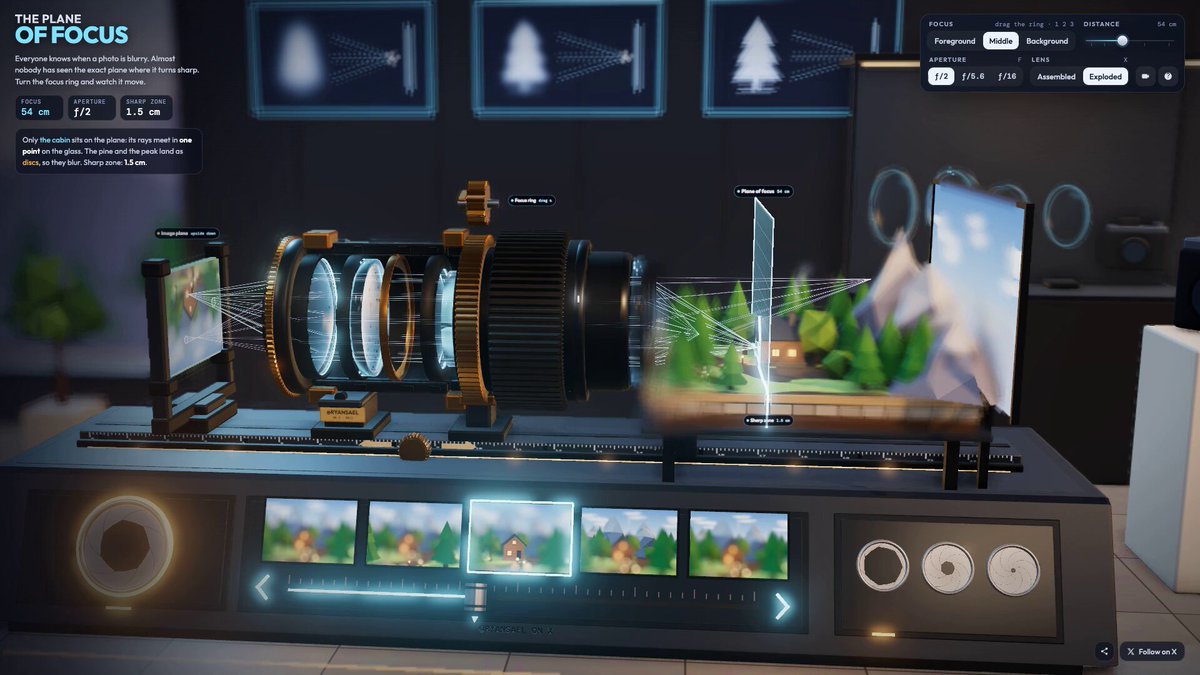
Ryan Sael (@RyanSael) shared an interactive educational demonstration on September 23, 2026, simulating camera lens elements and focal planes, which Opus 5.5 authored in a single run lasting one hour and 26 minutes at a self-reported API cost of $25.66. The output is an interactive web page captured as video rather than a traditionally compiled animation file. (Item: Opus 5.5 builds an interactive lens focus lab in one shot)

Artem (@sl1ma4) shared a Three.js product animation on October 5, 2026, generated from a single Claude Code prompt describing an application monitoring service, which completed after one hour and seven minutes at an API cost of $12.45 across 185.5k output tokens and 1,767 added code lines using Opus 5.5. In an earlier test on October 1, the same author generated a 30-second motion graphics clip for Uptimepage using Sonnet 5.5 in 26 minutes for $6.74. (Item: One prompt has Opus 5.5 build a presentation video in about an hour)
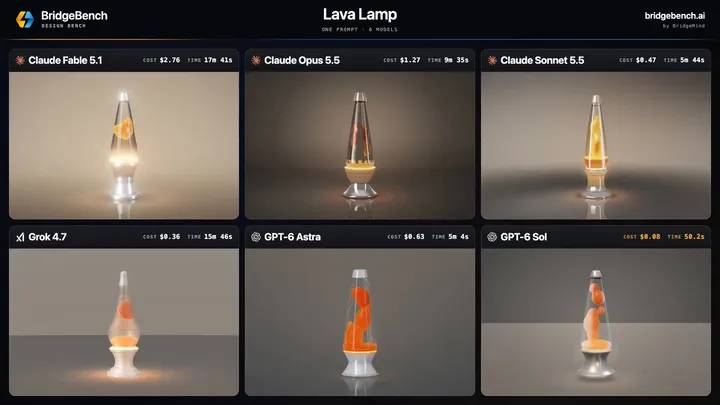
Selecting smaller models can lower token expenses significantly. Benchmark testing from Bridgebench (@bridgebench) on September 28 revealed that the same lava lamp prompt cost $1.27 across 9 minutes and 35 seconds on Opus 5.5, compared to $0.47 across 5 minutes and 44 seconds on Sonnet 5.5, and the author said Sonnet nailed the glow, the lighting and the details.
Large-scale computational projects occupy the high end of reported expenditures. Stefan 3D AI (@Stefan_3D_AI) reported spending $2,175 in Opus 5.5 tokens over 36 hours and 7.85B tokens, with access to Unity, Blender and APIs, plus $230 for 2D, 3D and music generation, and getting a playable old-school MMO RPG. While such massive software undertakings are rare in the dataset, they illustrate the upper boundary of open-ended agent execution.
Conversely, 20 posts in our cost sample reported an effective marginal cost of zero dollars because the authors relied entirely on standard consumer subscription allowances. For instance, Chubby♨️ (@kimmonismus) noted that compiling his three-minute historical Remotion film required about an hour of time and consumed 7 percent of his weekly usage quota. In programmatic workflows, token generation represents the primary expense, as rendering tasks handled locally via HyperFrames or Remotion run on local compute hardware without per-render software fees.
As a methodological caveat, five specific accounts accounted for 38 of the 95 benchmark tests analyzed, primarily centered on a recurring prompt genre simulating soft 3D physics toys, meaning those test results capture a specific viral aesthetic rather than a comprehensive cross-industry baseline.
Limits: the default look, usage limits and plan access
Direct critical complaints represent a minority of total posts, but they highlight key operational boundaries around plan tiers, token quotas, and repetitive design tropes.
Across our classified sample of 2,500 posts, 2,285 posts raised no structural criticisms, while 90 posts cited generic or buggy visual output, 74 posts noted token costs or strict usage rate limits, 46 posts emphasized that output files still required manual developer intervention, and 5 posts criticized plan restrictions.
Subscription limitations remain a friction point for individual creators. Anthropic officially restricts the Claude Motion beta to Team and Enterprise workspace accounts. In response, creators like James Malsawm (@JamesMalsawm) have publicly requested that Anthropic extend Motion functionality to Pro and Max subscription tiers. Concurrently, Mustafa Al Bassam (@musalbas) expressed frustration on October 15, saying Opus now uses the built-in Claude Motion by default instead of scripting from scratch (his experience; Anthropic has not confirmed it).
Commercial revenue claims, including mentions of client contracts or monthly business earnings, appeared in only 17 of the 2,500 sampled posts, representing under 1 percent of discussions. The editor did not verify any of these financial declarations, and they are omitted from our findings.
Questions and answers
How much usage does an Opus 5.5 animation take, and can it make long videos?
API users in our collection report a median expenditure of about $11 per video project across 245 reported figures. Operating on a standard $20 monthly subscription, creator Eray’la Yapay Zeka (@AIMevzulari) noted that five-hour rolling rate limits and weekly quotas typically allow him to produce five to six two-to-three-minute animations per week, totaling 20 to 25 videos per month. He says length depends on your plan and its limits, and that an animation could run as long as 10 minutes. The longest documented project in our evidence is Ziwen's 25-minute episode Gus & Spark, which Opus 5.5 worked on for over 15 hours at about $370 at API prices (self-reported).
Can I use Claude Motion on a Pro or Max plan?
As of October 18, 2026, Claude Motion cannot be accessed on individual Pro or Max plans, as Anthropic officially maintains the feature as a beta limited to Team and Enterprise workspace tiers, where an organization administrator must explicitly enable it. Pro and Max users seeking video generation capabilities rely instead on Claude Code connected to local rendering frameworks such as Remotion or HyperFrames, which execute locally to compile programmatic animations into MP4 files without workspace restrictions.