MiniMax M3.1 Flash vs DeepSeek V4.1 Flash: price, speed and coding results compared
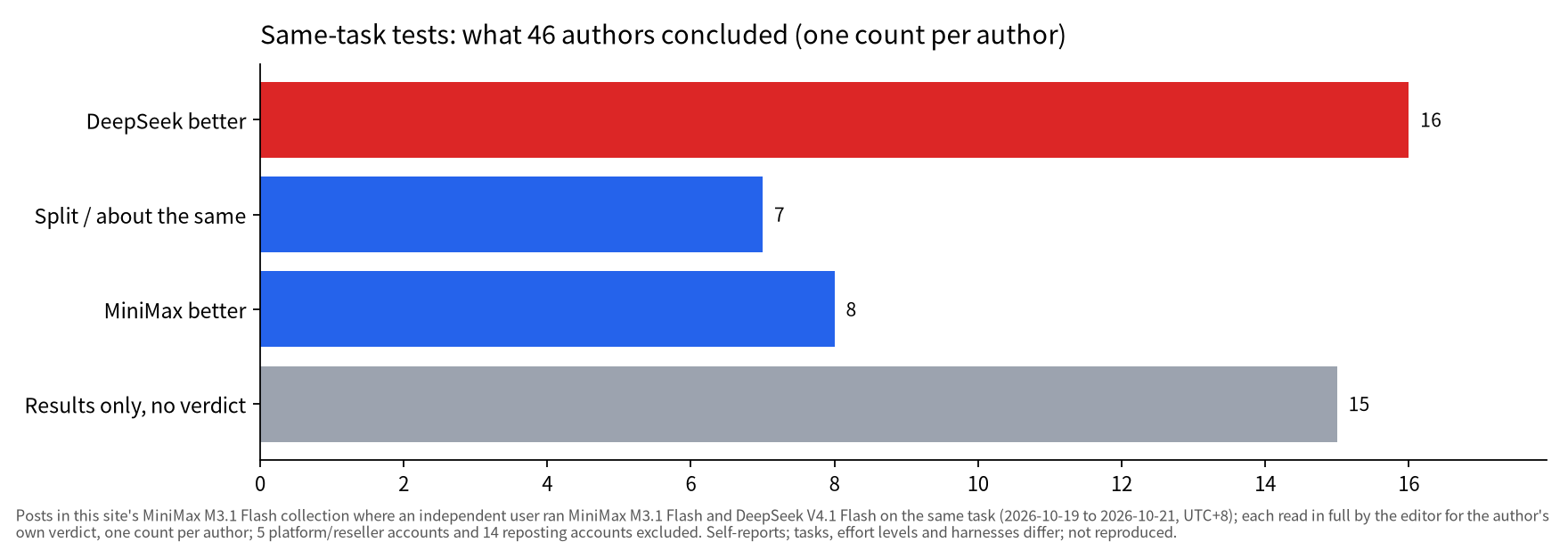
For coding and anything where accuracy matters, DeepSeek V4.1 Flash-1017 is still the safer pick: it leads MiniMax M3.1 Flash on the coding rows of both vendors' tables and on most independent tests, and 16 of the 31 users who ran both on the same task and gave a verdict preferred it (8 preferred MiniMax). MiniMax is usually cheaper per finished task and half price during DeepSeek's weekday peak hours, but it is slower, can burn far more tokens on long runs, and guesses more on facts. This review draws on official pricing and model pages checked on 21 October 2026, Artificial Analysis, and 399 posts in this site's collection, with 54 same-task comparisons read by hand.
The short answer: default to DeepSeek V4.1 Flash-1017 for coding, repo work and anything factual; use MiniMax M3.1 Flash for cheap daytime agent, search or automation runs, quick visual drafts, video input, and while it is free on some routes. MiniMax's list price matches DeepSeek's off-peak rate ($0.15 per million input tokens, $0.60 per million output tokens), but it is flat all day, while DeepSeek doubles during weekday peak hours (09:00-12:00 and 14:00-18:00 UTC+8). DeepSeek's cached input is 2.5x to 5x cheaper, which matters for long agent runs.
Per task, MiniMax was cheaper in 10 of 12 paid user receipts, but cost 3.7x and 5.9x more in the two runs that lasted over four hours, and it was slower in 11 of 18 timed comparisons.
On quality, MiniMax's own table puts it ahead of 1017 on 2 of 6 shared rows and behind on all three coding rows, and independent tests mostly agree. MiniMax's wins are office automation scores, cost-efficient web search, a $5-budget website-building race and some one-shot 3D scenes.
MiniMax announced M3.1 Flash on 19 October 2026 at 19:56 UTC+8 and confirmed that the anonymous Space Bunny model was an early version; DeepSeek released 1017 two days earlier.
More tests are in the MiniMax M3.1 Flash collection and the DeepSeek V4.1 Flash collection; for DeepSeek against Opus 5.5, GPT-6 and Gemini 4 Argon see the DeepSeek V4.1 Flash review.
How the two models differ on paper
On paper the two look alike: the same list price as DeepSeek's off-peak rate and the same 1M-token context. The differences are that MiniMax charges a flat rate, always reasons, accepts video, and has no open weights yet, while DeepSeek has peak pricing, a non-thinking mode and MIT-licensed weights on Hugging Face. MiniMax claims nearly 3x faster inference than M3 and 70% lower usage cost on agentic tasks; its product page notes that the 70% is not a unit-price comparison. The launch post says weights arrive on 23 October, the blog says "later", and they were not out as of 21 October.
Table: Official prices and specs per million tokens (official pages, checked 21 October 2026)
| Item | MiniMax M3.1 Flash | DeepSeek V4.1 Flash-1017 |
|---|---|---|
| Input (cache miss) | $0.15, flat all day | $0.30 peak / $0.15 off-peak |
| Output | $0.60, flat all day | $1.20 peak / $0.60 off-peak |
| Cached input | $0.015 | $0.006 peak / $0.003 off-peak |
| Peak hours | none | weekdays 09:00-12:00 and 14:00-18:00 UTC+8, except Chinese public holidays |
| Context | 1M tokens | 1M tokens, max output 384K |
| Reasoning | always on, 5 effort levels (Low to Max), cannot be disabled | thinking (default) and non-thinking modes |
| Input types | text, image, video | text, image |
| Weights | launch post says 23 October; not out as of 21 October | open on Hugging Face (MIT) |
Sample/method: Sources: MiniMax pricing page, launch blog, product page and launch post on X; DeepSeek API docs (Models & Pricing) and the DeepSeek-V4.1-Flash-1017 model card. Unit prices only, not per-task cost.
Model size is not stated on the MiniMax pages we opened. MarkTechPost reports 428B total parameters with about 23B active, while Artificial Analysis says MiniMax has not disclosed it. Treat the figure as unconfirmed.
One integration gotcha: reasoning in M3.1 Flash cannot be turned off. The official product page lists five effort levels (Low, Medium, High, Xhigh and Max, with Max the default), and MarkTechPost notes that M3 integrations sending a thinking-disabled flag now get an error. DeepSeek lets you switch thinking off. That mattered for AI Penguin (@HeyAIpenguin): his first DeepSeek call through OpenRouter spent its tokens thinking and returned nothing until he turned reasoning off. His final run took 17 seconds and $0.004 on DeepSeek, and 52 seconds on MiniMax's free route.
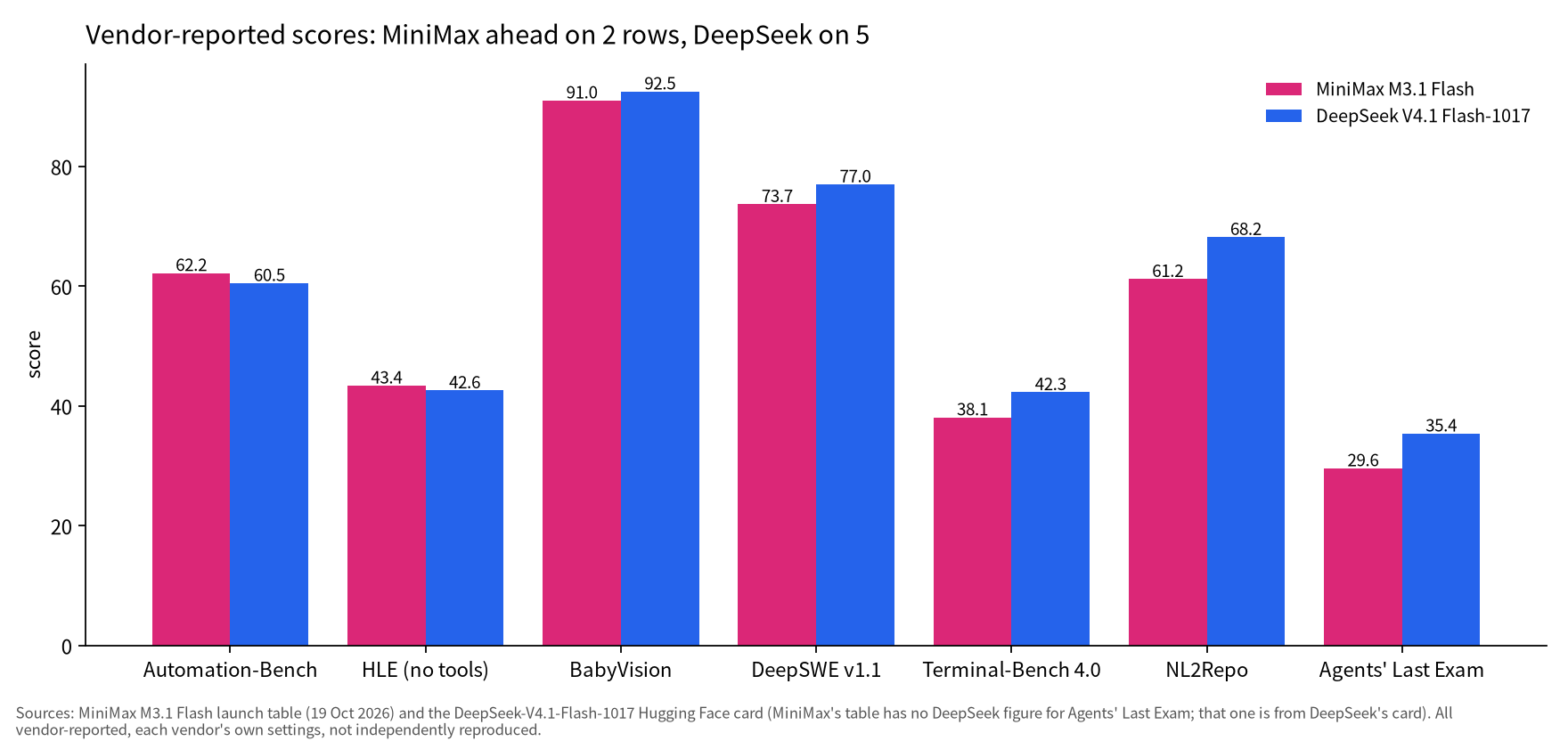
Sample/method: Sources: MiniMax M3.1 Flash launch table (19 Oct 2026) and the DeepSeek-V4.1-Flash-1017 Hugging Face card (MiniMax's table has no DeepSeek figure for Agents' Last Exam; that one is from DeepSeek's card). All vendor-reported, each vendor's own settings, not independently reproduced.
In detail, MiniMax leads Automation-Bench (62.2 vs 60.5) and HLE without tools (43.4 vs 42.6), and trails DeepSWE (73.7 vs 77.0), Terminal-Bench 4.0 (38.1 vs 42.3), NL2Repo (61.2 vs 68.2) and BabyVision (91.0 vs 92.5). DeepSeek's own model card adds Agents' Last Exam at 35.4, against MiniMax's 29.6. All of these are vendor-reported and not independently reproduced.
Which is cheaper: it depends on the hour and the cache
Per token, MiniMax is never cheaper than DeepSeek off-peak, and it is half price during DeepSeek's weekday peak; for long agent runs, cache pricing can flip the result. Off-peak, uncached input and output cost the same on both, and DeepSeek's cached input is 5x cheaper ($0.003 vs $0.015). At peak, MiniMax's output ($0.60 vs $1.20) and uncached input ($0.15 vs $0.30) are half price, but DeepSeek's peak cache rate of $0.006 is still lower than MiniMax's $0.015. On input alone, MiniMax stays cheaper until the cache hit rate passes about 94%.
Table: Effective price per million input tokens at different cache hit rates (editor's calculation from list prices)
| Cache hit rate | MiniMax | DeepSeek peak | DeepSeek off-peak |
|---|---|---|---|
| 0% | $0.1500 | $0.3000 | $0.1500 |
| 50% | $0.0825 | $0.1530 | $0.0765 |
| 90% | $0.0285 | $0.0354 | $0.0177 |
| 99% | $0.0163 | $0.0089 | $0.0045 |
Sample/method: Formula: miss price × (1 − hit rate) + hit price × hit rate; input only. Output is $0.60 for MiniMax, $1.20 peak and $0.60 off-peak for DeepSeek. Editor's arithmetic, not a real bill.
NFT_Chen (@NFT_Chen) worked out that with a 120:1 input-to-output mix, MiniMax beats DeepSeek's peak price as long as the cache hit rate stays below about 97.5%; the editor's check gives the same. On launch night, users jackyang886 and Zekunnnnn pointed out that MiniMax's cache price is 5x DeepSeek's off-peak rate, which adds up for cache-heavy workloads.
Free routes complicate the bills. MiniMax's official replies said the final model is free on OpenRouter for 72 hours and on OpenCode for three days; they were posted around 04:40-05:00 UTC+8 on 20 October, so both windows end around 23 October. Several receipts below used these routes, so a $0 bill is not a list-price comparison.
Cost and time for a real task
MiniMax usually finished the same task for less money, but it was slower more often than not, and the two longest runs cost several times more. All numbers are self-reported; routes, effort levels and harnesses differ.
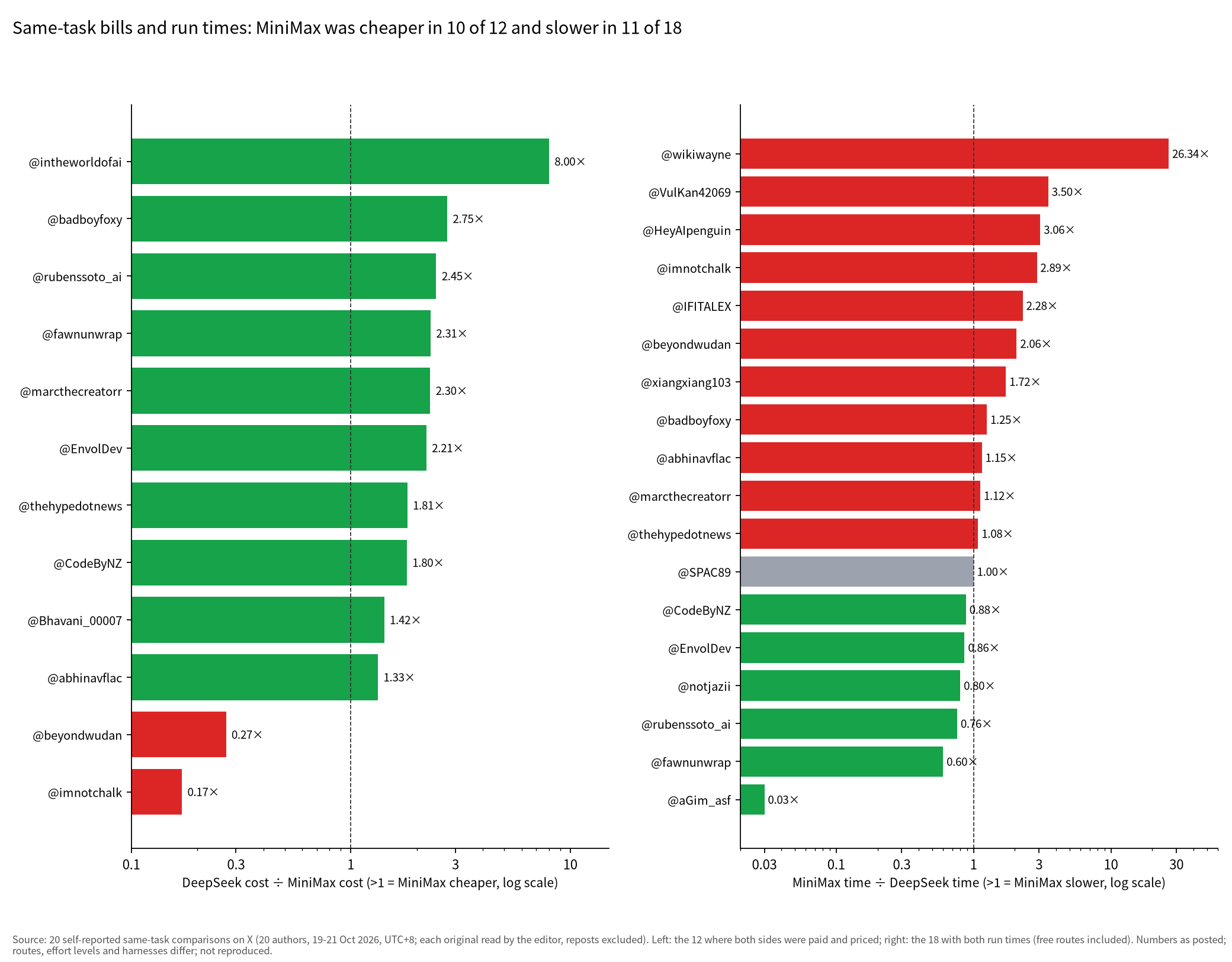
Sample/method: 20 self-reported same-task comparisons on X, each read by the editor; left: 12 paid on both sides with both costs; right: 18 with both run times. Self-reported, not reproduced.
Table: Same-task comparisons: self-reported cost, time and verdict
| Tester | Task | Cost, MiniMax / DeepSeek | Time, MiniMax / DeepSeek | Poster's take |
|---|---|---|---|---|
| @thehypedotnews | submarine chase in an undersea city (one HTML file, several fix rounds) | $0.21 / $0.38 | 29m24s / 27m09s | no verdict |
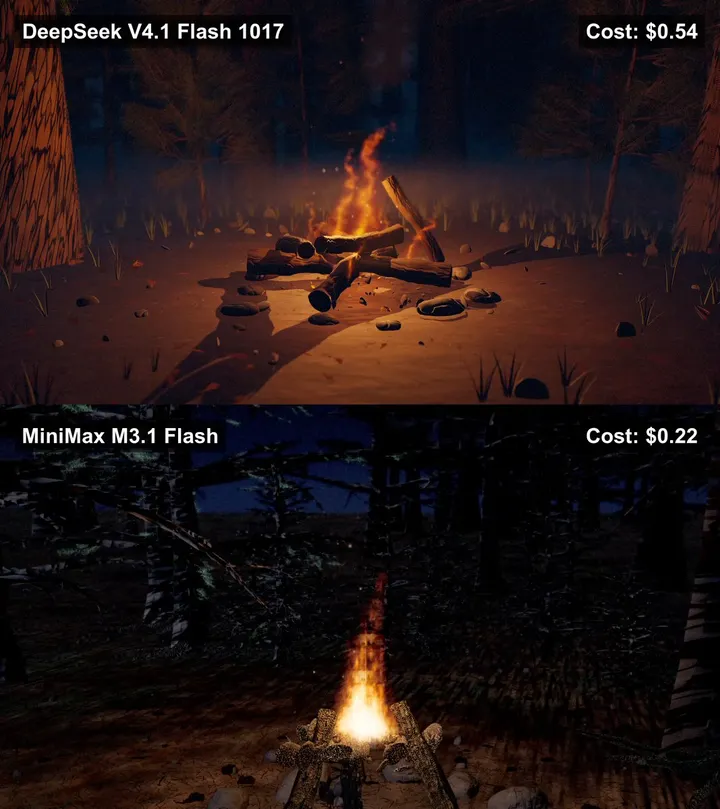
| @rubenssoto_ai | campfire scene | $0.22 / $0.54 | 1h06m51s / 1h28m27s | no verdict |
| @marcthecreatorr | same-prompt scene | $0.50 / $1.15 | 1h30m / 80m | MiniMax went simpler at under half the cost |
| @fawnunwrap | FAWNBENCH test | $0.029 / $0.067 | ~3m / ~5m | not stated |
| @badboyfoxy | koi pond (max) | $0.40 / $1.10 | 50m / 40m | DeepSeek had better design taste |
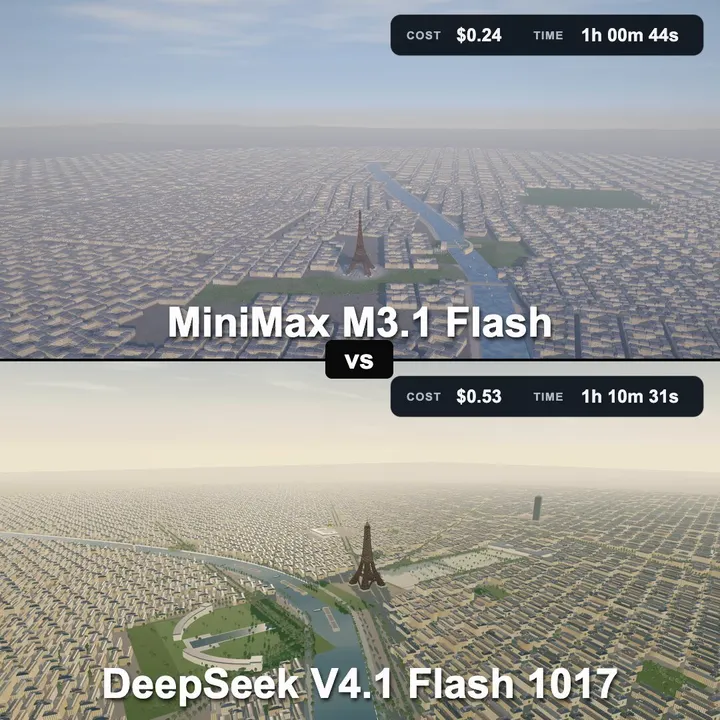
| @EnvolDev | Eiffel Tower 3D scene | $0.24 / $0.53 | 1h00m44s / 1h10m31s | MiniMax better (added traffic unprompted) |
| @intheworldofai | 360-degree product viewer | $0.01 / $0.08 | — | split: MiniMax more complete UI |
| @Bhavani_00007 | Three.js rocket launch | $0.55 / $0.78 | — | MiniMax better |
| @CodeByNZ | same-prompt task | $0.50 / $0.90 | 1h03m51s / 1h12m43s | no verdict |
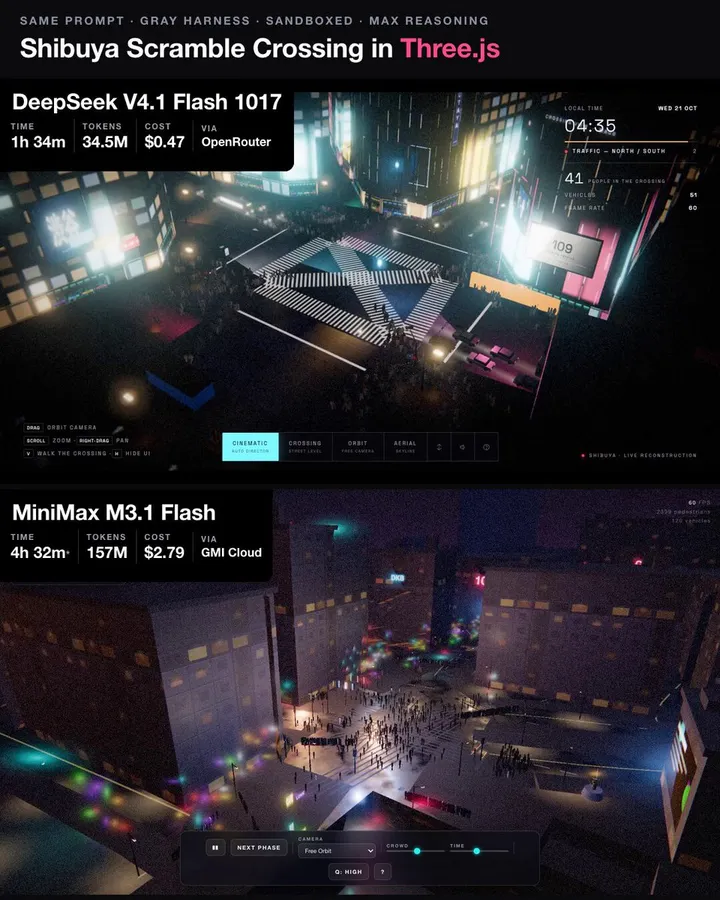
| @imnotchalk | Shibuya Scramble Crossing in Three.js | $2.79 / $0.47 | 4h32m / 1h34m | says there is a clear winner (DeepSeek, on the numbers) |
| @beyondwudan | long max-effort task (MiniMax in OpenCode, DeepSeek in DeepSeek Harness) | $2.68 / $0.72 | 4h01m / 1h57m | no verdict |
| @abhinavflac | same-prompt task | $0.79 / $1.05 | 2h40m / 2h19m | no verdict |
| @notjazii | pixel-art waterfront city (highest reasoning) | $0 (plan) / $0.40 | 40m / 50m | different styles, no winner |
| @SPAC89 | same test (max) | plan / not stated | 38m / 38m | MiniMax better |
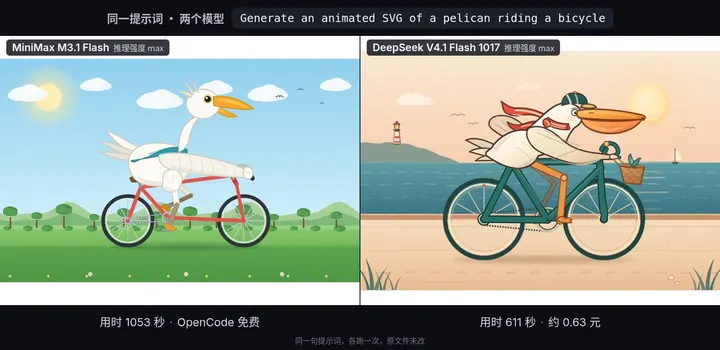
| @xiangxiang103 | pelican-on-a-bicycle SVG (max) | free / about ¥0.63 | 1053s / 611s | DeepSeek better; MiniMax drew an egret |
| @aGim_asf | Three.js koi pond | $0 / $0.9 | 3.3m / 1h40m | DeepSeek's pond prettier |
| @VulKan42069 | Pelican Mafia test (max) | not stated | 2h24m / 41m10s | go for DeepSeek |
| @IFITALEX | pixel-art cat-on-a-bike animation (each in its own harness) | not stated | 1h22m / 36m | DeepSeek most solid |
| @wikiwayne | desert oasis scene | free tier / not stated | 576.8s / 21.9s | MiniMax passed first try but 26x slower |
| @HeyAIpenguin | rocket-race animation (one HTML file) | free / $0.004 | 52s / 17s | both drafts |
Sample/method: Sample: 20 original posts read by the editor (19-21 Oct 2026, UTC+8; reposts excluded). Numbers as posted, not reproduced; many MiniMax runs used time-limited free routes, and routes, effort levels and harnesses differ.
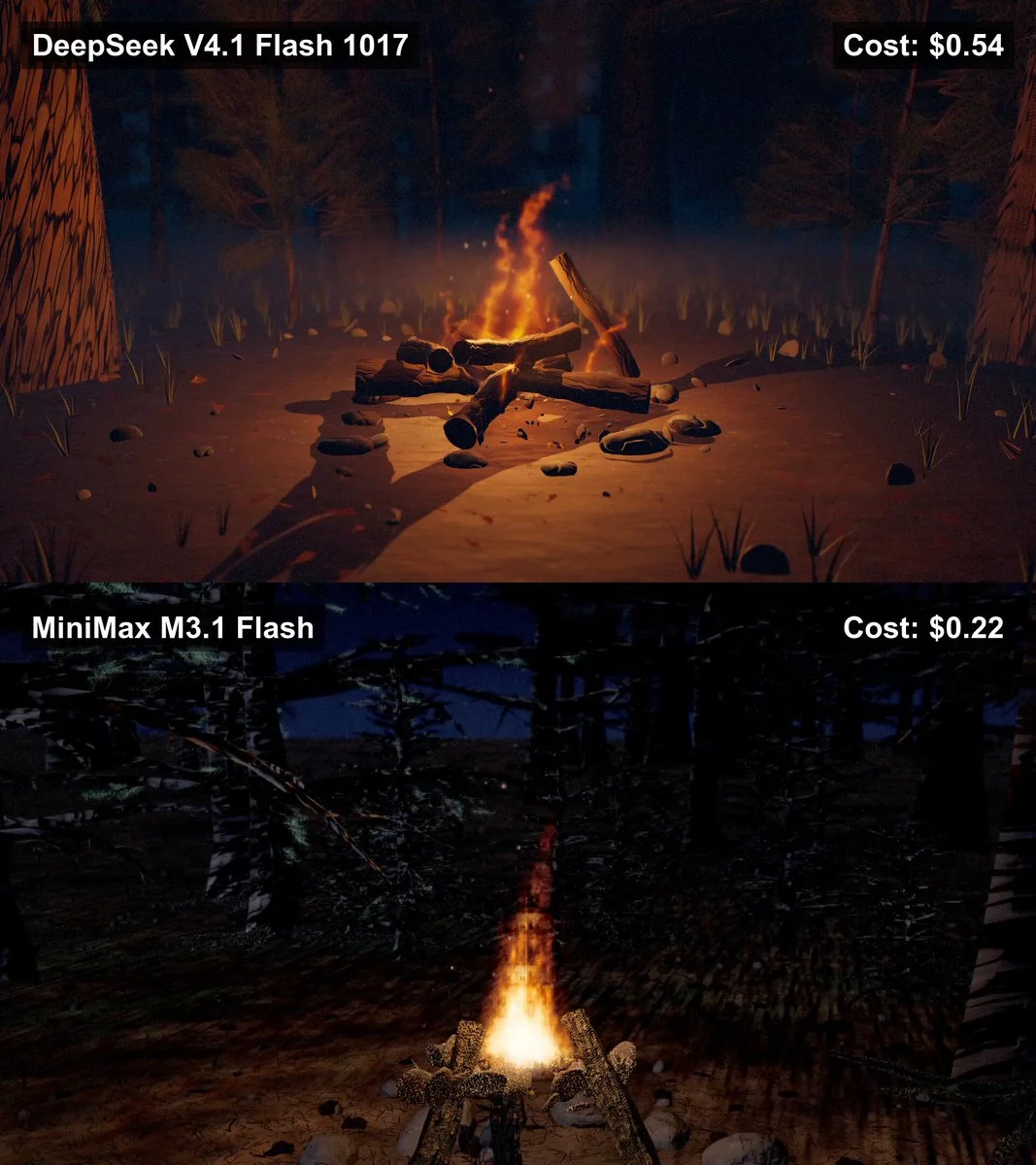
Rubens Soto | AI & SaaS (@rubenssoto_ai) posted this campfire comparison on 19 October 2026: DeepSeek V4.1 Flash 1017 on top for $0.54, MiniMax M3.1 Flash below for $0.22. He did not say which result was better. (Item: MiniMax M3.1 Flash vs DeepSeek V4.1 Flash on the same task: 22 minutes faster, 59% cheaper)
Token counts and bills do not move together. In that test DeepSeek used 89.5 million tokens and MiniMax 8.12 million, yet DeepSeek cost only $0.54 against $0.22. The poster gave no breakdown; the editor's reading is that most of DeepSeek's tokens must have been cheap cached reads. These figures were reposted by at least six other accounts and are counted once here.
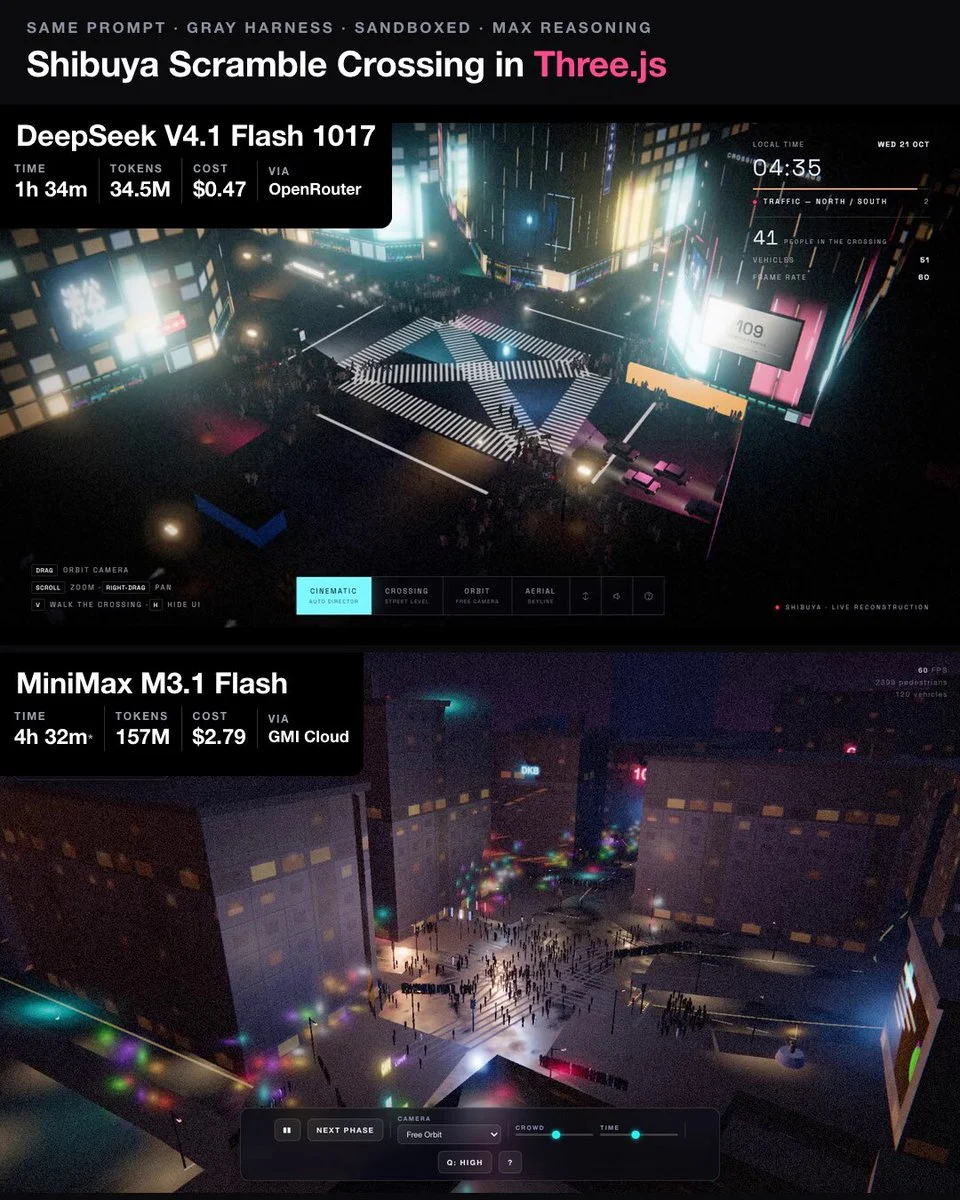
Daniel (@imnotchalk) posted this Shibuya Scramble Crossing build in Three.js on 21 October 2026 (UTC+8): DeepSeek took 1 hour 34 minutes, 34.5 million tokens and $0.47; MiniMax took 4 hours 32 minutes, 157 million tokens and $2.79. He called it a clear win; on the numbers, that is DeepSeek. (Item: Shibuya crossing in 3JS: DeepSeek V4.1 Flash 1h34m/$0.47 vs MiniMax M3.1 Flash 4h32m/$2.79)
The two runs where MiniMax cost more were both long. Besides Daniel's Shibuya build, abhinav (@beyondwudan) ran a max-effort task that took MiniMax 4 hours 1 minute, 147.9 million tokens and $2.68 in OpenCode, against 1 hour 57 minutes, 134.7 million tokens and $0.72 for DeepSeek in DeepSeek Harness. In VulKan's (@VulKan42069) Pelican Mafia test, MiniMax needed 2 hours 24 minutes and 76.3 million tokens; DeepSeek needed 41 minutes 10 seconds and 33.6 million.
On speed, MiniMax claims 200+ tokens per second with a P50 of 170+. Artificial Analysis measured 104.7 tokens per second on MiniMax's API against 208.7 on DeepSeek's. Iqbal Abdullah (@iqbalabd) measured MiniMax at roughly 37% of DeepSeek's output speed on Ollama's cloud, while Iam_ (@SPAC89) saw about 200 tokens per second on his MiniMax M Plan. J A Z I I (@notjazii) gets 100+ tokens per second but says the model hallucinates and does work he did not ask for on xhigh or max, so tasks end up slow. In Farhan's (@mhdfaran) Connect Four match, the score was 3-3 after six games, with a median thinking time of 9.5 seconds for MiniMax against 74.4 seconds for DeepSeek.
Coding and building: who wins the same-task tests
Of the 46 independent users who ran both models on the same task, 16 preferred DeepSeek, 8 preferred MiniMax, 7 called it split and 15 gave no verdict. DeepSeek's lead is widest on longer coding and real-project work. These are counts of posts in our collection, not real-world usage.
Sample/method: Posts in this site's MiniMax M3.1 Flash collection where an independent user ran MiniMax M3.1 Flash and DeepSeek V4.1 Flash on the same task (2026-10-19 to 2026-10-21, UTC+8); each read in full by the editor for the author's own verdict, one count per author; 5 platform/reseller accounts and 14 reposting accounts excluded. Self-reports; tasks, effort levels and harnesses differ; not reproduced.
By task (the editor's grouping), one-shot visual, 3D or front-end scenes went DeepSeek 10, MiniMax 7, split 5. Longer coding, agent or real-project work went DeepSeek 5, MiniMax 1, split 2. The samples are small, and the tasks and first takes were chosen by the posters.
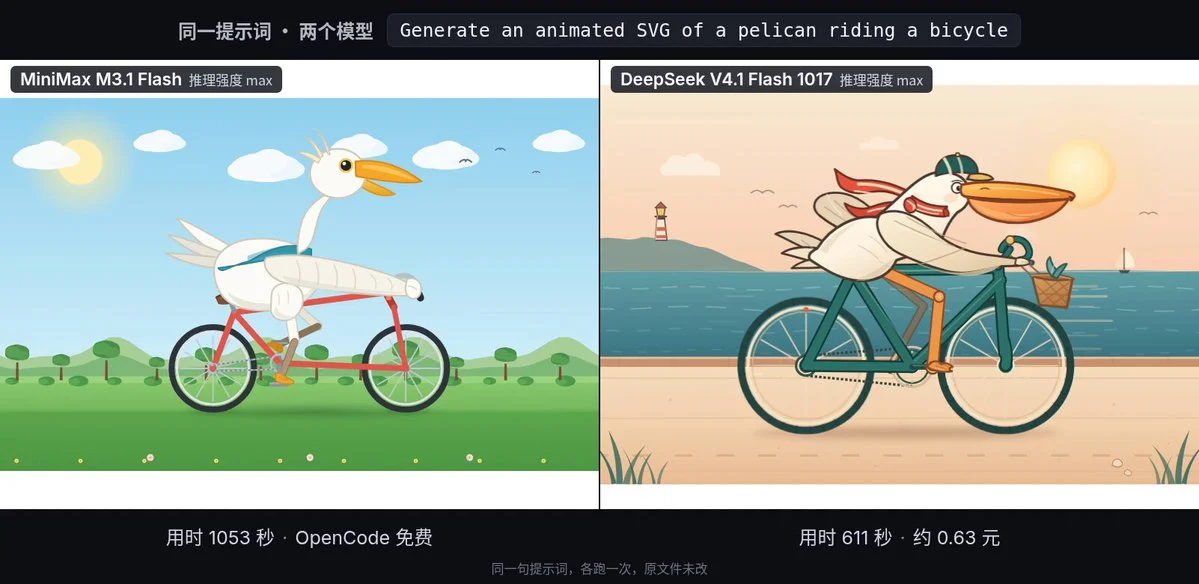
雨哥向前冲 (@xiangxiang103) ran the same pelican-on-a-bicycle SVG prompt on max effort and posted this on 19 October 2026: MiniMax on the left took 1,053 seconds, free in OpenCode; DeepSeek on the right took 611 seconds and about ¥0.63. MiniMax drew an egret with a stick-like wing. His verdict: try the free one if you want, but keep DeepSeek for real work. (Item: MiniMax M3.1 Flash pricing roundup; loses pelican animation test to DeepSeek V4.1 Flash)
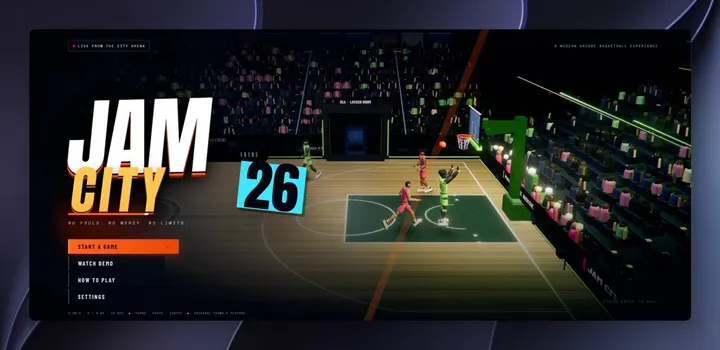
Real-project reports lean toward DeepSeek. swarogan (@swarogan) used MiniMax on real projects for several days and found DeepSeek significantly better. Rich · Atom Tan Studio (@atomtanstudio) remade NBA Jam with both using the same loop; MiniMax did not finish and said it could not close the gap. tphuang (@tphuang) says it is not better at SWE tasks and accuses MiniMax of benchmaxxing; that is his opinion. ninety是九零 (@_ninetyhe) built a playable three-player game with it but found it weaker than DeepSeek overall. Yum (@yuhasbeentaken) found it verbose, with more implementation mistakes than its scores suggest, and says DeepSeek feels more reliable for pushing code; yet in OpenCode, where DeepSeek was capped at 200K context for him, he switches to Space Bunny for its 1M window. Mooncast (@MooncastOnline) let MiniMax build a Japanese tea garden for 24 hours: it started strong and got worse hour by hour, and he says both models need tight limits and completion criteria.
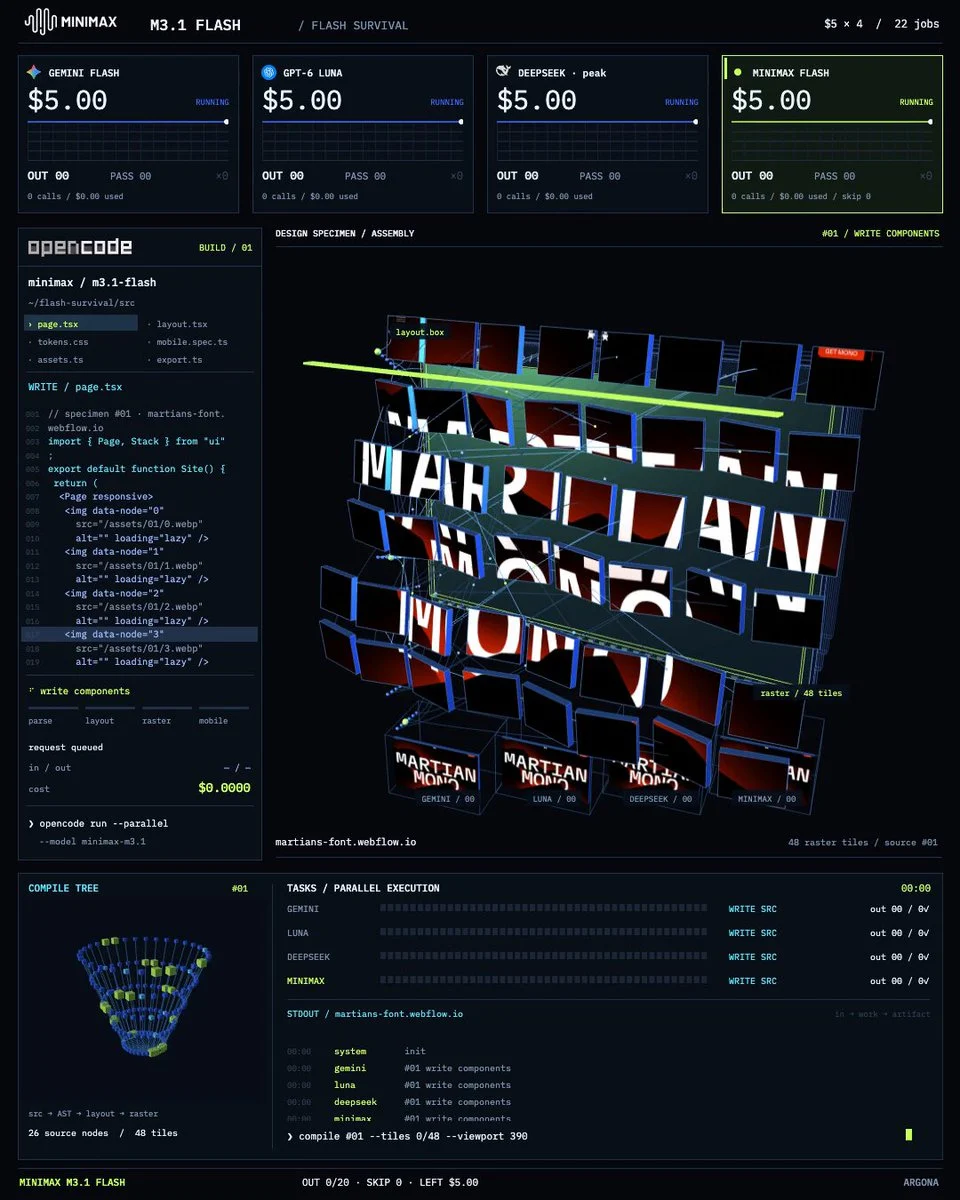
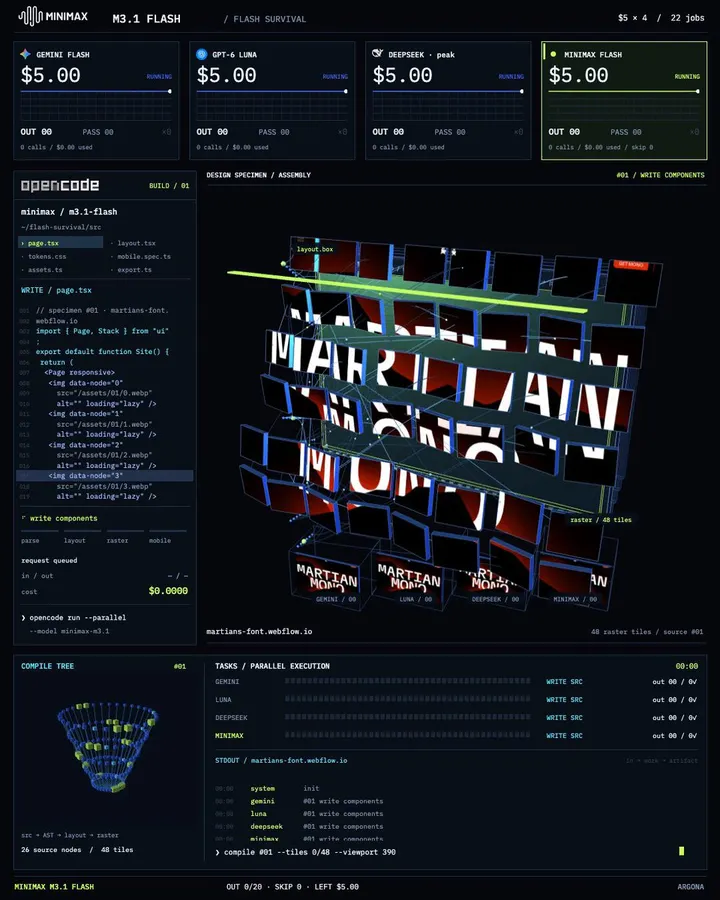
Argona (@Argona0x) gave four models $5 each and the same coding agent to build sites for 20 businesses, and posted this on 21 October 2026 (UTC+8). One run per model. (Item: Four models given $5 each to build 20 sites: M3.1 Flash finished all 20)
MiniMax has real wins too. In Argona's race it built all 20 sites with $1.90 left, every one working on a phone, and was the only model to skip the 2 businesses that already had a website; DeepSeek ran out of money after 13. In 岚叔's (@LufzzLiz) snowboarding pelican test, MiniMax stuck closer to the brief, while DeepSeek looked better but had the pelican drifting in the air. AJ (@ItsmeAjayKV), Ivana (@ivanainai), Hugo Plat (@hug0_plat), Bhavy (@Bhavani_00007) and FeiZ (@Fei2411) also preferred MiniMax's one-shot scenes.
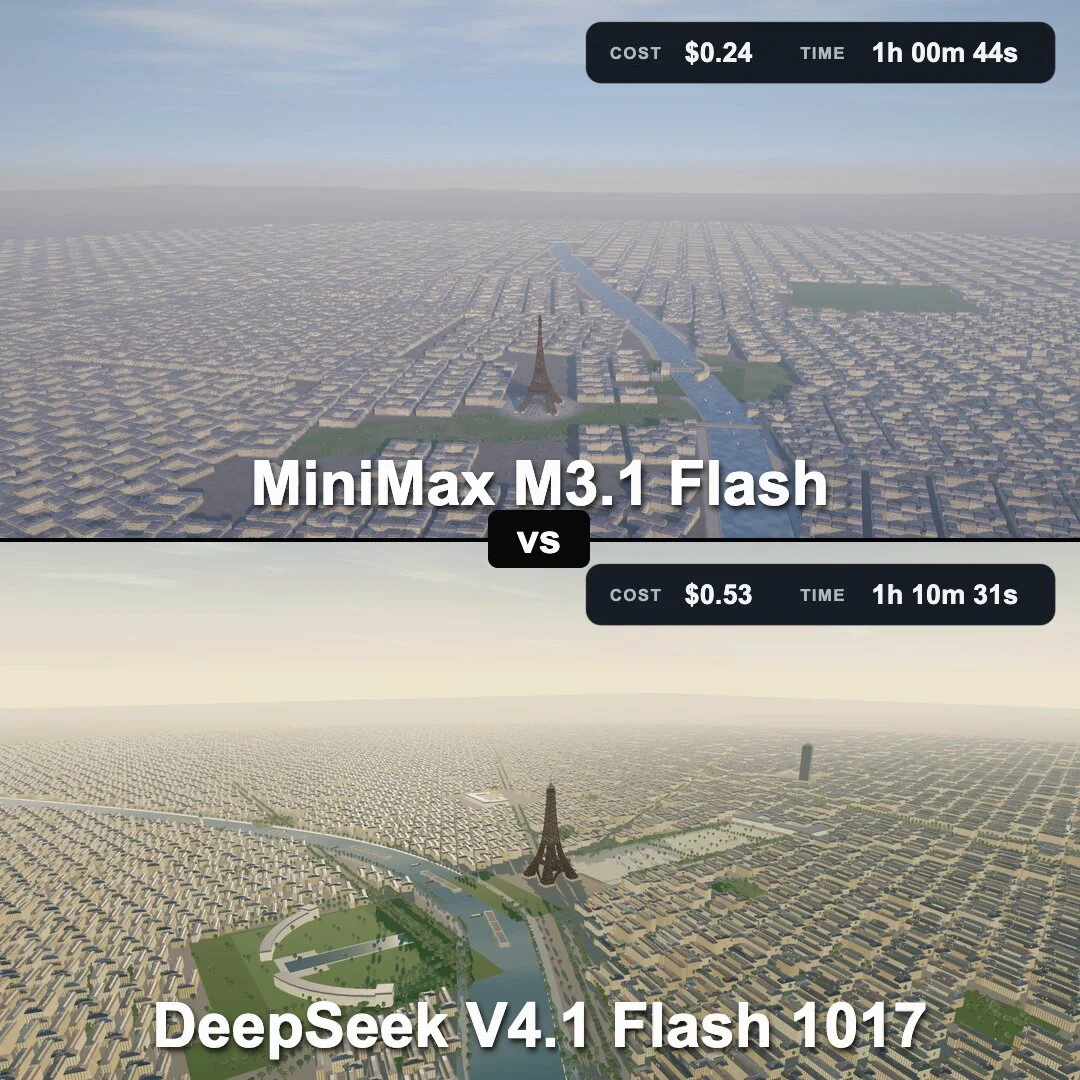
Tony (@EnvolDev) posted this Eiffel Tower comparison on 20 October 2026 (UTC+8): MiniMax M3.1 Flash on top, $0.24 and 1 hour 0 minutes 44 seconds; DeepSeek V4.1 Flash 1017 below, $0.53 and 1 hour 10 minutes 31 seconds. He preferred MiniMax's version, which added traffic he never asked for. (Item: MiniMax M3.1 Flash vs DeepSeek V4.1 Flash on the Eiffel Tower benchmark)
DeepSeek's wins are just as concrete. Loktar (@loktar00) says DeepSeek has much better prompt adherence and understands nuance in the camera shots he describes. Mia (@MiaAI_lab) asked MiniMax for 100 HTML files; the results were worse than DeepSeek's and GLM 5.3 Flash's, with some broken files. badboyfoxy (@badboyfoxy) and agim (@aGim_asf) both preferred DeepSeek's Three.js koi ponds, and in gKev1n's (@GKev1n) Japanese town scene, MiniMax's train lights drifted away at night.
Third-party tests and factual accuracy
Independent tests mostly put DeepSeek ahead on coding, reasoning puzzles and reliability, and MiniMax ahead on automation and cost-efficient search. Its biggest weakness is guessing on facts it does not know.
Table: Third-party tests that ran both models
| Test (who ran it) | MiniMax M3.1 Flash | DeepSeek V4.1 Flash-1017 |
|---|---|---|
| Artificial Analysis Intelligence Index (page, 21 Oct) | 43, $0.22 per task | 45, $0.26 per task |
| Artificial Analysis output speed (first-party APIs) | 104.7 tokens/s | 208.7 tokens/s |
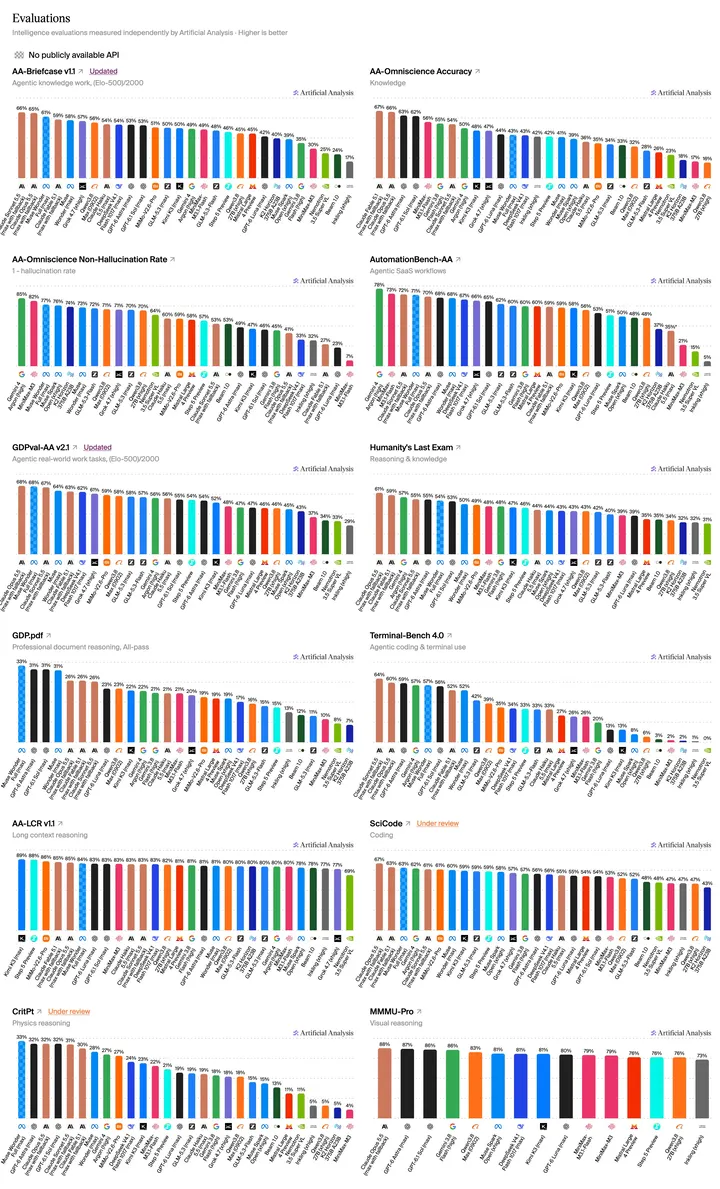
| AA-Omniscience knowledge (Artificial Analysis, 19 Oct) | 56% correct; hallucinates on 93% of questions it does not know | 43% correct; 67% |
| AutomationBench-AA (Artificial Analysis) | 73% | 67% |
| Terminal-Bench v4.0 (Artificial Analysis) | 26% | 34% |
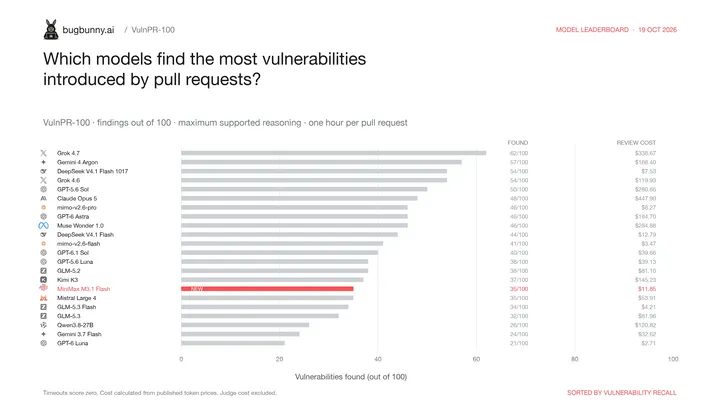
| VulnPR-100 code review (@Zaddyzaddy) | 35 found, $11.85 | 54 found, $7.53 |
| Extended NYT Connections (@LechMazur, high) | 28.3 | 92.8 |
| BuildingBench 3D reconstruction (@EnactraAI) | 73.3 | 81.9 |
| Parallel search efficiency board (@p0) | #1 on efficiency | similar web-research results at about 3x the cost |
| Private quiz of the reviewer 猫老板, median (relayed by @0xLogicrw) | 51.76 | 56.03 |
Sample/method: Sources: Artificial Analysis model pages (opened 21 Oct 2026) and its post on X; the rest are results posted on X by each tester (17-21 Oct 2026). Methods and effort levels differ, so rows are not comparable with each other; the last row is second-hand.
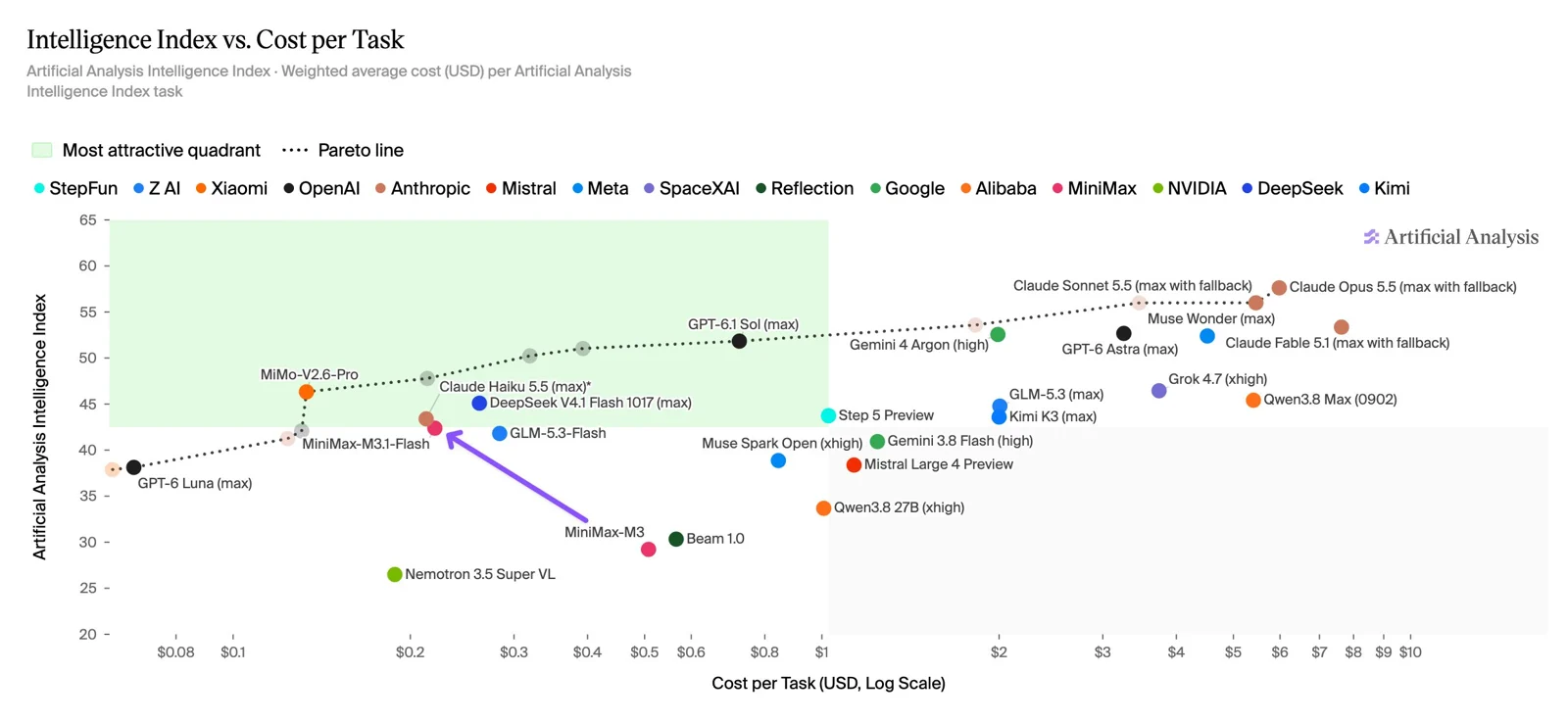
Artificial Analysis (@ArtificialAnlys) posted this index-versus-cost chart on 19 October 2026: MiniMax-M3.1-Flash at about $0.22 per task and 42 points, DeepSeek V4.1 Flash 1017 (max) at about $0.26 and 45. Its model page showed 43 for MiniMax on 21 October. (Item: Artificial Analysis publishes MiniMax M3.1 Flash benchmark page)
On AA-Omniscience, Artificial Analysis found MiniMax answered 56% of questions correctly against DeepSeek's 43%, but it attempts 98% of them and hallucinates on 93% of the ones it does not know, against 67% for DeepSeek. Its predecessor M3 attempted only 35%. Artificial Analysis also calls MiniMax very verbose: it used 180 million output tokens to run the index.
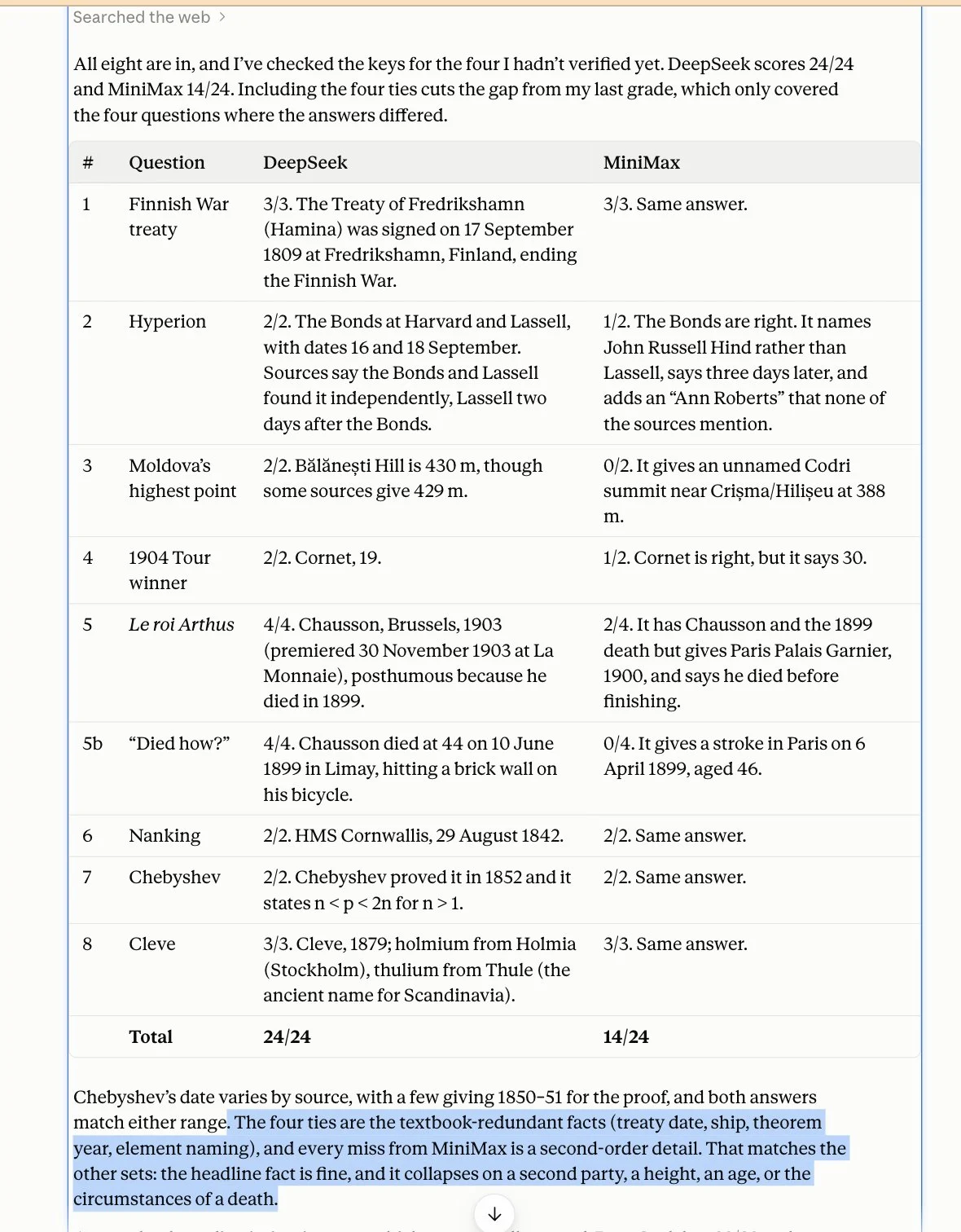
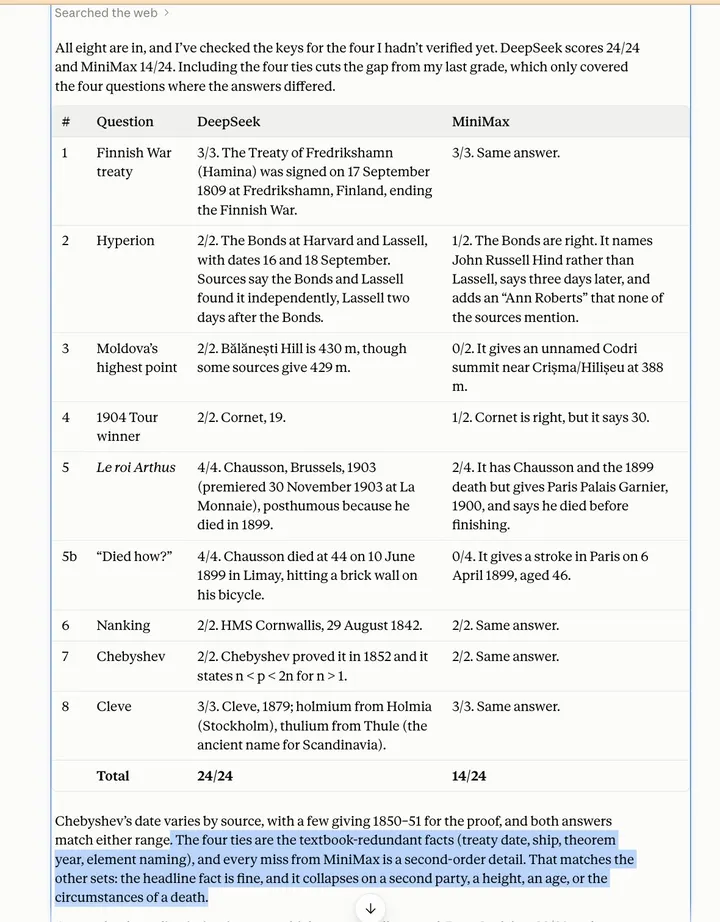
Teortaxes (@teortaxesTex) posted this question-by-question check of one quiz round on 20 October 2026: DeepSeek 24/24, MiniMax 14/24. Every MiniMax miss was a second-order detail such as a second name, a height, an age or a cause of death. (Item: Trivia quiz comparison: M3.1 Flash scores 60%/48%/62% vs DeepSeek 1017 near 100%)
His quiz was written by Claude Sonnet, with the answer keys checked against web search. Both models aced the first round. In round two MiniMax scored about 60% to DeepSeek's 100%; in round three, 48% to 100%, though Sonnet's own key had an error in that round. After seeing Parallel's search ranking, mspd4100 summed it up: fine for gathering and organizing information, not for proofreading and fact-checking.
There is also a benchmaxxing suspicion, relayed and unproven. 0xLogicrw (@0xLogicrw) relays that the reviewer 猫老板 saw MiniMax score near-perfect on old questions in his private set and near zero on new ones; its median was 51.76 against DeepSeek's 56.03.
Watch which DeepSeek a comparison uses. Some test the September V4.1 Flash, not 1017. On BuildingBench (@EnactraAI), MiniMax's 73.3 is close to the old version's 72.9 but well behind 1017's 81.9, and AJ (@ItsmeAjayKV) says MiniMax beats the September model but is still far behind 1017 on the Artificial Analysis index.
Which one to use
Keep DeepSeek V4.1 Flash-1017 as the default for code and facts, and send cheap, high-volume or daytime work to MiniMax M3.1 Flash where you can check the output. Pick DeepSeek for repo-level coding and bug fixing, long agent sessions with stable context (its cache is cheap), anything factual, work at night or on weekends (same price off-peak), and self-hosting today: the weights are MIT-licensed, and DeepSeek open-sourced its DeepInfer inference framework on 20 October. Use non-thinking mode for simple calls.
Pick MiniMax for weekday-daytime batch jobs (half DeepSeek's peak price), office and SaaS automation, web research, video input, quick visual drafts, and free trials while they last. Set a lower effort level for simple tasks, because reasoning cannot be switched off.
Watch three things: speed (about half of DeepSeek's measured output rate), long runs that balloon past 150 million tokens, and confidently wrong facts. Run a small test of your own before switching; J A Z I I (@notjazii) suggests using it as a sub-agent for simple tasks. If MiniMax ships weights on 23 October as promised, local-deployment comparisons will follow, and we will update this page.
Questions and answers
Is MiniMax M3.1 Flash cheaper than DeepSeek V4.1 Flash?
Per token, only during DeepSeek's weekday peak hours (09:00-12:00 and 14:00-18:00 UTC+8), when MiniMax is half price. Off-peak and on weekends both charge $0.15/$0.60 per million tokens, and DeepSeek's cached input is 5x cheaper ($0.003 vs $0.015). Per finished task, MiniMax was cheaper in 10 of 12 user receipts.
What was Space Bunny?
An anonymous model on OpenRouter and OpenCode that MiniMax confirmed on 19 October 2026 was an early version of M3.1 Flash. MiniMax says it processed more than 200 trillion tokens.
Which is better for coding, MiniMax M3.1 Flash or DeepSeek V4.1 Flash?
DeepSeek V4.1 Flash-1017 in most tests. In MiniMax's own table it leads DeepSWE (77.0 vs 73.7), Terminal-Bench 4.0 (42.3 vs 38.1) and NL2Repo (68.2 vs 61.2), and 16 of 31 users who ran both and gave a verdict preferred it; 8 picked MiniMax.
Can you turn off reasoning in MiniMax M3.1 Flash?
No. Reasoning is always on, with five effort levels from Low to Max (official product page). DeepSeek V4.1 Flash has a non-thinking mode.
Are MiniMax M3.1 Flash weights open?
Not as of 21 October 2026; MiniMax's launch post says weights arrive on 23 October. DeepSeek V4.1 Flash-1017 weights are already on Hugging Face under the MIT license.
Sources
Selected examples
“MiniMax M3.1 Flash looks better in benchmarks than it does in re…”

“@ollama I've been mostly using deepseek-v4.1-flash:cloud and I t…”