GPT-6.1 Sol vs GPT-6 Astra: price, usage limits and real-world differences
Make GPT-6.1 Sol your default and keep GPT-6 Astra for hard audits, code review and polished 3D or front-end work: 6.1 Sol costs a fifth of Astra's API price, OpenAI's Codex pricing page estimates 15 to 160 messages per five hours on Plus versus 5 to 45 for Astra, and 8 of 13 first-hand testers found it better or good enough, though it often runs slower. This comparison draws on OpenAI's pricing and launch pages and 7,680 posts from two X collections (September 2 to October 15, 2026), with every first-hand comparison read by hand.
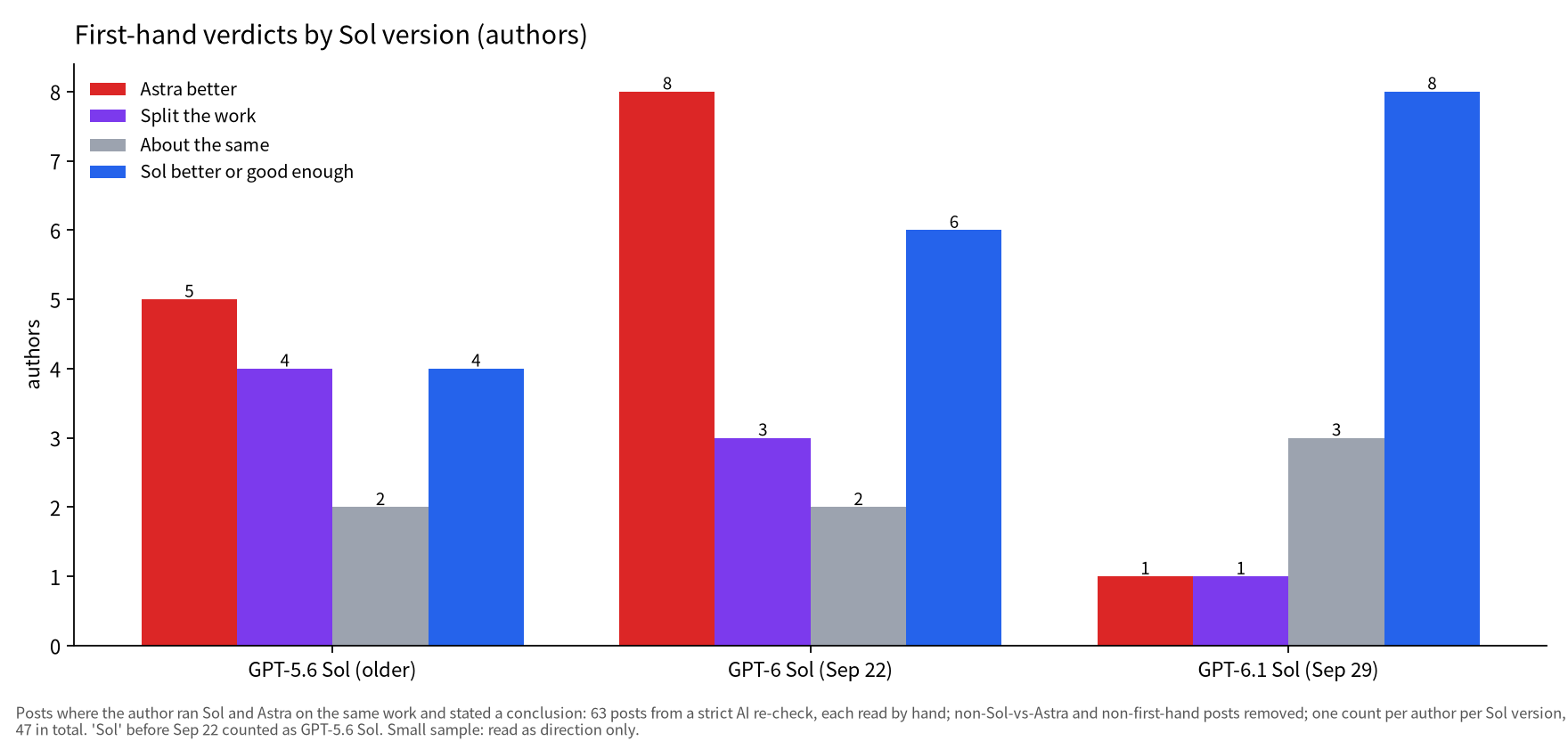
For most everyday coding and agent work, start with GPT-6.1 Sol. Its standard API rate is $2 per million input tokens and $10 per million output tokens, against $10 and $50 for GPT-6 Astra. In Codex, OpenAI estimates 15 to 160 local messages every five hours on a Plus or Business Standard seat with 6.1 Sol, and 5 to 45 with Astra. Among people who ran both models on the same task and posted a verdict, 8 of 13 said GPT-6.1 Sol was better or good enough. Astra still won most head-to-heads on code audits, code review and polished 3D or front-end output.
Check which Sol a post means before trusting it. Until September 22, 2026, the Sol in Codex was GPT-5.6 Sol (posts may also mean the rumored GPT-6 Sol); from September 22 it was GPT-6 Sol; from September 29, GPT-6.1 Sol. Much of the "Sol is worse than Astra" talk is about GPT-6 Sol, the week-one model that 6.1 replaced at the same API price.
Do not expect 6.1 Sol to be faster: in 2 of 3 timed same-task posts it took longer than Astra. It saves money and allowance, not time. Below are OpenAI's figures side by side, a hand-checked tally of people who ran both models, their timings and costs, and the pre-launch rumors checked against what shipped. Counts describe posts in our collections, not usage. GPT-6 Astra launched on September 3, 2026, to a limited group first.
Browse more Astra tests and the Sol launch posts in the GPT-6 Astra hands-on collection and the GPT-6 Sol leaks and launch collection; Codex changes are tracked in the Codex and Claude Code updates collection. Other models from the same weeks: Gemini 4 Argon review and how to make videos with Claude Opus 5.5.
First, which Sol: GPT-5.6 Sol, GPT-6 Sol and GPT-6.1 Sol
Three models carried the Sol name within a month, so a post's date tells you which one it means. GPT-6 Astra arrived on September 3, first for Daybreak cyber defenders and select customers, with wider access in the following days (NBC News). On September 22 OpenAI released GPT-6 Sol and GPT-6 Luna in ChatGPT Work and Codex, not in Chat, with the API id gpt-6-sol. On September 29 came GPT-6.1 Sol, an upgrade at the same $2/$10 price with cached input halved to $0.10. Before all this, the Sol in Codex was GPT-5.6 Sol at $4/$20.
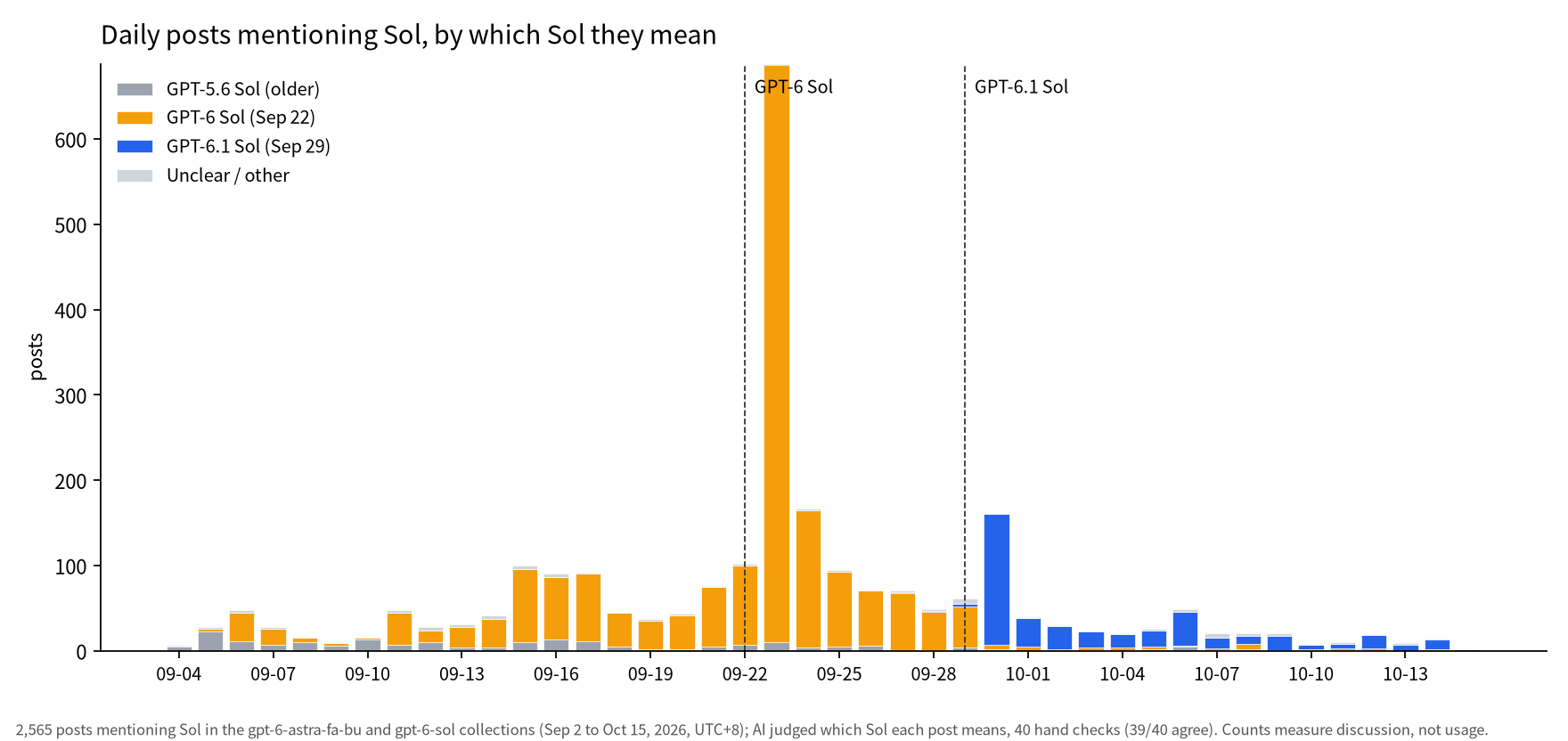
Sample/method: 2,565 posts mentioning Sol in the gpt-6-astra-fa-bu and gpt-6-sol collections (Sep 2 to Oct 15, 2026, UTC+8); AI judged which Sol each post means, 40 hand checks (39/40 agree). Counts measure discussion, not usage.
Of the 2,565 posts that mention Sol in our two collections, 1,879 are about GPT-6 Sol (rumored or released), 399 about GPT-6.1 Sol and 204 about GPT-5.6 Sol. Most of the Sol conversation is about a model that was current for one week.
The practical takeaway: gpt-6-sol is still listed at the same price, but if you pick a model id, pick gpt-6.1-sol. OpenAI's Models page now recommends GPT-6.1 Sol "to balance intelligence and cost."
Price and allowance: Sol is a fifth of the price and stretches a Codex plan about three times further
On paper GPT-6.1 Sol costs one-fifth of Astra's API price, and Codex's own estimates give it roughly three times as many messages per five-hour window on Plus.
Table: Official price and allowance: GPT-6 Astra vs GPT-6.1 Sol
| Item | GPT-6 Astra | GPT-6.1 Sol |
|---|---|---|
| API input (per 1M tokens) | $10 | $2 |
| API cached input (per 1M tokens) | $1 | $0.10 |
| API output (per 1M tokens) | $50 | $10 |
| Codex estimated local messages per 5 hours (Plus, Business Standard) | 5–45 | 15–160 |
| Context window / max output (API) | 1.05M / 128K | 1.05M / 128K |
| How subscriptions count it | Included in the existing allowance on Pro ($100/$200) and $100 Business; Plus and $20 Business get limited use, with optional credits | Work and Codex on Plus, Pro, Business, Enterprise, Edu; not yet in Chat |
| Ultrafast | 6x token price; uses allowance at 8x the Standard rate | Same |
Sample/method: OpenAI pricing page, model pages, GPT-6.1 Sol launch post, Codex pricing page and the ChatGPT enterprise rate card, checked Oct 18, 2026; Standard mode, short-context prices.
OpenAI says 6.1 Sol "nearly matches GPT-6 Astra's intelligence on agentic coding, computer use, and professional work at one-fifth of Astra's standard input and output token prices," and that it matches Astra on DeepSWE v1.1 at roughly one-fifth of the cost. The same post keeps Astra on top for science: it scored 68.1% on Terminal-Bench Science and "should be used for the most difficult scientific research tasks." These are vendor claims. The 5–45 versus 15–160 message ranges are OpenAI estimates; the editor reads them as roughly three times the room, and real use varies by task.
Ultrafast changes the math. OpenAI says 6.1 Sol Ultrafast generates tokens up to eight times faster than its standard speed in Codex; the rate card prices Ultrafast at 6x the Standard token rate and says it uses subscription allowance at 8x. By the editor's arithmetic, 6.1 Sol Ultrafast costs $12/$60 per million tokens, slightly above Astra Standard. On Plus and the $20 Business plan Astra use is limited, with optional credits; it is included in the existing allowance on Pro ($100/$200) and the $100 Business plan.
What people who ran both found: the verdict flipped with the Sol version
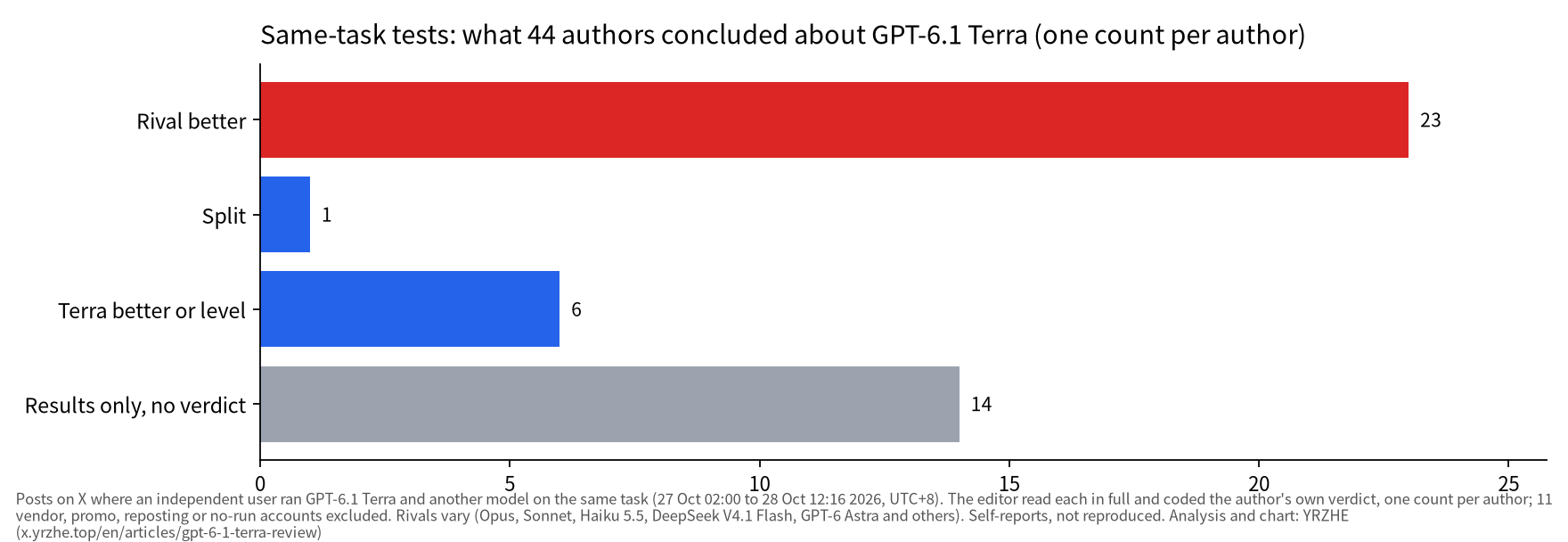
Against the original GPT-6 Sol, first-hand testers leaned towards Astra, 8 to 6; against GPT-6.1 Sol, 8 of 13 said Sol was better or good enough and only one chose Astra. The sample is small, so read it as direction.
Sample/method: Posts where the author ran Sol and Astra on the same work and stated a conclusion: 63 posts from a strict AI re-check, each read by hand; non-Sol-vs-Astra and non-first-hand posts removed; one count per author per Sol version, 47 in total. 'Sol' before Sep 22 counted as GPT-5.6 Sol. Small sample: read as direction only.
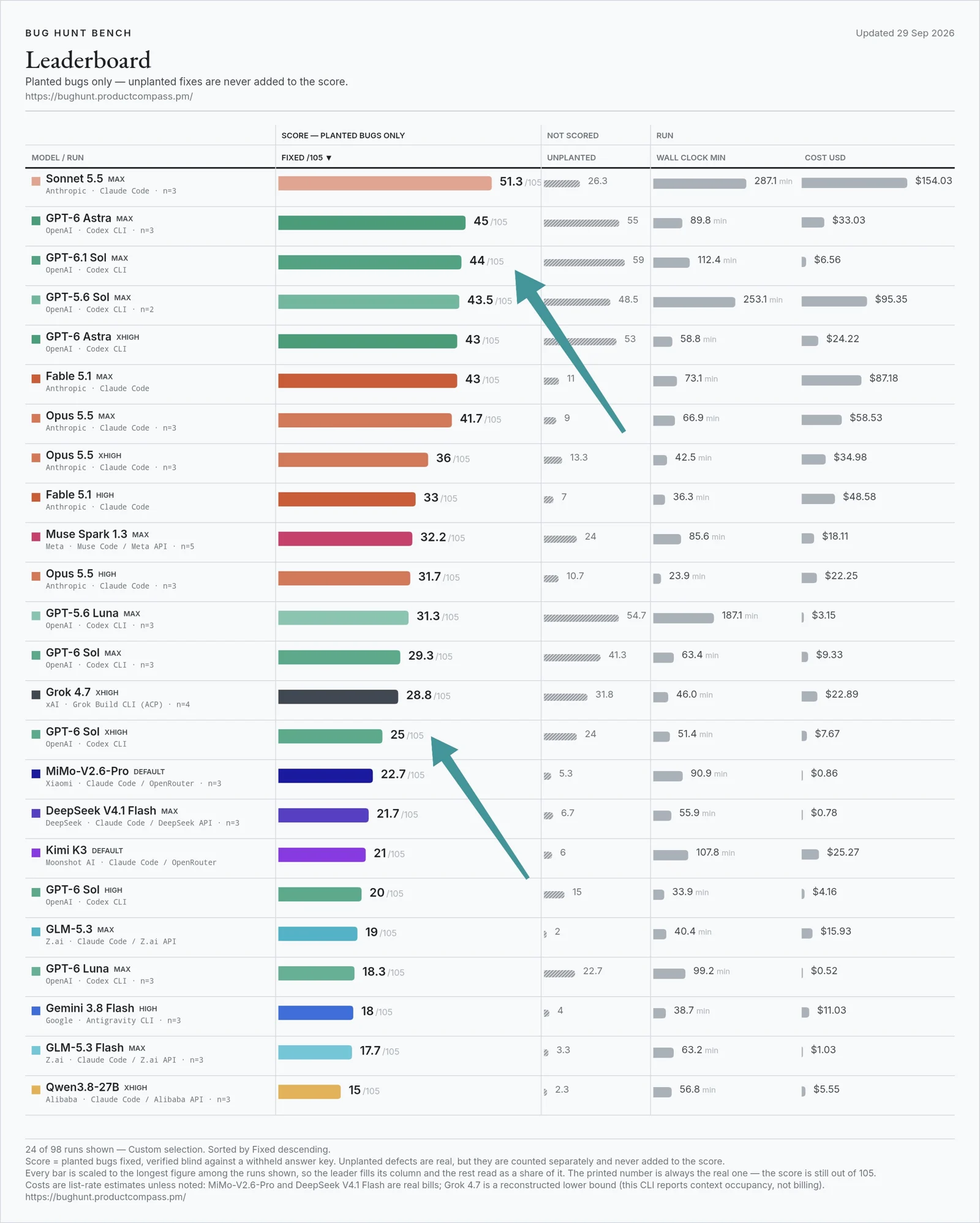
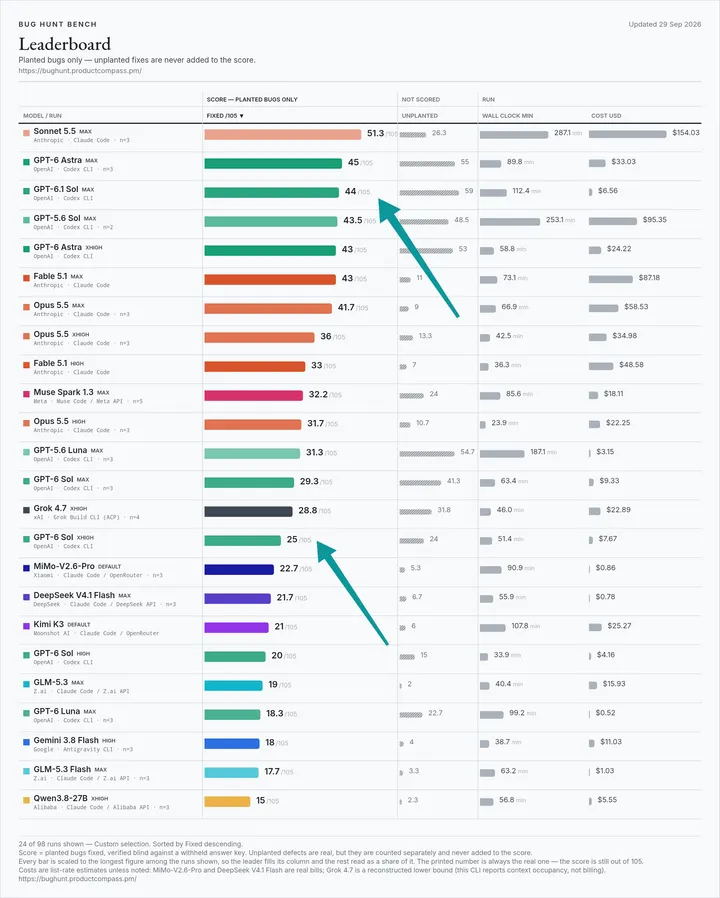
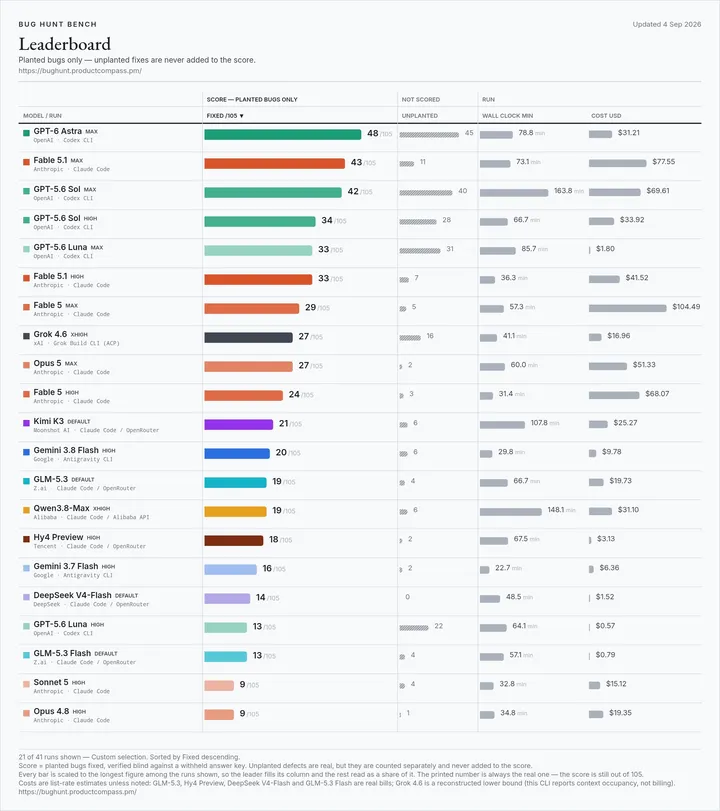
Paweł Huryn (@PawelHuryn), September 29: he planted 105 bugs in two repos. GPT-6 Astra (max) fixed 45 for $33, GPT-6.1 Sol (max) 44 for $6.56, and GPT-6 Sol only 29.3 for $9.33. Huryn calls it n=1, but the post shows both halves of the story: GPT-6 Sol fell short, 6.1 Sol nearly matched Astra at a fifth of the cost. (Item: 105 planted bugs: Astra ties GPT-6.1 Sol at a fraction of the cost)
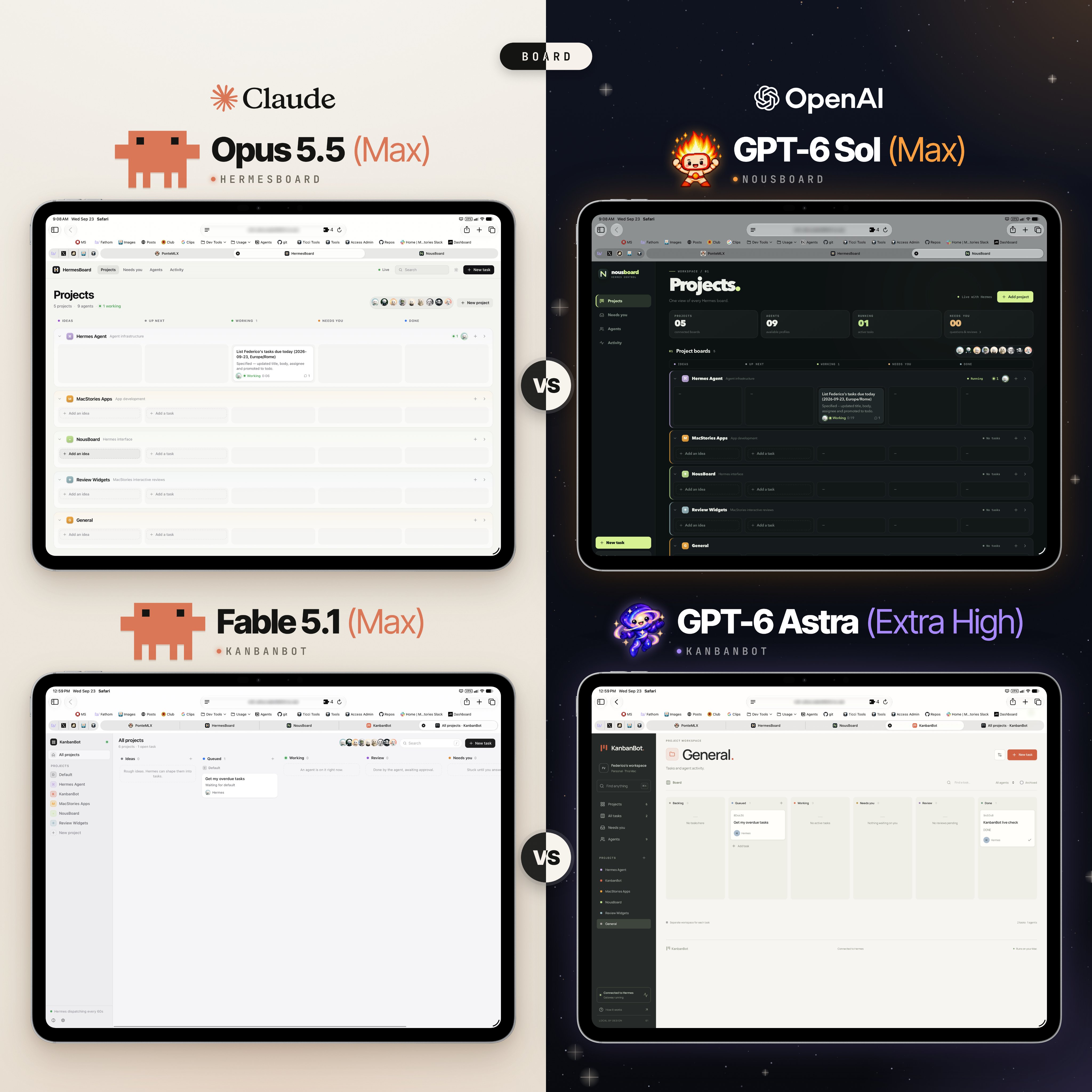
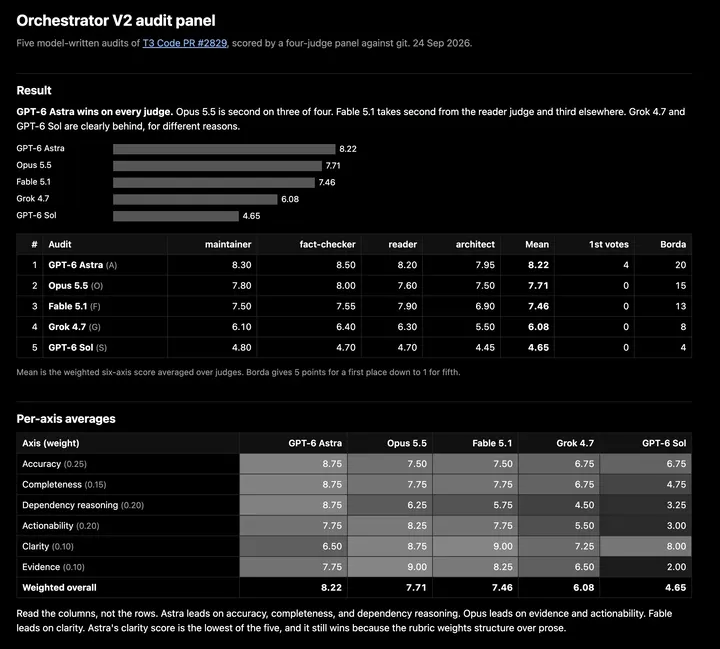
In the GPT-6 Sol week (September 22–28), Theo (@theo) had the new models audit a project and a judge panel rank them: "Astra slaughtered," with GPT-6 Sol "WAY behind." Federico Viticci (@viticci) ranked a kanban-app build Opus 5.5 first, Astra and Fable tied, Sol last. Others were happy with GPT-6 Sol for daily work: Dan Shipper (@danshipper) called it "not quite Astra, but close enough for much of my everyday work."
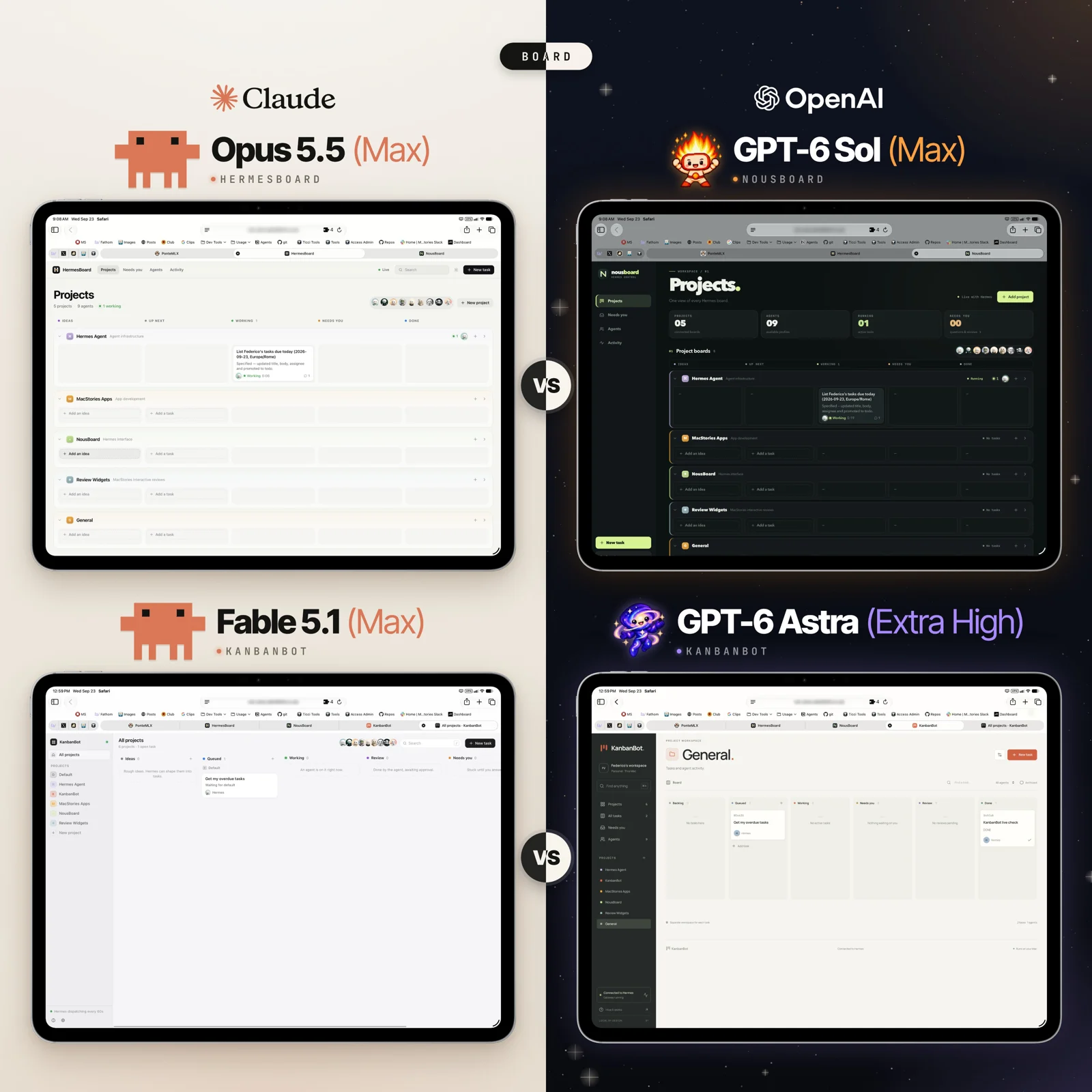
Federico Viticci (@viticci), September 23: front-end results for the same kanban-app prompt from four models. It shows one prompt's output, not a general ranking. (Item: Frontend design test ranks Opus 5.5 first, GPT-6 Sol last)
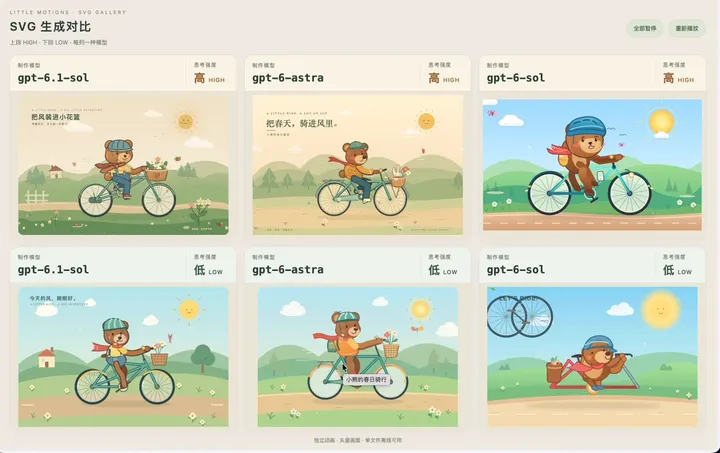
After September 29 the picture changed. 李不凯 (@libukai) found 6.1 Sol at High much better than Astra at Low on the same prompt. J A Z I I (@notjazii) preferred 6.1 Sol's output, which cost $1.50 against $11 for Astra. SkalskiP (@skalskip92) reports 6.1 Sol 2% behind Astra on the team's detection benchmark at 78% lower cost. Daniel Zambrini (@DanielZambrini) found Sol cheaper and "maybe even better than Astra quality wise" on a code-only animation, though Opus and Sonnet 5.5 beat both.
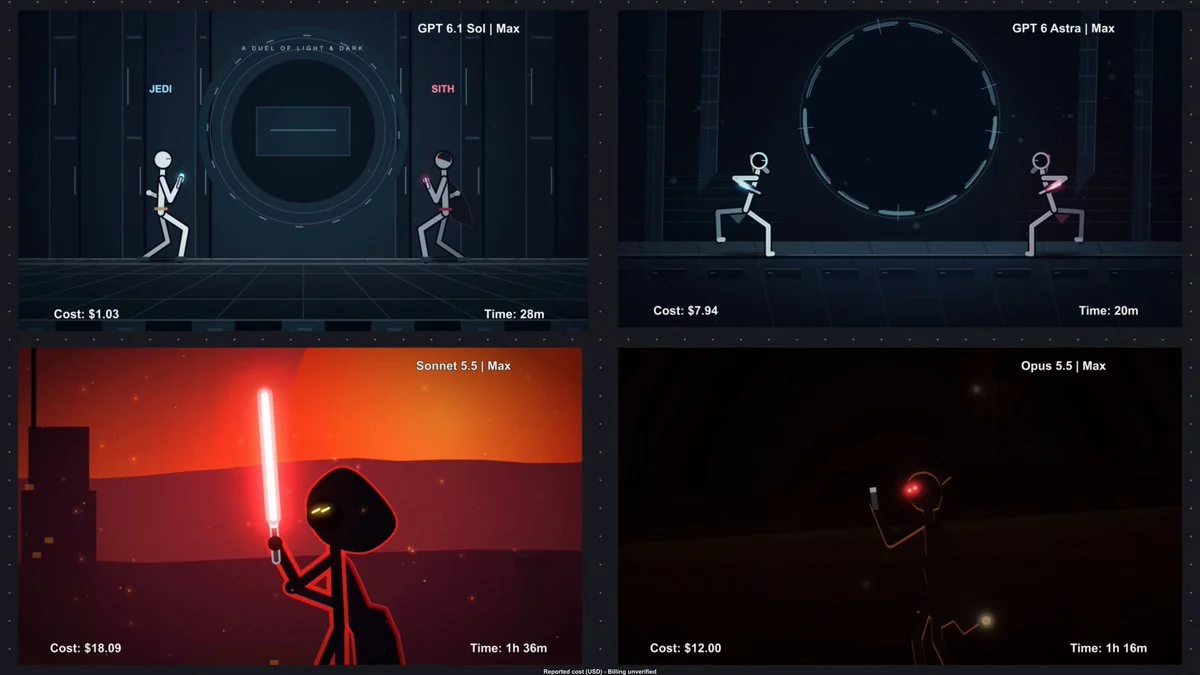
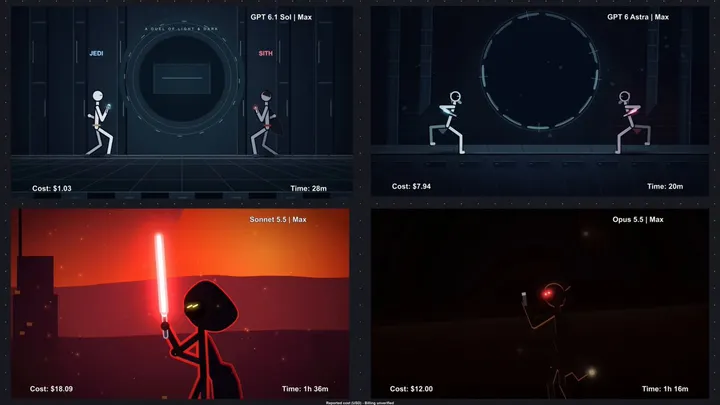
Daniel Zambrini (@DanielZambrini), October 1: frames from the same code-only animation prompt on GPT-6.1 Sol, GPT-6 Astra, Sonnet 5.5 and Opus 5.5. (Item: Four models compared on the same prompt for code-generated animation)
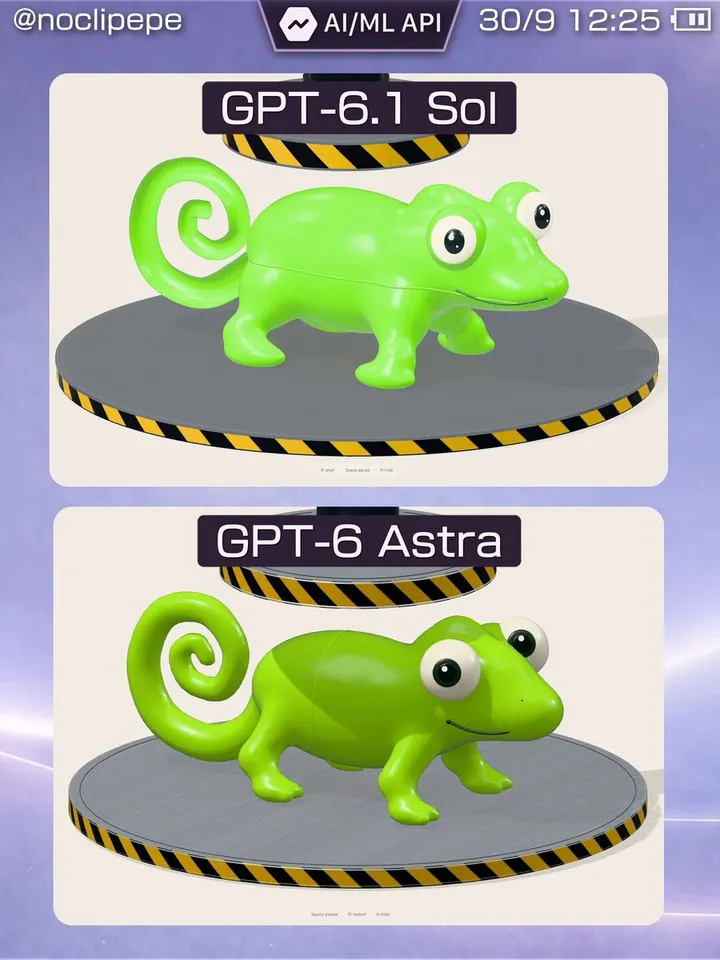
Where Astra still wins: the one 6.1 Sol tester who chose Astra, noclipepe (@noclipepe), ran a 3D squishy-toy task on the AI/ML API platform the post tags and liked Astra's result better, while noting Sol did it "for pocket change." Across all Sol versions, when Astra wins the reason is most often 3D or front-end visuals (5 of 14) or coding and audit quality (4 of 14); when Sol wins, it is most often cost or allowance (9 of 18).
Speed and cost: 6.1 Sol saves money but is often slower
GPT-6 Sol was faster than Astra in every timed post we found, but GPT-6.1 Sol was slower than Astra in 2 of 3; what it reliably saves is money and allowance.
Table: Posts that ran the same task on both models: time, cost and allowance
| Author (date) | Sol version | Task | Astra | Sol |
|---|---|---|---|---|
| 雪瑜 (Sep 23) | GPT-6 Sol | SVG pelican-on-a-bike animation, High | 6m 03s, 16% of 5-hour allowance | 4m 42s, 2% |
| Louis-François Bouchard (Sep 23) | GPT-6 Sol | Writing benchmark, deepest effort each | 526 s, $0.85 per script | 171 s, $0.11 per script |
| 雪瑜 (Sep 30) | GPT-6.1 Sol | Same prompt | 6m 03s, 16% | 15m 41s, 4% |
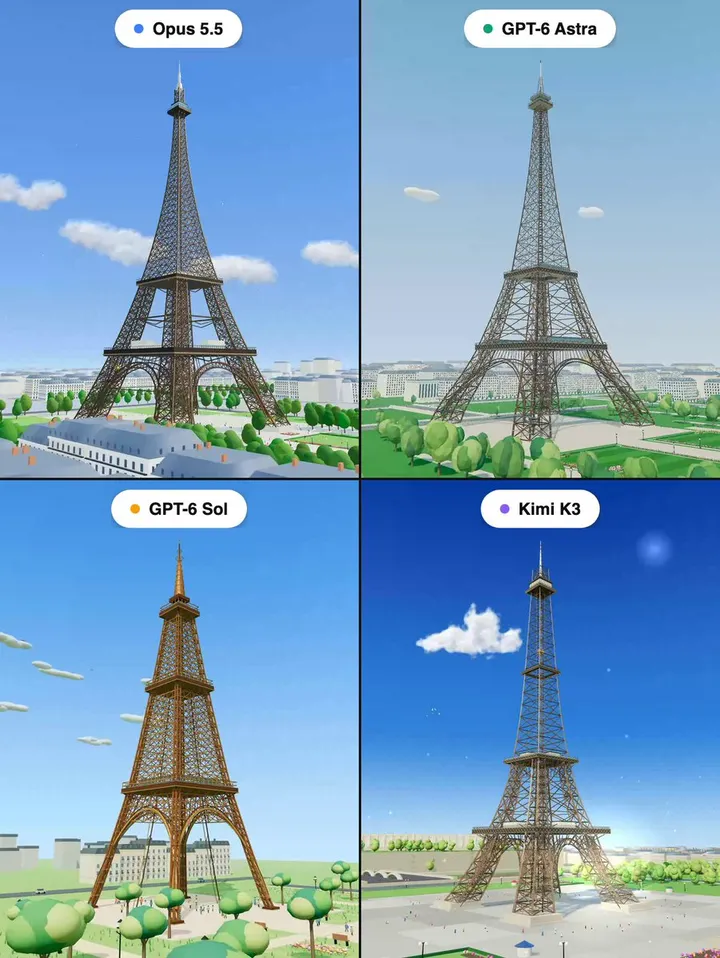
| Bhavy (Sep 23) | GPT-6 Sol | Eiffel Tower in Three.js | 8 min, $7.45 | 5 min, $3.90 |
| J A Z I I (Sep 29) | GPT-6.1 Sol | Same prompt, highest reasoning | 25 min, $11 | 10 min, $1.50 |
| noclipepe (Sep 30) | GPT-6.1 Sol | Add a hydraulic press to an inflatable chameleon | 16m 54s, $6.17 | 27m 41s, $0.85 |
| Paweł Huryn (Sep 29) | GPT-6.1 Sol | 105 planted bugs in 2 repos, max | 45 fixed, $33 | 44 fixed, $6.56 |
| Paul Hudson (Sep 22) | GPT-6 Sol | Everyday Codex work, xhigh | 5–7% of weekly limit | 1% of weekly limit |
Sample/method: Numbers copied from the authors' posts (user self-reports, single runs, not reproduced); cost is the author's API-priced or platform figure, allowance is the Codex subscription usage percentage.
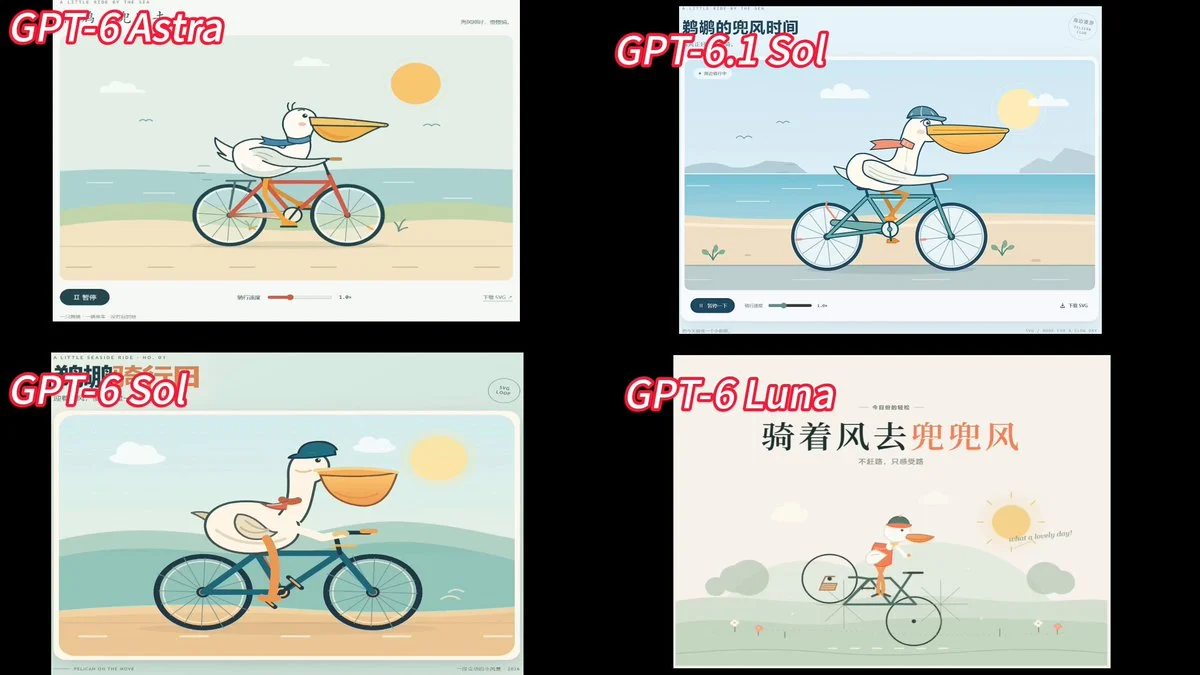
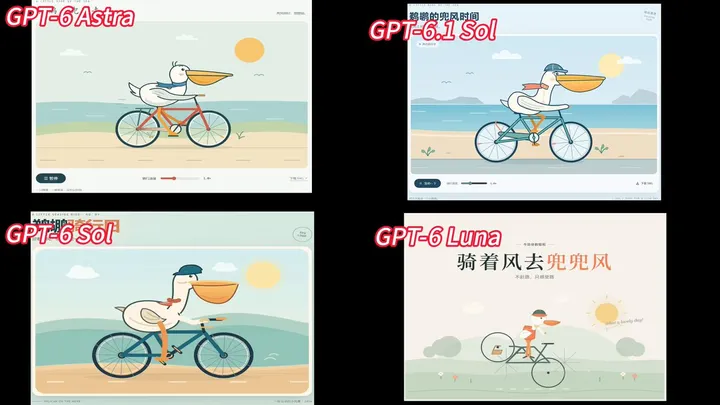
雪瑜 (@xueyu1125), September 30: the same SVG prompt in Codex on several models, with time and share of the 5-hour allowance. Astra took 6m03s and 16%; GPT-6.1 Sol 15m41s and 4%; GPT-6 Sol 4m42s and 2%. The author notes that 6.1 Sol's quarter-of-Astra usage matches OpenAI's claim, but it took more than twice as long. (Item: GPT-6.1 Sol vs Astra: quota use and generation time compared)
shownotover (@shownotover) ran 6.1 Sol at MAX: 2% of weekly usage, 2.8 million tokens, 52 minutes of work, but "EXTREMELY SLOW," and the city it built was smaller than Astra's. The post suggests using it as the implementer.
Editor's reading: if waiting costs you more than money, the choice is Astra Standard or 6.1 Sol Ultrafast, which costs about the same per token. If allowance is the constraint, use 6.1 Sol at Standard speed.
Why people waited for Sol: Astra burns through the allowance
Posts saying Astra drains the allowance peaked in the week of September 14 (61 posts) and fell after GPT-6 Sol shipped. Editor's reading: much of the demand for Sol was demand for a cheaper default.
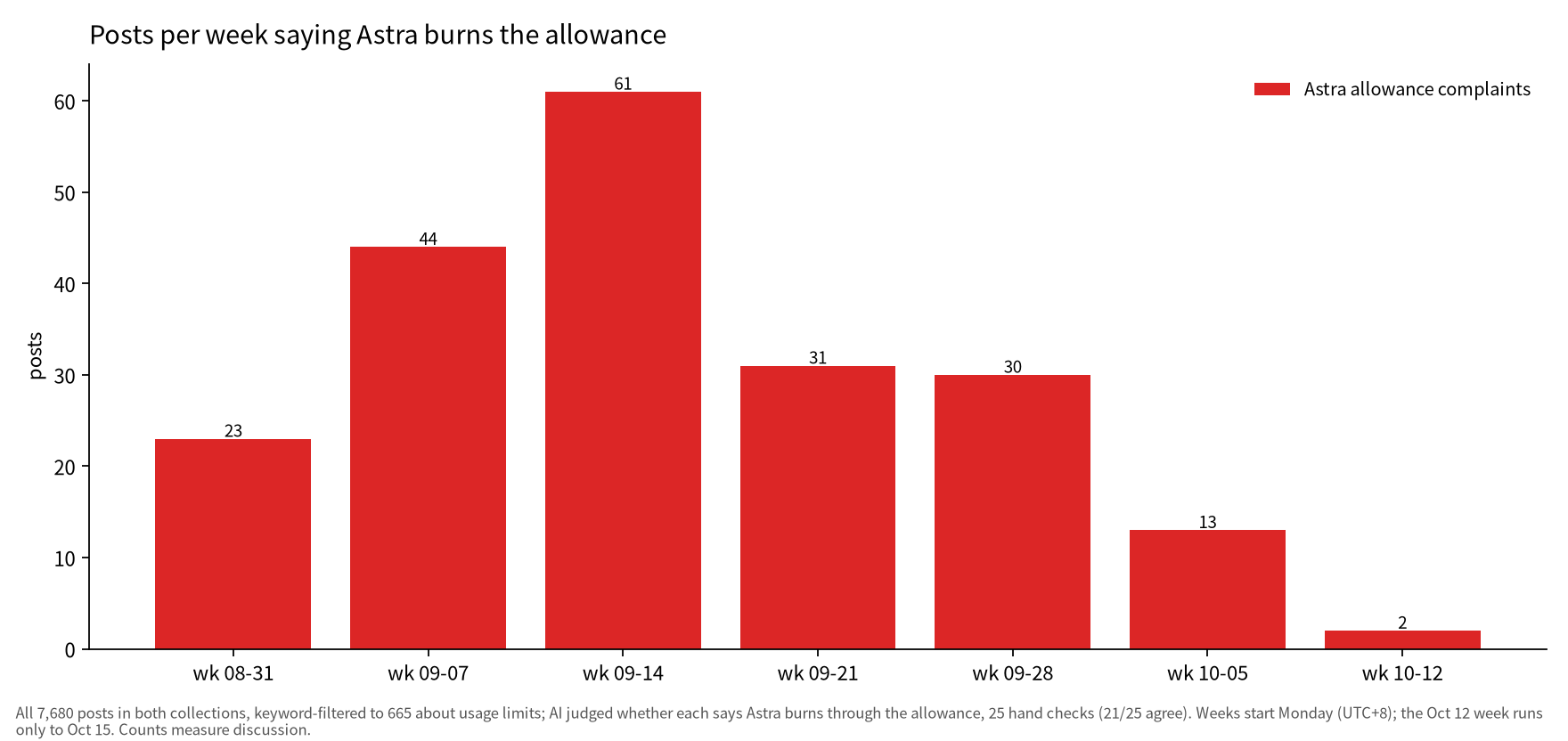
Sample/method: All 7,680 posts in both collections, keyword-filtered to 665 about usage limits; AI judged whether each says Astra burns through the allowance, 25 hand checks (21/25 agree). Weeks start Monday (UTC+8); the Oct 12 week runs only to Oct 15. Counts measure discussion.
Procesor X (@procesor_x), on a Pro x5 plan, wrote on September 5 that Astra used his weekly limit 1.5 to 2.5 times faster than GPT-5.6 Sol on the same easy fixes, so he kept Astra for planning, reviews and final polish. Irushi (@Im_IrushiK) hit a $200 account's weekly limit in 1.5 days after Astra launched and switched back to Sol (then GPT-5.6 Sol).
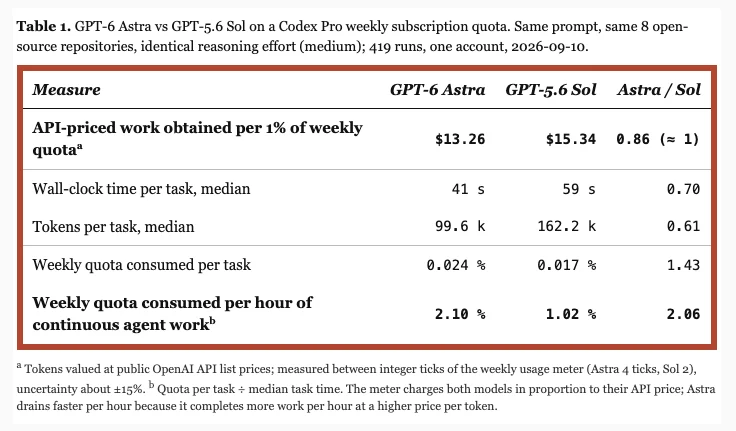
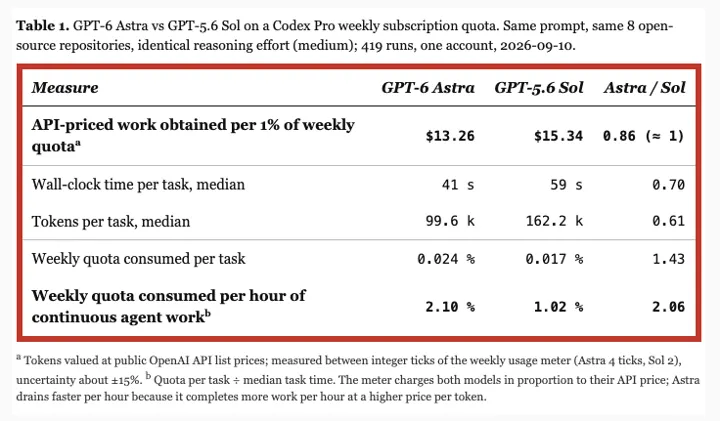
Kun Chen (@kunchenguid), September 10: his table of API-priced work per 1% of weekly quota, GPT-6 Astra versus GPT-5.6 Sol. (Item: Astra and Sol give similar value per quota, but Astra drains it twice as fast, test finds)
Kun Chen ran Codex CLI on the same tasks in 8 open-source repos at medium reasoning on the $200 plan. Both models gave about $13–15 of API-priced work per 1% of weekly quota, so Astra users are not short-changed; Astra drains about 2x faster per hour because it works faster at a higher price. Kun Chen's advice: don't make Astra the default.
After GPT-6 Sol arrived, Paul Hudson (@twostraws) moved from Astra xhigh to Sol xhigh and used 1% of his weekly limit versus 5–7% on Astra for the same work.
A common setup emerged: Sol as the main agent, calling Astra for planning, code review and architecture (camsoft2000, @camsoft2000). まかねこ (@makaneko_AI) found little gap on plans and design but Astra clearly better at code review. The caveat comes from Darren (@dtzy_88): the allowance saved with GPT-6 Sol went into Astra redoing its mistakes.
Which pre-launch Sol rumors turned out right
The price and allowance rumors were right; the September 29 DevDay launch date and the "6x faster" claim were not. Of 557 posts in the gpt-6-sol collection before September 22, 407 were rumors.
Table: Pre-launch Sol rumors vs what shipped
| Rumor (author, date) | What happened |
|---|---|
| Launch at DevDay on Sep 29 (Rajath Gowda, Sep 6) | GPT-6 Sol shipped Sep 22; Sep 29 brought GPT-6.1 Sol |
| Positioned below Astra, better value (Chubby, Sep 15) | True: GPT-6 Sol API $2/$10 vs Astra $10/$50 |
| "6x faster than Astra in one reported test" (Rajath Gowda, Sep 16) | No first-hand post came close to 6x; GPT-6 Sol beat Astra in all 3 timed runs; GPT-6.1 Sol was slower than Astra in 2 of 3 |
| Could match or exceed Astra (Rajath Gowda, Sep 13) | OpenAI still called Astra its best model; more first-hand testers preferred Astra over GPT-6 Sol |
| Better usage limits (Rajath Gowda, Sep 6) | True: Codex estimates 15–150 messages per 5 hours for GPT-6 Sol vs 5–45 for Astra |
Sample/method: Rumors are representative posts from the gpt-6-sol collection before Sep 22 (407 of 557 posts classified as rumor by AI); outcomes from OpenAI pages and this article's first-hand tally.
Editor's reading: rumors framed Sol as an Astra replacement. What shipped first, GPT-6 Sol, was a cheaper middle model; the version that came close to Astra arrived a week later as 6.1.
Questions and answers
Is GPT-6 Astra burning tokens insanely fast for everyone?
Often, yes. Adham (@adhamuxi) asked this on September 29, and it is a common report: Codex estimates only 5 to 45 local messages per five hours on Plus for Astra versus 15 to 160 for GPT-6.1 Sol. Kun Chen's measurement against GPT-5.6 Sol found similar API value per 1% of quota but about twice the drain per hour. Run 6.1 Sol by default and call Astra for the hard steps.
If GPT-6.1 Sol is better than GPT-6 Sol, why would anyone still use GPT-6 Sol?
Use 6.1 (question based on a post by Omar, @omarespinosa__, October 7). Both cost $2/$10 per million tokens in the API, and 6.1's cached input is half the price ($0.10 versus $0.20); OpenAI's Models page recommends GPT-6.1 Sol. The only reason we saw to keep GPT-6 Sol is speed: testers' timings showed it finishing faster.
GPT-6.1 Sol Ultrafast costs about the same as Astra but is much faster, so why use Astra?
Because they cost about the same, the choice comes down to quality (question from JP, @jpshrodinger, October 14). Ultrafast is 6x the Standard token price, so 6.1 Sol Ultrafast is $12/$60 per million tokens, slightly more than Astra Standard ($10/$50), and in subscriptions it uses the allowance at 8x. Astra still makes sense where testers found it better: audits, code review and polished 3D or front-end output, plus the hardest science tasks according to OpenAI.
Sources
Selected examples
“Hot damn, GPT-6 Sol is cheap on subscription. I've moved from As…”
“BREAKING: ”